
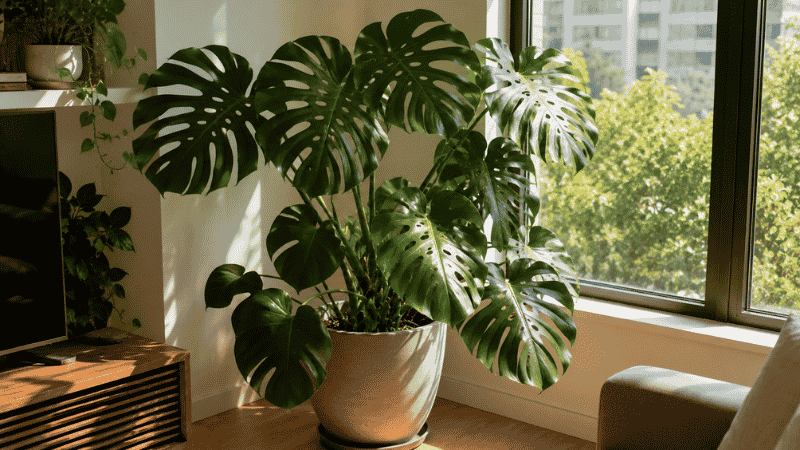
You bought it for the leaves. Those iconic, deeply split, hole-punched leaves that you’ve seen in every plant account on Instagram, every stylish apartment photoshoot, every café with good taste. You brought your monstera home, found it a bright spot, and waited for those dramatic fenestrations to appear on the new leaves.
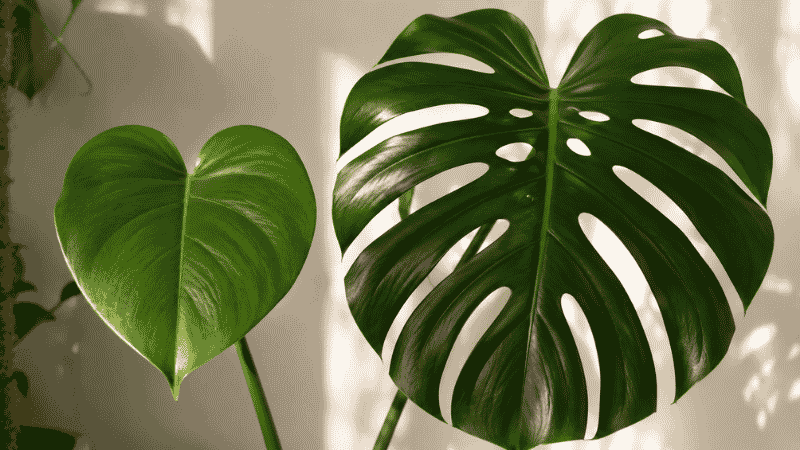
They didn’t. The new leaves came in small. Smooth. No holes, no splits. Just a flat, heart-shaped leaf that looks nothing like the plant you thought you were getting.
Here’s what nobody tells you upfront: young monstera plants produce leaves without holes. This is completely normal. Fenestrations — the holes and splits that make monstera leaves so distinctive — develop as the plant matures and as it receives adequate light. Your plant isn’t broken, sick, or wrong. It’s just young, and possibly needs a brighter spot.
This guide covers everything you need to know about monstera care: why those holes appear (or don’t), how to get the biggest, most dramatic leaves, what the aerial roots are doing, and how to keep this stunning plant genuinely thriving in your home.
Key Takeaways
- Monstera leaves develop holes and splits (called fenestrations) as the plant matures — young plants and plants in low light produce smooth, unperforated leaves; move to brighter indirect light to encourage fenestrations
- Water when the top 1–2 inches of soil feel dry — monsteras like to dry out slightly between waterings but hate sitting in soggy soil
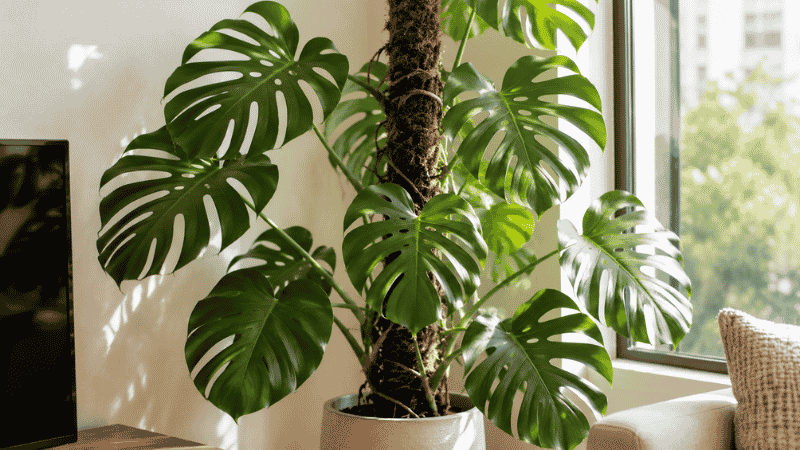
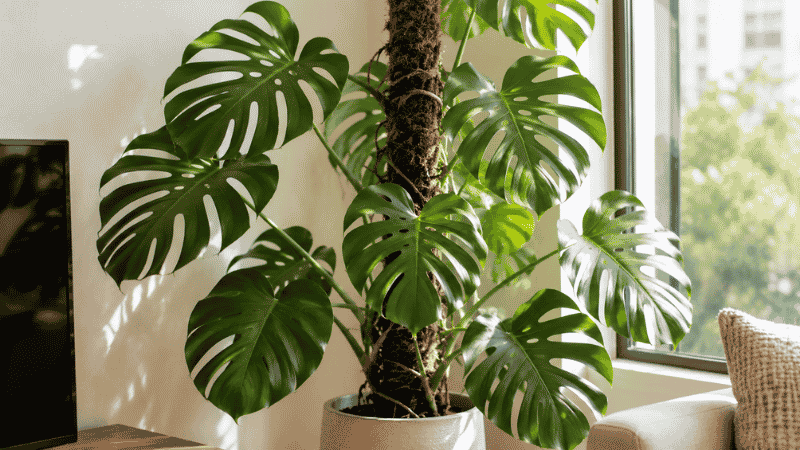
- Monsteras are natural climbers — a moss pole supports upward growth and encourages larger leaves with deeper fenestrations
- Monsteras are toxic to cats, dogs, and humans if ingested — keep out of reach of pets and children; wear gloves when pruning or propagating
- With good light and consistent care, monsteras can grow 1–2 feet per year indoors and produce leaves 12–18 inches across
What Exactly Is a Monstera?
Monstera deliciosa — sometimes called the Swiss cheese plant, fruit salad plant, or split-leaf philodendron (though it’s not a true philodendron) — is native to the tropical rainforests of Central America. In the wild, it’s a vigorous climbing vine that uses aerial roots to anchor itself to trees and scramble upward toward the canopy, eventually reaching heights of 70 feet or more. In its natural habitat, leaves can grow 1–3 feet across.
“Monstera deliciosa” translates, wonderfully, to “delicious monstrosity” — a name that reflects both the enormous scale the plant can achieve and the fact that it actually produces edible fruit in the right conditions (described as tasting somewhere between banana, pineapple, mango, and strawberry). Indoor plants are unlikely to flower or fruit, but the leaves alone make it one of the most visually dramatic houseplants available.
The National Garden Bureau declared 2025 the Year of the Monstera — a recognition of how firmly this plant has established itself as the defining houseplant of a generation.
Understanding its jungle origins explains almost everything about monstera care. It wants warmth. It wants humidity. It wants to climb. It wants bright light filtered through a forest canopy. Replicate those conditions as best you can, and this plant will reward you with rapid, dramatic growth.
Monstera Care: Light Requirements
Light is the single most important variable in monstera care — and the one most directly connected to fenestration development.
Bright indirect light is ideal. This means near a window with good natural light, but not in the direct path of harsh afternoon sun. East-facing windows provide excellent gentle morning light. South or west-facing windows work well if the plant is positioned a few feet back from the glass, or if the light is filtered by a sheer curtain.
Medium indirect light: monsteras tolerate lower light better than many tropical plants, but growth slows significantly and new leaves come in smaller and without fenestrations. If your monstera has been producing small, smooth leaves with no splits or holes, insufficient light is almost always the cause.
Direct harsh sunlight: avoid. The large leaves scorch in direct afternoon sun, producing bleached or brown patches that won’t reverse. Even in bright conditions, direct sun through glass can damage leaves — filter or distance.
On fenestrations and light: the connection is direct. In the wild, monstera plants climb higher in the canopy as they mature, receiving more light, which drives the development of the distinctive splits and holes. Indoors, providing bright indirect light and a support to climb mimics this progression. According to the Royal Horticultural Society, younger plants and those in poor light typically produce fewer or no fenestrations; moving to better light and providing support typically produces fenestrated leaves within 1–3 growing cycles.
Practical tip: rotate your monstera a quarter turn at every watering so all sides receive equal light and the plant develops a balanced, attractive shape rather than leaning heavily toward one side.
How to Water a Monstera
Monsteras want their soil to dry out slightly between waterings — not bone dry, but not consistently soggy. The distinction matters because consistently wet soil is the primary cause of root rot, which is the most common serious problem monstera owners encounter.
The rule: check the top 1–2 inches of soil. When they feel dry, water thoroughly until water flows from the drainage holes. Then let the soil dry to that depth before watering again.
Frequency: every 1–2 weeks in spring and summer when the plant is actively growing; every 2–3 weeks in autumn and winter when growth slows. Always check the soil rather than following a calendar.
Signs of overwatering: yellowing leaves (especially lower, older leaves that yellow rapidly); stems that feel soft or mushy near the soil; a musty smell from the pot; soil that stays wet for more than 10 days.
Signs of underwatering: leaves that droop or curl; brown crispy leaf edges; soil that has pulled away from the sides of the pot; the pot feels very light when lifted.
On drainage: monsteras absolutely need pots with drainage holes. Sitting in waterlogged soil even briefly can initiate root rot. If you love a decorative pot without drainage, use it as a sleeve — keep the monstera in a nursery pot inside the decorative one, and remove to water.
Soil: Give Roots Room to Breathe
Monsteras have evolved in loose, aerated rainforest soil rich in organic matter and bark. Their roots need oxygen as much as they need nutrients — dense, compact soil that holds water is exactly wrong for a monstera.
Use a well-draining potting mix. A standard all-purpose potting mix improved with perlite (about 20–30% of the total volume) works well. For the best results, add orchid bark or coarse coconut coir as well — these create larger air pockets that allow roots to breathe and prevent waterlogging.
Avoid using garden soil in pots. It compacts with watering and creates the dense, poorly-draining conditions that cause root rot.
Pot size: monsteras grow large root systems and benefit from generously-sized pots. However, going too large too quickly causes the same problem as with other plants — excess soil stays wet and roots struggle to absorb it all. Repot when roots are visibly circling the pot bottom or growing out of drainage holes. Go up one size — 2 inches larger in diameter.
Repotting timing: spring is ideal, when the plant is entering active growth. After repotting, give it a few weeks in its new pot before resuming regular fertilizing.
The Aerial Roots: What Are They and What Should You Do?
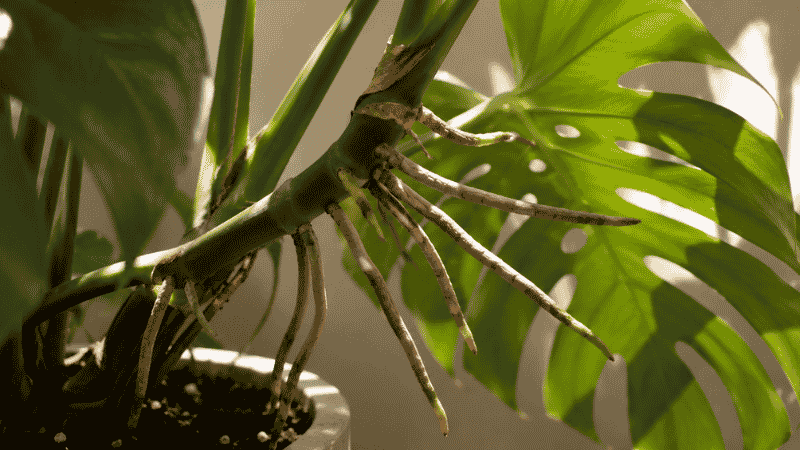
One of the most distinctive and slightly alarming features of a mature monstera is the aerial roots — thick, sometimes brown or pale, root-like structures that emerge from the stems and reach in various directions.
These are completely normal and actually a sign of a healthy, mature plant. In the wild, monstera uses aerial roots to grip tree bark and pull itself upward. Indoors, they serve a similar purpose if you provide a support, and they can also absorb moisture and nutrients from the air.
What to do with aerial roots:
Option 1 — Attach to a moss pole. A moss pole (or coir pole) gives aerial roots something to grip, encouraging upward growth and larger leaf development. Keep the moss pole slightly damp — aerial roots detect moisture and will actively grow toward it. This is the approach that produces the most dramatic growth and fenestration.
Option 2 — Direct into soil. Lower aerial roots can be gently guided into the potting mix, where they’ll root and contribute to the plant’s overall stability and nutrient uptake.
Option 3 — Leave them alone. Aerial roots don’t need to be removed or managed. If the aesthetic bothers you, you can trim a few with clean scissors without harming the plant — but avoid removing all of them from a mature plant that’s using them to climb.
Humidity and Temperature
Monsteras are tropical plants that prefer warmer temperatures and moderate to high humidity. The good news is they’re adaptable enough to manage in typical home conditions — they’re not as demanding as orchids or calatheas.
Temperature: 65–85°F (18–29°C) is ideal. Avoid temperatures below 55°F (13°C), which stress the plant and can cause leaf damage. Keep monsteras away from cold drafts, air conditioning vents, and cold glass windows in winter.
Humidity: monsteras appreciate humidity levels of 50–60%, but manage reasonably well in average household humidity (typically 30–50%). In very dry conditions — particularly in winter with heating running — leaves may develop brown crispy edges.
To increase humidity: place the pot on a pebble tray filled with water (with the pot sitting above the waterline), group the monstera with other plants, or use a small humidifier nearby. Misting provides only brief benefit and can encourage fungal issues on leaves if done excessively.
Feeding Your Monstera
Monsteras are reasonably active feeders during their growing season and respond well to regular fertilizing with visible results — bigger leaves, faster growth, more pronounced fenestrations.
A simple feeding schedule: a balanced liquid fertilizer, applied at the recommended strength, every 4–6 weeks during spring and summer. Reduce to once every 6–8 weeks in early autumn. Stop feeding entirely in winter — the plant’s growth slows dramatically and unused fertilizer accumulates as salts in the soil.
Signs of over-fertilizing: brown leaf tips and edges from salt buildup; white crusty deposits on the soil surface. Flush the soil thoroughly with water every few months to remove accumulated salts.
How to Get Bigger Leaves with More Fenestrations
This is the question most monstera owners have after the initial “why are there no holes?” panic. Here’s what actually drives fenestration development:
More light. This is the biggest single factor. Bright indirect light produces larger leaves with more pronounced splits and holes. If your monstera has been in a dim spot producing small smooth leaves, move it to better light and give it 1–3 growing cycles to show improvement.
A climbing support. Providing a moss pole and encouraging the plant to climb upward — as it does in the wild — produces larger, more mature leaves with deeper fenestrations. A climbing monstera is a different plant from a trailing one.
Maturity and patience. Very young plants (those under 2–3 years old or still in small pots) naturally produce unperforated leaves regardless of care. Maturity is required for fenestrations to develop. The plant will get there — give it time.
Consistent care. Stress events — major repotting, pest infestations, extended drought, dramatic light changes — can cause new leaves to come in smaller and less fenestrated. Consistent, stable care produces the most impressive leaves.
Common Monstera Problems
Yellow Leaves
Yellowing is almost always caused by overwatering or poor drainage. Check the soil — if it’s wet, stop watering and let it dry completely. Ensure the pot has drainage holes. If yellowing is rapid and widespread, check the roots for rot.
Occasional yellowing of the oldest, lowest leaves is natural aging. It’s only concerning when it progresses rapidly up the plant or affects many leaves simultaneously.
Brown, Crispy Leaf Edges
Usually caused by low humidity, underwatering, or the plant being near a heating or air conditioning vent. Increase humidity, check watering frequency, and move the plant away from direct airflow. Existing crispy edges won’t reverse — trim with clean scissors.
No Holes in New Leaves
The plant needs more light or more time. Move it to a brighter spot (bright indirect light, near an east or south-facing window). If the plant is young (under 2 years), patience is also part of the equation — fenestrations develop with maturity. Adding a moss pole and encouraging upward climbing also accelerates fenestration development.
Drooping Leaves
Usually thirst — check the soil and water if it’s dry. A monstera that has drooped from underwatering typically recovers within a few hours of thorough watering. If the soil is wet and the plant is drooping, suspect root rot — check roots and repot in fresh dry soil if needed.
Aerial Roots Growing Everywhere
This is normal for a healthy, mature monstera. The plant is doing exactly what it’s supposed to do. Direct the roots toward a moss pole, tuck them into the soil, or trim a few if aesthetics demand it.
How to Propagate a Monstera
Propagating a monstera is genuinely one of the most satisfying plant projects for a beginner. One plant can become many, and the process is visible and rewarding.
The method: stem cuttings with at least one node (the small bump on the stem where a leaf and aerial root emerge).
In water:
- Cut a stem section with at least one node and one leaf, just below the node.
- Remove any leaves that would be submerged.
- Place in a jar of clean water with the node submerged.
- Set in bright indirect light and change the water every few days.
- Roots appear in 2–6 weeks. Once roots are 2–3 inches long, pot up in standard potting mix.
In damp sphagnum moss: place the cutting with the node buried in moist (not wet) sphagnum moss. Cover loosely with plastic to retain humidity. Roots develop in 3–6 weeks. This method often produces roots more quickly than water propagation.
Wear gloves when propagating — monstera sap contains calcium oxalate crystals that can irritate skin. Wash hands thoroughly afterward.
⚠️ Monstera Toxicity: Important for Pet and Family Safety
All monstera varieties contain insoluble calcium oxalate crystals throughout their leaves, stems, and roots. If ingested, these cause immediate oral irritation — burning sensation, excessive drooling, vomiting, and difficulty swallowing — in both humans and animals.
The ASPCA confirms monstera deliciosa is toxic to both cats and dogs. Keep it out of reach of pets that chew on plants and away from young children.
The sap can also irritate skin in sensitive individuals when handling. Wear gloves when pruning, repotting, or propagating.
If You Only Have 10 Minutes Right Now
Check the soil. If the top 1–2 inches feel dry, water thoroughly. If the plant is in a dim corner with smooth, unfenestrated leaves, move it somewhere brighter. If aerial roots are growing everywhere, relax — that’s the plant doing exactly what it should.
Monstera care is genuinely manageable once you understand what it wants: bright light, occasional thorough watering, something to climb, and patience.
FAQ
Why does my monstera have no holes in its leaves? Either the plant is young (fenestrations develop with maturity, typically after 2–3 years), or it’s not receiving enough light. Move it to bright indirect light and provide a moss pole for it to climb — most plants respond within 1–3 growing cycles with more fenestrated leaves.
How often should I water my monstera? When the top 1–2 inches of soil feel dry — typically every 1–2 weeks in spring and summer, every 2–3 weeks in autumn and winter. Never follow a fixed schedule; check the soil each time.
Do monsteras need a moss pole? They don’t strictly need one, but providing a climbing support encourages larger leaves with more fenestrations, supports the plant’s natural growth habit, and keeps a mature plant from becoming unwieldy. For the most impressive growth, a moss pole is genuinely beneficial.
Are monsteras safe for cats and dogs? No — monsteras are toxic to cats and dogs if ingested. They contain calcium oxalate crystals that cause oral irritation, drooling, and vomiting. Keep them out of reach of pets and children.
Why are my monstera leaves turning yellow? Almost always overwatering. Check that your pot has drainage holes and that you’re allowing the top 1–2 inches of soil to dry between waterings. If yellowing is rapid and widespread, inspect the roots for rot.
How fast does a monstera grow indoors? In good conditions (bright indirect light, regular watering, monthly fertilizing in growing season), monsteras can grow 1–2 feet per year indoors and produce several new leaves per growing season. Growth slows significantly in low light.
Can I grow a monstera in a small apartment? Yes, with the right variety. Monstera deliciosa can eventually become very large (4–7 feet tall indoors), so consider whether you have the space for it to grow. Monstera adansonii (the “Swiss cheese vine”) is a smaller, trailing variety that works well in tighter spaces and hanging baskets.
The Plant That Earns Its Space
Few houseplants make a room feel the way a healthy monstera does. It’s not subtle — a mature monstera with its dramatic split leaves is a statement, a presence, something that changes the quality of a room in a way that smaller plants simply can’t.
A 2022 scoping review published in Environmental Research found that having indoor plants — including large tropical statement plants — is consistently associated with reduced stress, improved mood, and a greater sense of wellbeing in both home and work environments. The monstera, with its calming green presence and its rewarding growth patterns, earns every inch of space it occupies.
Give it light. Give it something to climb. Give it a little water when the soil tells you it’s time. And then watch what happens.
Keep Growing
- 🌿 [Low Maintenance Indoor Plants: 12 Hard-to-Kill Picks] — more plants that reward beginner care
- 🌱 [How to Care for Pothos] — the perfect companion plant for your monstera shelf
- 🔄 [How to Repot a Plant: Step-by-Step for Beginners] — when your monstera outgrows its pot
- 💛 [Plant Leaves Turning Yellow? 7 Real Causes and Fixes] — diagnose any struggling plant
References: Largo-Wight, E., et al. (2022). When green enters a room: A scoping review of epidemiological studies on indoor plants and mental health. Environmental Research, 214. ASPCA Animal Poison Control Center. Toxic and Non-Toxic Plant List — Monstera deliciosa. Royal Horticultural Society (2024). Monstera: Swiss Cheese Plants. Missouri Botanical Garden Plant Finder (2024). Monstera deliciosa. National Garden Bureau (2025). Year of the Monstera.