
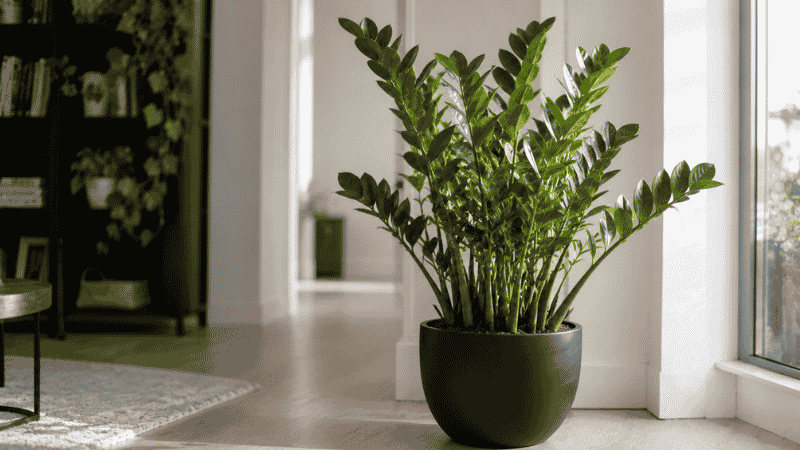
You bought it because someone told you it was impossible to kill. You put it in the corner of your apartment — the dim corner, the one that doesn’t really get much light — and you watered it occasionally, sometimes forgot about it entirely, and fully expected to find it wilting within a month.
Six months later, it still looks exactly the same. Maybe slightly larger. Definitely still glossy. Still perfect.
That’s the ZZ plant experience. Zamioculcas zamiifolia — nicknamed the ZZ plant because its full name is genuinely difficult to say — is one of those rare houseplants that seems to respond to neglect by quietly, persistently thriving. It’s the plant of hotel lobbies and airport lounges precisely because it survives fluorescent lighting, forgotten waterings, and complete inattention with a grace that most houseplants simply don’t possess.
This guide covers everything you need to know about ZZ plant care: why it’s so resilient, the one thing that will actually kill it (spoiler: too much water), how to read what it’s telling you, and how to propagate new plants from the one you already have.
Key Takeaways
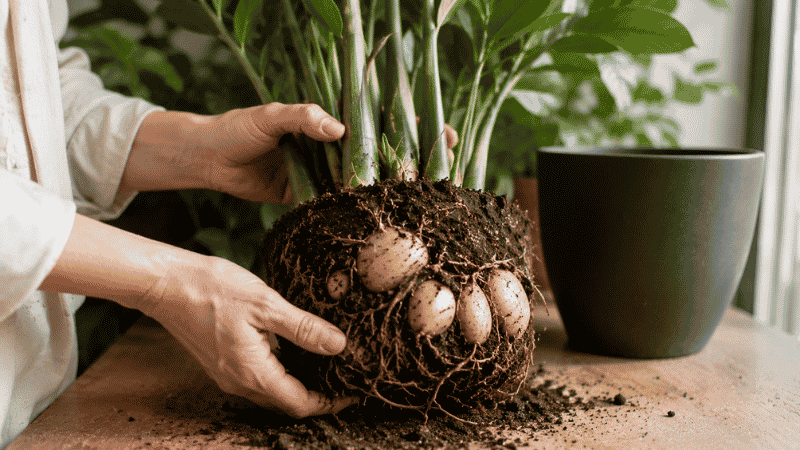
- ZZ plants store water in large underground rhizomes — potato-like structures beneath the soil — allowing them to survive 2–4 weeks or more without watering
- Overwatering is the only reliable way to kill a ZZ plant. Water only when the soil is completely dry all the way through
- ZZ plants tolerate low light better than almost any other tropical houseplant, but grow faster and look better in medium indirect light
- ZZ plants are toxic to humans and pets if ingested — keep out of reach of cats, dogs, and children; wear gloves when pruning or propagating
- With minimal care, ZZ plants can live for decades — they are one of the longest-lived houseplants available to beginners
Why ZZ Plants Are So Incredibly Resilient
Understanding why a ZZ plant is so tough changes how you approach its care. This isn’t a plant that’s vaguely tolerant of neglect — it’s a plant that has been specifically engineered by evolution for exactly this situation.
ZZ plants are native to the seasonally dry forests of eastern Africa, particularly Kenya and South Africa, where rainfall is sporadic and unpredictable. In their natural habitat, periods of drought can last weeks or months. To survive this, ZZ plants evolved a remarkable adaptation: large, fleshy underground rhizomes — thick, potato-like storage organs beneath the soil — that hold significant reserves of water and nutrients. When drought hits, the plant draws on these reserves rather than immediately suffering.
This is why a ZZ plant can sit in your apartment for three weeks with no water and look completely fine. It’s not getting lucky — it’s using stored resources. The waxy coating on its leaves further reduces water loss through evaporation. The plant is, as one botanist put it, essentially engineered for inconsistency.
In your home, the practical implication is this: the ZZ plant needs almost nothing from you. Your job is mostly to not give it too much.
ZZ Plant Care: Light Requirements
ZZ plants are among the most low-light tolerant plants you can own. They survive in conditions that would kill or severely stress most other houseplants. But — and this matters — “survive” and “thrive” are different things.
In very low light (north-facing rooms, dim corners far from windows): ZZ plants survive. They may go months without producing new leaves, existing in a quiet holding pattern. The leaves they have will remain glossy and healthy-looking, but growth essentially stops. If you’re placing a ZZ in a genuinely dark spot, expect it to be a static, decorative presence rather than a growing plant.
In medium indirect light (east-facing windows, a few feet from a south or west window): this is where ZZ plants genuinely thrive. Growth is visible and consistent — new stems emerge from the soil regularly, unfurling from bright lime-green to deep glossy green as they mature. This is the sweet spot.
In bright indirect light: excellent — ZZ plants respond well to more light as long as it doesn’t become harsh direct sun.
In direct harsh sunlight: avoid. The waxy leaves, despite their tough appearance, scorch in direct afternoon sun, producing bleached or yellowed patches.
One practical note: if your ZZ plant has been sitting in the same spot for many months without producing a single new stem, try moving it somewhere brighter. Light is the most common limiting factor for ZZ plant growth.
How to Water a ZZ Plant (Less Than You Think)
This is the single most important aspect of ZZ plant care — and the place where most people go wrong.
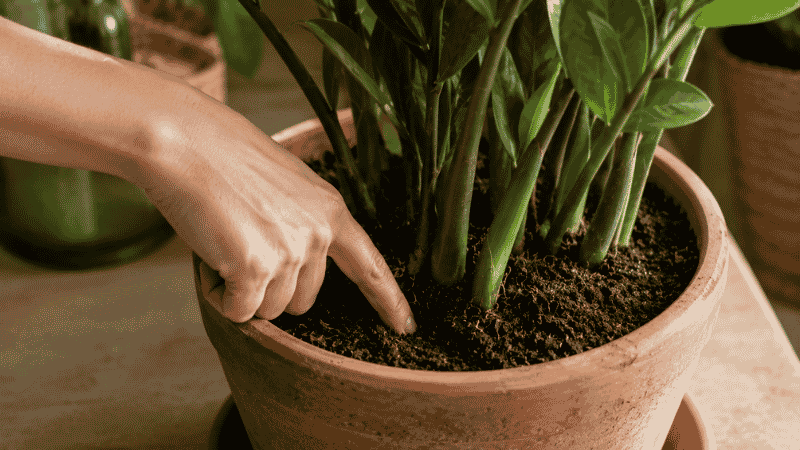
The rule: water only when the soil is completely dry, all the way through. Not just dry on top — dry throughout the pot. Press your finger as deep as it will go into the soil. If it’s still moist anywhere, wait.
Frequency: every 2–4 weeks in spring and summer; every 4–6 weeks in autumn; once a month or less in winter. In practice, you may find yourself watering even less than this. The ZZ plant will tell you clearly if it needs water — and it rarely does.
When you water, do it thoroughly — water until it flows from the drainage holes — then let the soil dry completely before watering again. This deep-and-dry cycle is exactly what the rhizomes are adapted for.
Why this matters so much: the rhizomes that store water can rot when surrounded by consistently wet soil. Unlike root rot in other plants, which progresses slowly, ZZ rhizome rot can advance significantly before you see any visible sign above soil. By the time leaves start yellowing, the damage underground is often already substantial. The plant can be killed with kindness — regular “just in case” watering is the most reliable way to end a ZZ plant’s life.
Signs the soil is right: dry to the touch throughout the pot; the pot feels noticeably lighter than after watering (a useful check for pots you can lift).
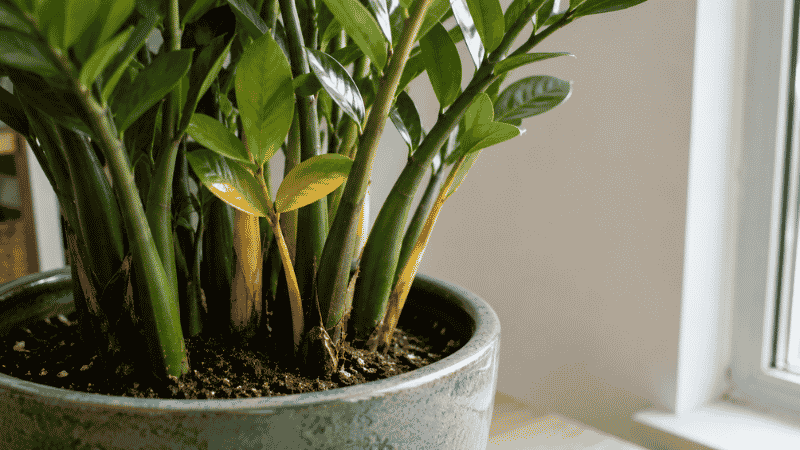
Signs of overwatering: yellowing leaves (the most common symptom); stems that look healthy above but feel soft or mushy at the base; a slight musty smell from the soil.
Signs of underwatering (rare but possible): wrinkled, slightly shriveled leaf texture; leaves that look dull rather than glossy; stems that lean or droop. Water deeply immediately.
Soil and Pots
ZZ plants need well-draining soil above everything else. Standard all-purpose potting mix is workable, but adding perlite (about 30% of the total mix) significantly improves drainage and reduces the risk of rhizome rot. Alternatively, a cactus and succulent mix — designed for plants that need to dry out thoroughly — works very well for ZZ plants.
Never use garden soil in a pot. It compacts with watering, blocks drainage, and creates exactly the consistently wet conditions that will rot ZZ rhizomes.
Pot requirements: drainage holes are absolutely essential. A ZZ plant in a pot without drainage is on a slow countdown to rhizome rot regardless of how carefully you water.
Pot material: terracotta (unglazed ceramic) is particularly good for ZZ plants because it’s porous — moisture evaporates through the walls, helping the soil dry out faster. This natural drainage assist suits a plant that genuinely prefers its soil dry.
On repotting: ZZ plants are slow growers and genuinely don’t need frequent repotting. Plan to repot every 2–3 years, or when rhizomes are visibly pressing against the pot sides or growing out of drainage holes. When you do repot, go up one size only — too large a pot holds excess soil that stays wet, defeating the purpose.
Temperature and Humidity
ZZ plants prefer temperatures between 65–80°F (18–27°C) — essentially standard room temperature — which makes them naturally suited to most homes. They dislike cold: avoid placing them near drafty windows in winter or directly in the path of air conditioning vents in summer. Below 50°F (10°C), growth stops entirely; sustained cold can damage the plant.
Humidity is largely irrelevant to ZZ plant care. Unlike tropical plants that need misting or humidifiers, ZZ plants manage perfectly well in average household humidity. Their thick, waxy leaves retain moisture efficiently regardless of ambient conditions. You can safely ignore humidity as a care variable for this plant.
Fertilizing: Less Is More
ZZ plants evolved in nutrient-poor sandy soils in eastern Africa. They’re genuinely adapted to low-nutrition conditions and don’t need heavy feeding.
A balanced liquid fertilizer, diluted to half the recommended strength, applied once or twice during spring and summer is more than adequate. Stop feeding entirely in autumn and don’t feed through winter — the plant’s growth slows significantly during this period and fertilizer it can’t use accumulates as mineral salts in the soil.
Over-fertilizing is more likely to cause problems (salt buildup, leaf tip damage) than underfeeding. When in doubt, feed less.
Common ZZ Plant Problems
ZZ Plant Leaves Turning Yellow
Yellow leaves are almost always caused by overwatering. When rhizomes sit in consistently wet soil, they begin to rot and can no longer supply water and nutrients to the stems. The plant responds by yellowing — starting with the lower stems and progressing upward.
Fix: stop watering immediately. Let the soil dry out completely over the next several weeks. If yellowing is rapid or widespread, slide the plant out of its pot and inspect the rhizomes. Healthy rhizomes are firm and pale. Rotted rhizomes are brown, mushy, and may smell slightly unpleasant. Trim away any rotted sections with clean scissors, let the remaining rhizomes air-dry for an hour, and repot in fresh dry well-draining soil. Do not water for at least two weeks after repotting.
Natural aging of the very oldest stems (the oldest leaves occasionally yellow and drop at the base) is normal and not a cause for concern.
ZZ Plant Leaves Dropping
Leaf drop — where stems or individual leaflets fall off — is usually caused by overwatering or a sudden environmental change (being moved to a very different light level, temperature shock from a cold draft). Check soil moisture first. If the soil is wet, reduce watering and improve drainage. If the plant was recently moved, give it 4–6 weeks to adjust to its new position.
Leggy, Stretched Growth
Long, thin stems reaching dramatically toward a light source indicate the plant needs more light. Move it closer to a window. Leggy growth won’t reverse on existing stems, but new growth in better light will be compact and well-structured.
No New Growth
If your ZZ plant hasn’t produced new stems in many months, it’s most likely in too little light. Try moving it to a brighter location. Also check that you’re in the correct growing season — ZZ plants grow primarily in spring and summer and may produce very little in autumn and winter regardless of care.
How to Propagate a ZZ Plant
ZZ plants can be propagated in several ways, all of which are slow but reliably effective.
Method 1 — Division (fastest, easiest): When repotting in spring, you’ll find the pot contains multiple rhizome clusters. Gently separate these by hand, ensuring each division has at least one healthy stem and a portion of the root system. Pot each division separately in fresh well-draining soil. Water sparingly for the first few weeks while roots establish.
Method 2 — Stem cuttings: Cut a healthy stem at the base, let the cut end air-dry for a few hours (this reduces rot risk), then plant the base in moistened potting mix. Keep the soil barely moist — not wet — and patient. New growth may take several months to appear. This method works but is slower than division.
Method 3 — Leaf cuttings (very slow): Individual leaflets can be removed and planted in soil or placed in water. They will eventually produce a small rhizome and new growth — but this process can take 6–12 months. It’s a fun experiment but not the most practical propagation method.
Important: wear gloves when propagating ZZ plants. The sap contains calcium oxalate crystals that can irritate skin in sensitive individuals. Wash hands thoroughly after handling.
⚠️ ZZ Plant Toxicity: What You Need to Know
ZZ plants contain calcium oxalate crystals throughout their leaves, stems, and rhizomes. If ingested, these cause immediate oral irritation — burning sensation in the mouth, excessive drooling, vomiting, and difficulty swallowing — in both humans and animals.
The toxicity is considered moderate rather than severe, but it causes significant discomfort and requires prompt attention if ingested. The ASPCA confirms ZZ plants are toxic to both cats and dogs. Keep ZZ plants out of reach of pets that chew on plants and away from young children.
The sap can also cause skin irritation in sensitive individuals when handling. Wear gloves when pruning, repotting, or propagating, and wash hands immediately afterward.
If your pet ingests part of a ZZ plant, contact your veterinarian or the ASPCA Animal Poison Control Center (888-426-4435) promptly.
If You Only Have 5 Minutes Right Now
Check whether the soil is completely dry. If it is, water thoroughly. If it’s still moist — even slightly — put the watering can down and walk away.
That five-minute check is the entire ZZ plant care routine for most weeks. This plant is designed to reward the people who leave it alone.
FAQ
How often should I water a ZZ plant? Only when the soil is completely dry throughout the pot — typically every 2–4 weeks in spring and summer, every 4–6 weeks in autumn, and once a month or less in winter. The ZZ plant’s rhizomes store water and can sustain the plant through extended dry periods. When in doubt, wait longer.
Can ZZ plants grow in low light? Yes — ZZ plants survive in low light better than almost any other tropical houseplant. They will stay healthy in dim conditions but grow very slowly. For visible growth and the healthiest leaves, medium indirect light (near an east-facing window or a few feet from a south or west window) is ideal.
Why are my ZZ plant leaves turning yellow? Almost always overwatering. The rhizomes are rotting from consistently wet soil, and the plant can no longer deliver nutrients to the leaves. Stop watering immediately, let the soil dry completely, and if yellowing is widespread, check the rhizomes for rot. Trim mushy sections and repot in fresh dry soil.
Are ZZ plants safe for cats and dogs? No — ZZ plants are toxic to cats and dogs if ingested. They contain calcium oxalate crystals that cause oral irritation, drooling, vomiting, and difficulty swallowing. Keep them out of reach of pets that chew on plants. Contact your vet if ingestion occurs. For pet-safe alternatives, spider plants and areca palms are excellent low-maintenance options.
How long can a ZZ plant go without water? With fully dry soil as the starting point, a healthy ZZ plant can typically go 3–6 weeks or longer without water, depending on pot size, light level, and season. In winter with reduced light and cooler temperatures, they may need water only once a month or less.
How do I make my ZZ plant grow faster? Move it to a brighter spot (medium indirect light rather than dim shade), ensure it’s in the active growing season (spring through summer), and give it a diluted balanced fertilizer once a month during this period. ZZ plants are inherently slow growers — patience is genuinely part of the experience.
Do ZZ plants need humidity? No — ZZ plants are largely indifferent to humidity levels. Unlike tropical plants that need misting or humidifiers, ZZ plants manage perfectly well in typical household humidity. You can safely ignore this variable in their care.
The Quiet Ones
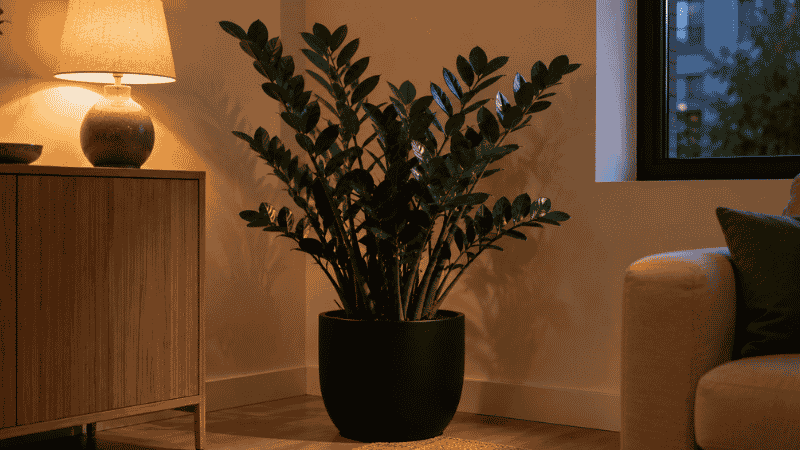
There’s a particular kind of satisfaction in owning a plant that asks very little and gives a lot back. The ZZ plant is glossy and architectural and quietly beautiful in a corner. It doesn’t demand attention. It doesn’t droop when you forget it. It simply exists — growing slowly, steadily, reliably — for years and potentially decades.
A 2022 scoping review published in Environmental Research found that even low-maintenance plants like the ZZ, when placed in living and work spaces, are consistently associated with reduced stress and improved emotional wellbeing — the benefit doesn’t require high-maintenance care to be real.
The ZZ plant is a reminder that sometimes the best thing you can do for something you care about is to leave it alone and trust it to do what it’s designed to do.
Keep Growing
- 🌿 [Low Maintenance Indoor Plants: 12 Hard-to-Kill Picks] — more plants that thrive on minimal attention
- 🌑 [Snake Plant Care: The Complete Beginner’s Guide] — another architectural plant that loves neglect
- 💛 [Plant Leaves Turning Yellow? 7 Real Causes and Fixes] — the full diagnostic guide for any struggling plant
- 🔄 [How to Repot a Plant: Step-by-Step for Beginners] — when your ZZ plant outgrows its pot
References: Largo-Wight, E., et al. (2022). When green enters a room: A scoping review of epidemiological studies on indoor plants and mental health. Environmental Research, 214. ASPCA Animal Poison Control Center. Toxic and Non-Toxic Plant List — ZZ Plant (Zamioculcas zamiifolia). Gardener’s Supply Company (2024). How to Care for a ZZ Plant. Old Farmer’s Almanac (2025). ZZ Plant Care Guide: How to Grow, Water & Propagate. University of Florida IFAS Extension (2023). Zamioculcas zamiifolia — ZZ Plant Care and Culture.