
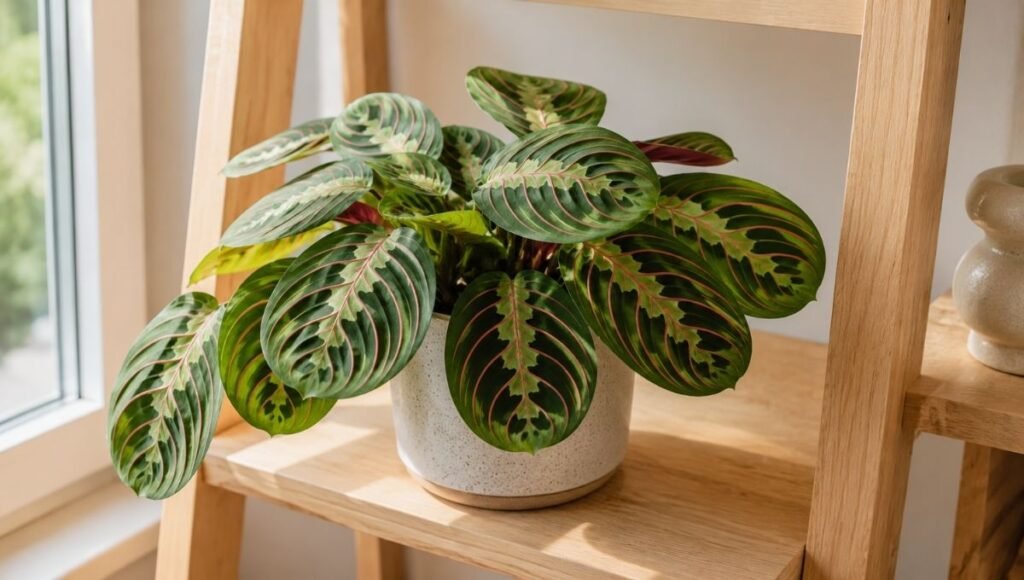
Someone on Reddit posted a photo of their first prayer plant with the caption: “My first prayer plant and I’m scared. Any and all advice welcome.”
That post got hundreds of replies. Not because the plant was sick — it looked perfectly healthy in the photo. But because apparently almost everyone who buys their first prayer plant feels some version of that. The anxiety of “I don’t want to kill this beautiful thing and I’ve heard they’re fussy.” The specific worry of “the leaves are moving — is that normal?” The quiet spiral of checking the soil seventeen times in one week just in case.
Here’s what the Reddit thread eventually concluded, and what I want to say upfront: prayer plant care is not as hard as its reputation suggests. It’s specific — there are a few things this plant cares about deeply — but it’s not mysterious or punishing. The people who struggle with prayer plants almost always have the same two problems: tap water and dry air. Fix those two things, and the rest is genuinely manageable.
This is the guide for everyone who is slightly scared of their prayer plant and doesn’t want to spend the next six months in low-grade anxiety about it.
Key Takeaways
- Prayer plants (Maranta leuconeura) fold their leaves upward at night and open them in the morning — this is called nyctinasty and is a sign the plant is healthy, not stressed
- Tap water is the silent sabotage — fluoride and chlorine accumulate in the soil and cause the brown tips that frustrate most prayer plant owners; switching to filtered water or leaving tap water overnight makes a measurable difference
- Humidity above 50% is the single most impactful care change you can make — more than watering schedule, more than fertilizer, more than pot choice
- Prayer plants are completely non-toxic to cats and dogs — one of the safest lush tropical plants for pet households
- A prayer plant that folds its leaves every evening and opens them every morning is doing exactly what it should — it’s healthy and responsive
First: About That Leaf Movement
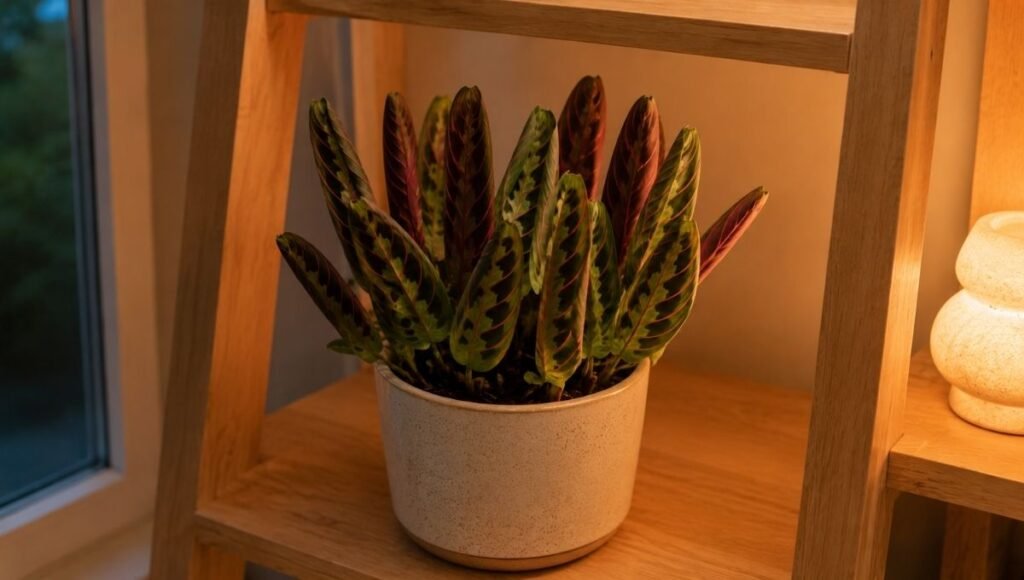
Before anything else, because this is genuinely the thing that makes first-time prayer plant owners anxious: the leaves moving is not a problem. It’s the point.
Prayer plants (Maranta leuconeura) practice nyctinasty — a scientifically documented response to light changes where leaves fold upward in low light and open flat in bright light. The folded-up position in the evening looks like hands pressed together in prayer, which is where the name comes from. In the morning, the leaves open back out, flat and fully extended.
A prayer plant that moves reliably is a prayer plant that is paying attention to its environment and functioning correctly. When prayer plants stop moving — when the leaves stay flat or stay folded without responding to light changes — that’s when something is actually wrong. The movement is the sign of health, not distress.
You might also notice that the leaves change their angle depending on where the light is coming from. This too is normal. The plant is orienting itself toward available light. If you want even growth on all sides, rotate the pot a quarter turn every couple of weeks.
Prayer Plant Care: Light Requirements
Prayer plants evolved on the floor of South American rainforests — growing in the dappled, filtered light that makes it through a dense forest canopy. This tells you exactly what kind of light they want indoors: bright, but indirect. Never direct sun.
Direct sunlight scorches and fades the distinctive leaf patterns — the very markings that make prayer plants so visually striking. If the colors on your prayer plant’s leaves look washed out, or if there are bleached or papery patches on the leaves, it’s getting too much direct sun.
What works: north or east-facing windows are often ideal — they provide consistent bright indirect light without the intensity of afternoon sun. A few feet back from a south or west-facing window with a sheer curtain filtering the light also works well.
What doesn’t work: a dim corner more than 6 feet from any window. Prayer plants tolerate lower light better than, say, succulents — but in genuinely dark conditions, the leaf patterns fade toward a flatter green and growth slows dramatically. If your space is dark, a small grow light running 12 hours a day is genuinely more useful than struggling with the wrong natural light.
One thing worth knowing: prayer plants are sensitive to light consistency. Sudden dramatic changes — moving from a bright spot to a dim one, or bringing a new plant home from a greenhouse into a much darker apartment — can cause leaf curl and browning even when the care is otherwise correct. Give the plant 2–3 weeks to adjust to a new position before evaluating whether it’s happy there.
The Tap Water Problem Nobody Warns You About
This is the section I wish every prayer plant guide led with, because it explains the brown tips that frustrate virtually every prayer plant owner and get attributed to everything except the actual cause.
Prayer plants are sensitive to fluoride and chlorine — the chemicals added to most municipal tap water as part of the treatment process. These chemicals don’t immediately harm the plant. They accumulate in the soil over time, and eventually they cause the characteristic brown tips and edges that appear on otherwise healthy leaves. The plant looks fine. The watering schedule seems right. The humidity seems okay. And still — brown tips.
Since switching from straight tap water, one prayer plant community documented that their brown tip problem dropped by roughly 80%.
The practical fix is simple:
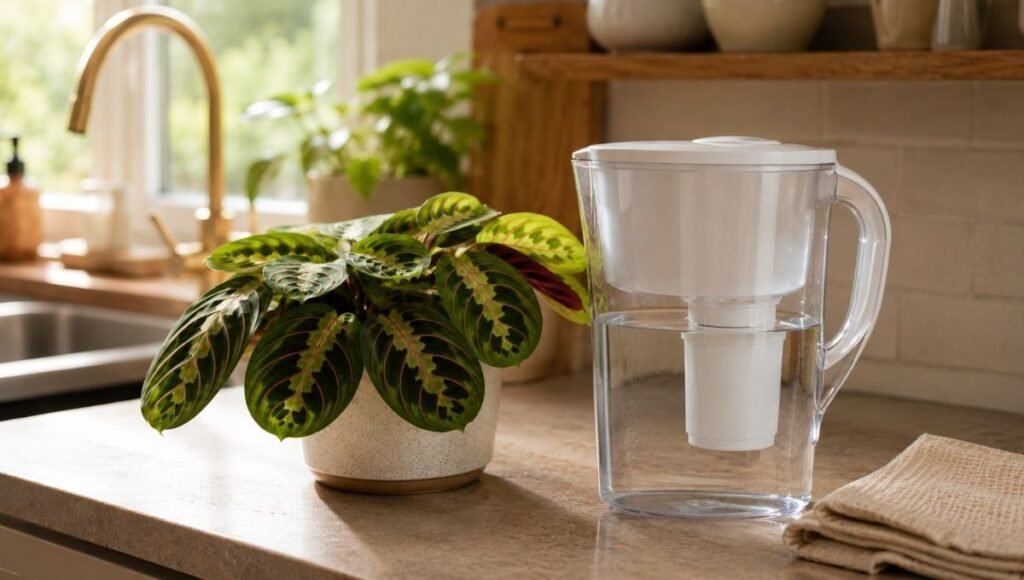
Option 1: Use filtered water. A basic pitcher filter (Brita or equivalent) removes chlorine and reduces fluoride sufficiently. Fill it, filter it, water your plant.
Option 2: Leave tap water in an open container overnight. Chlorine is a gas — it dissipates into the air when exposed. This doesn’t fully remove fluoride, but it helps significantly with the chlorine component.
Option 3: Collect rainwater. Prayer plants from Brazilian rainforests evolved drinking rainwater — naturally soft, no added chemicals, room temperature. If you have outdoor space or a window where rain collects, this is genuinely the premium option.
What about existing brown tips? Trim them with clean scissors, cutting at a slight angle to mimic the leaf’s natural shape. Cut into the brown but stop just before the green tissue — cutting into healthy tissue creates a new edge that will also brown. The trimmed leaf will look neater, and once you address the water quality, new growth will come in without the same issue.
Humidity: The Single Most Impactful Change You Can Make
Every prayer plant guide mentions humidity. Most treat it as one bullet point among many. It deserves significantly more attention than that.
High humidity is not just a preference for Marantas; it’s a requirement. Aim for at least 60% relative humidity. Most homes run at 30–50% under normal conditions. In winter with heating, it drops further. That gap — between what your home provides and what the prayer plant wants — is the primary cause of curling leaves, brown edges, and a plant that looks tired rather than lush.
The symptoms of insufficient humidity are specific: leaves that curl inward along their length; brown, crispy tips and edges on otherwise healthy fronds; a plant that looked vibrant in the shop and progressively less so in your home.
What actually works:
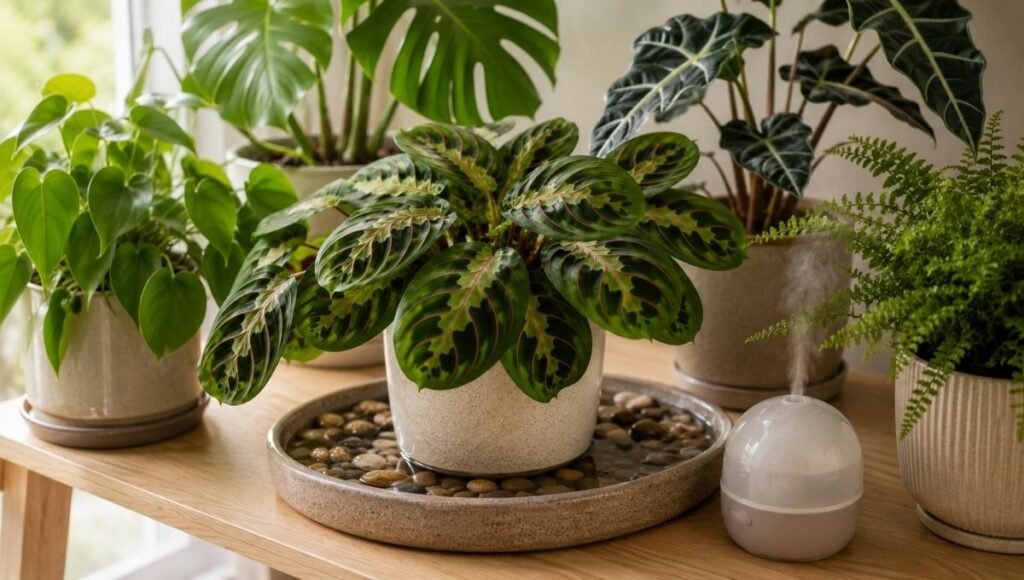
Humidifier: the most effective solution by a significant margin. A small ultrasonic humidifier running nearby raises ambient humidity consistently — not for twenty minutes until the mist dissipates, but continuously. If you have multiple tropical plants, this investment improves every single one of them simultaneously. It’s the one change that makes the most difference.
Pebble tray: fill a shallow tray with pebbles, add water to just below the top of the pebbles, place the prayer plant pot on top. The pot doesn’t sit in the water — just above it. As the water evaporates upward, it raises the local humidity around the plant. Effective and completely passive once set up.
Grouping plants: plants release moisture through their leaves (transpiration). A cluster of tropical plants creates a shared microclimate of elevated humidity. If you have other tropical houseplants, put them together.
Bathroom placement: steam from showers naturally raises bathroom humidity to prayer-plant-preferred levels. A bathroom with a window — even north-facing — is genuinely one of the best placements in many homes. This is not a cliché recommendation — it’s where several experienced plant owners keep their most humidity-sensitive plants.
What doesn’t work (despite being constantly suggested): misting. Misting the leaves provides humidity for approximately 20–30 minutes before the moisture evaporates. It also risks fungal problems if water sits on leaves in low-circulation conditions. One guide specifically recommends avoiding misters as these can cause fungal issues to the delicate leaves. Do it if you find it calming, but don’t rely on it as your primary humidity strategy.
How to Water a Prayer Plant
Prayer plants want consistently moist soil — not dry between waterings, not soggy, but reliably damp. The goal is that damp-sponge texture: moist throughout, no waterlogging.
The watering rule: check the top inch of soil. If it’s moist, wait. If it’s just beginning to dry out, water now — before it dries completely. Prayer plants don’t benefit from the “let it dry fully between waterings” approach that succulents need. Allowing the soil to dry completely causes the leaf curl and brown edges that look like humidity problems but are actually water stress.
Frequency: every 7–10 days in spring and summer; every 10–14 days in autumn and winter when growth slows. But check the soil rather than following a calendar — actual frequency depends on your pot size, light level, and home temperature.
Water temperature matters: use room temperature water, not cold water straight from the tap. Cold water shocks the roots of tropical plants that evolved in consistently warm conditions.
Signs of overwatering: yellowing leaves, particularly lower leaves yellowing and dropping; mushy or dark stems near the soil; soil that smells slightly off; roots that look brown and mushy if you check.
Signs of underwatering: leaves curling inward; dry, crispy edges and tips; soil that has pulled away from the pot sides; the plant drooping despite a recent watering (if the soil is wet and the plant droops, this suggests root rot from overwatering rather than underwatering — check roots).
Soil and Pots
Prayer plants have shallow, fine root systems that don’t need deep pots — and in fact do better in pots that are wider than they are deep. This allows the roots to spread horizontally and ensures soil dries at a more even rate throughout the pot.
Soil: a well-draining potting mix with some moisture retention. Standard all-purpose potting mix with 15–20% added perlite works well. The soil should hold moisture evenly without becoming waterlogged. Avoid anything very dense or compacted — soggy soil causes the root rot that is prayer plants’ most serious enemy.
Pot choice: terracotta breathes well but dries faster — more frequent watering checks needed. Plastic or glazed ceramic retains moisture better — longer intervals between waterings. Either works; choose based on your watering habits. Drainage holes are non-negotiable regardless of material.
Repotting: every 1–2 years, or when roots are growing from drainage holes. Spring is best. Go up one size only. Prayer plants prefer to be somewhat snug — a pot that’s too large holds excess wet soil that roots can’t absorb, increasing root rot risk.
Temperature: Warm and Stable
Prayer plants prefer 65–80°F (18–27°C) — standard room temperature. They dislike cold and, more specifically, they dislike fluctuation.
Keep prayer plants away from:
- Cold drafts from exterior doors or drafty windows in winter
- Direct airflow from air conditioning or heating vents
- Windowsills where cold glass can touch leaves in winter
Below 60°F (15°C), growth slows and the plant becomes more susceptible to root problems. Sustained cold causes leaf drop and browning that is slow to reverse.
Feeding Your Prayer Plant
A balanced liquid fertilizer, diluted to half strength, applied every 4–6 weeks during spring and summer is all this plant needs. Stop feeding in autumn and do not feed through winter — the plant’s growth slows significantly and unused fertilizer accumulates in the soil as mineral salts, contributing directly to the brown tips you’re trying to avoid.
Signs of over-fertilizing: white crusty deposits on the soil surface or pot rim; brown leaf tips appearing suddenly after feeding; roots that look salt-damaged. If this happens, flush the soil thoroughly by watering heavily several times to wash out accumulated salts.
Propagating a Prayer Plant (Free New Plants)
Prayer plants propagate easily by division — the most reliable and fastest method. When you repot in spring, gently separate the root ball into sections, ensuring each section has leaves and roots. Pot each section separately in fresh potting mix, keep humidity high, and water consistently. New growth typically appears within 3–4 weeks.
Stem cutting propagation also works: cut a healthy stem just below a leaf node, place in water in bright indirect light, and roots develop in 3–5 weeks. Once roots are 1–2 inches long, pot up in moist potting mix.
Common Prayer Plant Problems: Real Answers
“My prayer plant has brown tips — I’ve tried everything.”
The most common cause that gets overlooked: tap water. Before adjusting humidity, watering, or light, switch to filtered water for a month and see what happens. Switching from straight tap water dropped brown tip occurrence by roughly 80% for documented prayer plant growers. Existing tips won’t reverse — trim them and watch whether new growth comes in clean.
“The leaves are curling but the soil is moist.”
Usually humidity, not water. Curling leaves with adequate soil moisture almost always points to insufficient humidity. Check what your ambient humidity is — a basic hygrometer costs a few dollars and tells you exactly what you’re dealing with. If it’s below 50%, that’s your answer.
“The leaves aren’t moving anymore.”
Check light first — a plant in insufficient light stops responding to light changes as dramatically. Also check whether the plant is stressed from overwatering, root rot, or significant temperature change. A prayer plant that moves reliably is a healthy prayer plant. One that’s stopped moving is telling you something in its environment has shifted.
“Yellow leaves.”
Almost always overwatering or root rot. Check the soil — if it’s consistently wet, reduce watering frequency and ensure drainage is working. If yellowing is rapid and widespread, unpot and check the roots. Healthy roots are white and firm. Rotted roots are brown and mushy — trim them, air-dry for an hour, and repot in fresh dry soil.
If You Only Have 5 Minutes Right Now
Fill your watering can and let it sit out overnight so the chlorine dissipates before you water next. That one change — used consistently over the next few weeks — will likely reduce the brown tips more than anything else you could adjust.
⚠️ Pet Safety Note
Prayer plants are completely non-toxic to cats and dogs — confirmed by the ASPCA. This makes them one of the best choices for pet households wanting a lush, dramatic tropical plant. The leaves are safe if chewed, though as with any houseplant, keeping them out of reach of pets who habitually chew plants is sensible to protect the plant itself.
FAQ
Why are my prayer plant leaves curling? Most commonly: insufficient humidity. Prayer plants need 50–60%+ relative humidity and most homes provide less, especially in winter. Increase humidity using a humidifier, pebble tray, or bathroom placement. Less commonly: underwatering — check soil moisture and water before it dries completely.
Why does my prayer plant have brown tips? Almost always tap water chemicals (fluoride and chlorine) combined with low humidity. Switch to filtered water or leave tap water overnight before using. Increase humidity. Existing brown tips won’t reverse — trim them and monitor new growth with the change in water quality.
Is the leaf movement normal? Yes — completely normal and actually a sign of health. Prayer plants fold their leaves upward at night (nyctinasty) and open them in the morning in response to light. A plant that moves reliably is a happy plant. A plant that stops moving is showing stress.
Are prayer plants safe for cats and dogs? Yes — prayer plants are confirmed non-toxic to cats and dogs by the ASPCA. One of the best pet-safe tropical plants available.
How often should I water a prayer plant? When the top inch of soil is just beginning to dry — typically every 7–10 days in spring and summer, every 10–14 days in autumn and winter. Prayer plants prefer consistently moist soil; don’t let them dry out fully between waterings.
Why is my prayer plant not moving? Check light first — insufficient light reduces the plant’s nyctinastic response. Also check for stress from overwatering, root rot, or temperature extremes. A prayer plant that has stopped moving is showing environmental stress.
The Thing About Being Scared
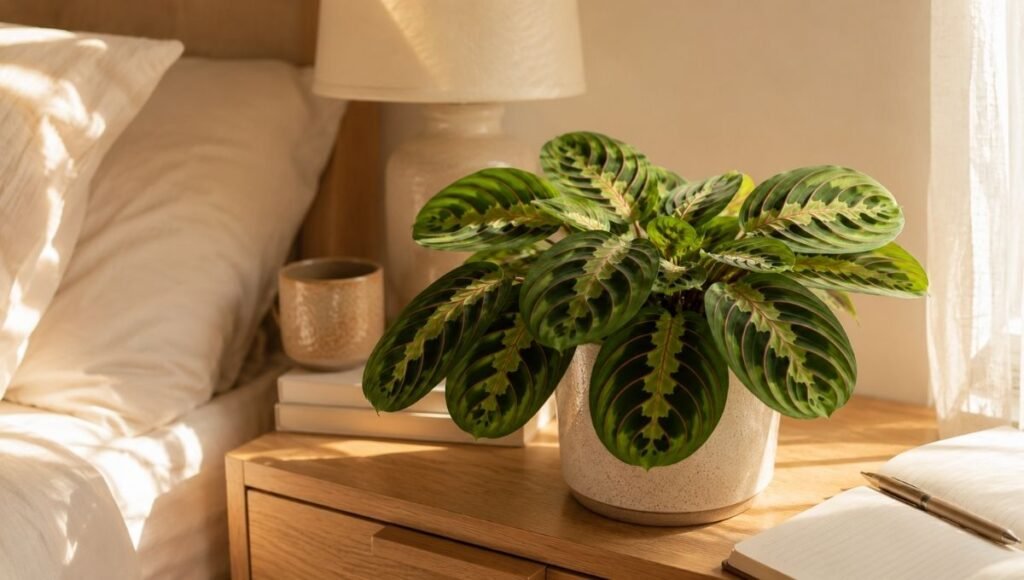
That Reddit post — “my first prayer plant and I’m scared” — got hundreds of sympathetic responses because the anxiety is real and it’s shared. You’ve bought something beautiful and delicate-looking and you don’t want to be the person who kills it through ignorance or inattention.
Here’s what experienced prayer plant owners consistently say: the anxiety gets replaced by curiosity once you know what to watch for. The brown tips become information rather than failure. The leaf movement becomes a daily check-in rather than a mystery. The plant communicates — more openly than most houseplants — and once you know its language, the relationship becomes genuinely rewarding.
A 2022 review in Environmental Research found that indoor plants in living spaces consistently reduce stress and improve mood — not just from aesthetics, but from the act of paying attention to something living. Your prayer plant, with its nightly folding and morning opening, gives you a particularly visible version of that daily ritual.
You’re going to be fine. So is the plant.
Keep Growing
- 🌿 [Calathea Care: Complete Guide] — the prayer plant’s close relative, with similar needs
- 💧 [Indoor Plant Care: The Complete Beginner’s Guide] — the principles behind every plant you’ll ever own
- 🌑 [Plant Leaves Turning Yellow? 7 Real Causes and Fixes] — diagnose any struggling plant
- 🌱 [Low Maintenance Indoor Plants: 12 Hard-to-Kill Picks] — for when you want something more forgiving
References: ASPCA Animal Poison Control Center. Toxic and Non-Toxic Plant List — Prayer Plant (Maranta leuconeura). Largo-Wight, E., et al. (2022). When green enters a room: A scoping review of epidemiological studies on indoor plants and mental health. Environmental Research, 214. The Sill Plant Care Team (2024). How to Care for Maranta — Prayer Plant. Almanac.com (2025). Prayer Plant Care Guide: Tips for Thriving Maranta leuconeura. Royal Horticultural Society (2024). How to Grow Maranta (Prayer Plant).