
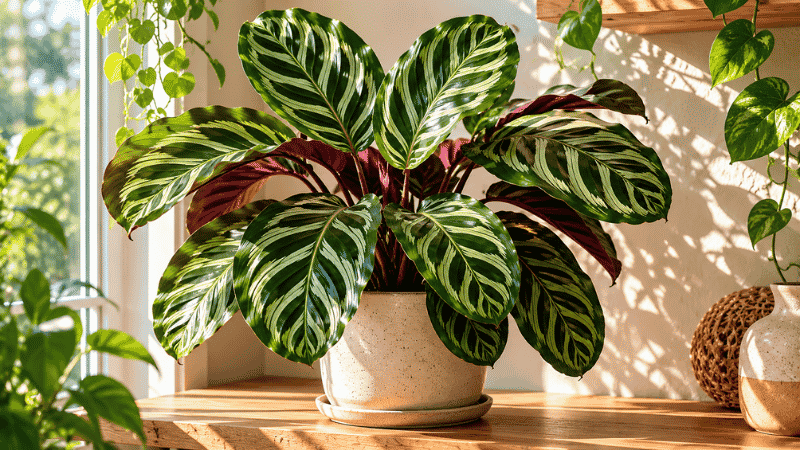
You bought it for the leaves. Not just the color — though the color is extraordinary — but the whole effect of it: those sweeping patterns in cream and green and deep burgundy, like something an artist painted rather than something a plant grew. You found it a spot, watered it, and felt genuinely pleased with yourself.
Then the edges started going brown. Then the leaves began curling inward, like the plant was trying to fold in on itself. Then you noticed the leaves actually moving — opening and closing with the light — and you weren’t sure if that was a good sign or a very bad one.
Here’s the reassuring truth: calathea care is more manageable than its drama suggests. Most of the things calatheas do that alarm beginners — the curling, the moving, the brown edges — are either normal behavior or simple signals that one specific need isn’t being met. Learn to read what the plant is telling you, and the whole relationship becomes surprisingly peaceful.
This guide covers everything: why the leaves move, what the curling means, how to fix the brown edges, and the specific care adjustments that make calatheas genuinely thrive.
Key Takeaways
- Calathea leaves move up and down in response to light — this is called nyctinasty and is completely normal; a calathea that moves is a healthy, responsive calathea
- Brown leaf edges are almost always caused by low humidity, tap water chemicals, or inconsistent watering — not by overwatering or disease
- Calatheas need high humidity (50–60%+) to thrive — this is the most commonly overlooked care requirement and the source of most calathea problems
- Calatheas are completely non-toxic to cats, dogs, and children — one of the safest popular houseplants available
- Bottom watering (setting the pot in a tray of water and letting it absorb from below) is more effective than top watering for calatheas — it ensures even moisture throughout the root ball
What Makes Calatheas So Special
Calatheas (Calathea spp., now largely reclassified under Goeppertia but still universally known by the original name) are native to the tropical rainforests of South and Central America. They grow on the forest floor, beneath the dense canopy of taller trees, in conditions of filtered light, consistently warm temperatures, and — critically — very high humidity.
This jungle-floor origin explains everything about calathea care. They never experience harsh direct sun. They live in air that’s almost perpetually humid. They grow in soil that’s rich, moist, and well-draining. Replicate those conditions as closely as your home allows, and a calathea is genuinely manageable.
The thing that makes calatheas truly distinctive — and that makes them so enduringly popular — is their leaves. The patterns are extraordinary: Calathea ornata (pinstripe calathea) has deep green leaves with cream or pink stripes so precise they look hand-drawn. Calathea medallion has concentric oval patterns in silver and deep green with a rich burgundy underside. Calathea rattlesnake has long, wavy leaves covered in dark spots. No two varieties look alike, and all of them bring something genuinely unusual to a room.
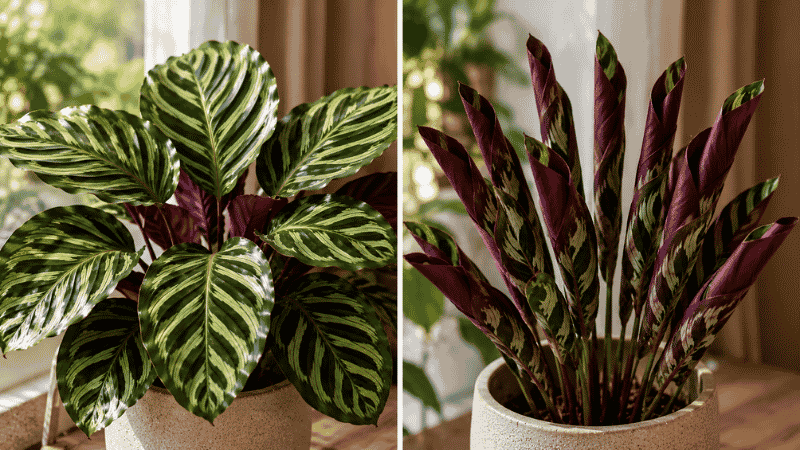
And then there’s the movement. Calathea leaves fold upward at night — resembling hands pressed together in prayer, which is why calatheas are commonly called prayer plants — and open flat again during the day. This behavior, called nyctinasty, is driven by a small joint at the base of each leaf that responds to light changes. A calathea that moves is not stressed or dying. It’s doing exactly what calatheas do, and it’s rather wonderful to watch.
Calathea Care: Light Requirements
Calatheas want bright indirect light — and that phrase matters. Not low light, not direct sun: the filtered, dappled light of a forest understory.
What works: east or north-facing windows, or south and west-facing windows where the plant is positioned away from the direct sun or filtered through a sheer curtain. The light should be bright enough to read by, but not direct enough to cast a sharp shadow on the leaves.
Too much direct sun: calathea leaves fade, bleach, and develop scorched patches. The distinctive patterns — which are their entire appeal — lose their contrast and color. If your calathea’s leaves look washed out or pale compared to when you bought it, too much direct sun is almost certainly the cause.
Too little light: growth slows to a near stop and new leaves come in smaller and with less vibrant patterning. The plant won’t die quickly in low light, but it won’t flourish. If you want the dramatic leaves to express their full beauty, adequate indirect light is necessary.
One practical tip: calatheas should never touch or be placed directly against a window. The glass intensifies temperature and light, both of which stress the plant. Keep a few inches of distance between the leaves and the glass.
How to Water a Calathea
Calatheas like their soil to stay consistently moist — not soggy, not dry. They occupy a middle ground that’s different from succulents (which want to dry out) and different from tropical plants that tolerate more variation. The goal is soil that feels like a damp sponge: moist throughout, but never waterlogged.
The rule: water when the top two inches of soil feel dry. In warm weather, this may mean every 5–7 days. In cooler months, every 10–14 days.
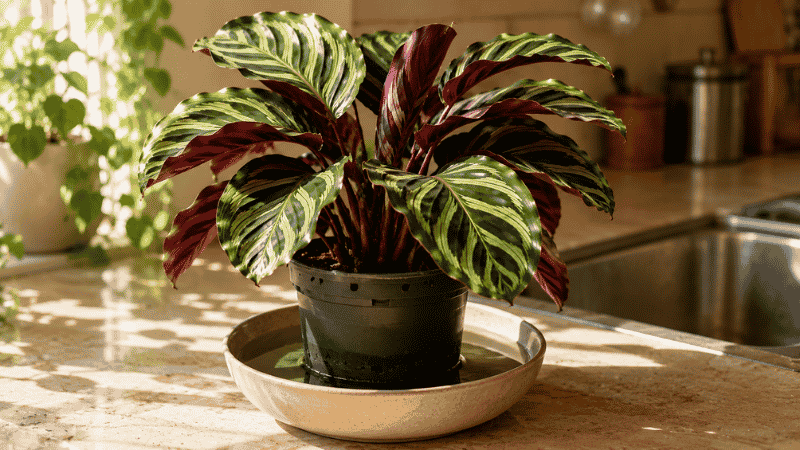
Bottom watering — the superior method: rather than pouring water onto the soil from above, place the calathea’s nursery pot (the one with drainage holes) into a bowl or sink filled with a few inches of water. Let it sit for 20–30 minutes, absorbing moisture from below. Then drain and return to its position. Bottom watering ensures even moisture throughout the root ball — something top watering often fails to achieve, as water can run down the sides of the pot without fully soaking the center.
When calatheas are consistently underwatered, the leaves curl inward along their length — the plant’s response to water stress. Bottom water the plant thoroughly and most curled leaves will unfurl within a day.
On water quality: this is one area where calatheas genuinely differ from most houseplants. They are sensitive to fluoride, chlorine, and mineral salts in tap water. These chemicals accumulate in the soil over time and cause the characteristic brown edges and tips that calathea owners find so frustrating. The fix is simple: use filtered water, collected rainwater, or let tap water sit in an open container overnight before using (which allows chlorine to dissipate, though it doesn’t remove fluoride).
Signs of overwatering: yellow leaves (particularly lower, older leaves), soggy soil, and a musty smell from the pot. Reduce watering frequency and ensure the pot drains freely.
Humidity: The Most Important and Most Overlooked Requirement
If there is one thing that separates calatheas that thrive from calatheas that slowly deteriorate, it’s humidity. Calatheas evolved in high-humidity rainforest conditions and genuinely need more moisture in the air than most homes provide — particularly in winter when heating systems significantly dry indoor air.
The target: 50–60% relative humidity or higher. Most homes run at 30–50% under normal conditions; in winter with heating, it can drop below 30%.
Signs of insufficient humidity:
- Brown, crispy leaf tips and edges — the most classic calathea complaint
- Leaves that curl inward despite adequate soil moisture
- Leaf patterns that look less vibrant than when the plant was purchased
How to increase humidity around your calathea:
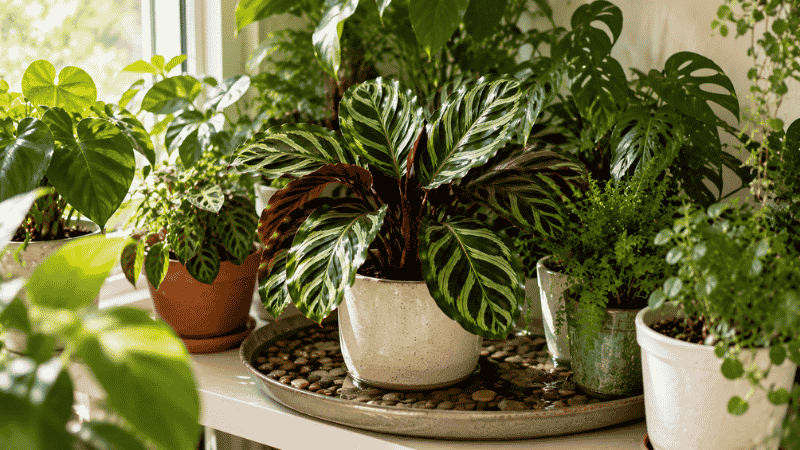
Pebble tray method: fill a shallow tray with pebbles, add water to just below the top of the pebbles (the pot should sit on top, not in the water), and let evaporation do the work. Effective and requires no electricity.
Grouping plants together: plants naturally release moisture through their leaves (transpiration). Grouping several plants together creates a microclimate of elevated humidity. A cluster of tropical plants on a shelf achieves better humidity than isolated specimens.
Humidifier: the most effective approach, particularly in winter. A small ultrasonic humidifier running nearby raises ambient humidity to calathea-preferred levels. Particularly worthwhile if you have several humidity-loving plants.
Regular misting: misting the leaves with filtered water every few days provides temporary humidity benefit. It’s useful but less effective than the other methods — the moisture evaporates quickly and doesn’t raise ambient humidity the way a pebble tray or humidifier does.
Where not to put your calathea: next to radiators or heating vents, near air conditioning units, or in very dry, sun-exposed rooms. All of these accelerate humidity loss.
Where to put your calathea: bathrooms with good indirect light are genuinely ideal — steam from showers naturally raises humidity to calathea-preferred levels. Kitchens are often more humid than living rooms. Any room where you group plants together benefits from elevated humidity.
Temperature: Warmth and Stability
Calatheas prefer temperatures between 65–80°F (18–27°C) — standard room temperature for most homes. What they dislike is fluctuation: sudden cold drafts from open windows, exposure to air conditioning vents in summer, or proximity to cold glass in winter.
Keep calatheas away from exterior doors, drafty windows, and any direct airflow from heating or cooling systems. Temperature fluctuation is one of the less-discussed causes of calathea stress — a plant that’s technically in the right temperature range but experiences frequent cold drafts will show the same brown edges and curling as a plant with humidity problems.
Below 60°F (15°C), calatheas begin to struggle. Sustained cold can cause leaf damage that won’t reverse.
Soil and Potting
Calatheas need well-draining but moisture-retentive soil — a balance that standard potting mix achieves reasonably well. The goal is soil that holds enough moisture to keep roots evenly moist between waterings, but drains freely so roots aren’t sitting in waterlogged conditions.
A standard all-purpose potting mix is fine. For slightly improved results, add perlite (about 20% of the total mix) to improve drainage while maintaining moisture retention.
Pot requirements: drainage holes are essential. Calatheas sitting in pots without drainage will develop root rot as soil becomes waterlogged with no escape route.
On repotting: calatheas grow slowly and don’t need frequent repotting. Plan for every 1–2 years, or when roots are visibly circling the pot bottom or growing from drainage holes. Spring is the best time. After repotting, expect the plant to take a few weeks to settle before resuming normal growth.
Feeding Your Calathea
Calatheas are moderate feeders — they benefit from regular nutrition during active growth but don’t need heavy feeding.
A balanced liquid fertilizer, diluted to half the recommended strength, applied every 3–4 weeks during spring and summer is sufficient. Stop feeding in autumn and don’t feed through winter — the plant’s growth slows significantly and accumulated fertilizer salts contribute to the brown edges that calathea owners find so frustrating.
If you notice brown tips appearing after fertilizing, reduce feeding frequency and flush the soil thoroughly with filtered water to wash out accumulated mineral salts.
Reading Your Calathea’s Leaves: A Diagnostic Guide
Calatheas are remarkably communicative plants. Once you learn to read the signals, troubleshooting becomes straightforward.
Leaves Curling Inward
The most common calathea complaint, and usually the simplest to fix. Curling leaves mean the plant needs water or humidity — or both.
Check the soil first. If it’s dry, water thoroughly (bottom watering is ideal). Most curled leaves unfurl within 24 hours of adequate watering.
If the soil is moist and leaves are still curling, the issue is humidity. Increase humidity using one of the methods above.
Brown Tips and Edges
The second most common issue, and one with multiple possible causes that look similar but require different solutions.
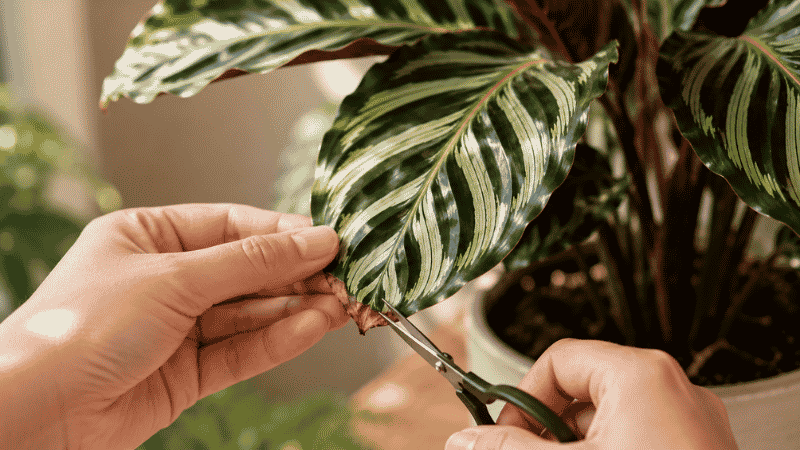
Crispy, dry brown tips from the very edge: almost always low humidity. Increase humidity and switch to filtered water. Existing brown tips won’t reverse — trim with clean scissors cut at an angle to maintain the leaf’s natural pointed shape.
Brown edges with a yellow halo between brown and green tissue: water quality issue. The yellow halo is a distinctive sign of fluoride or mineral salt accumulation. Switch to filtered water immediately and flush the soil thoroughly with filtered water to remove accumulated salts.
Brown tips accompanied by yellowing: likely over-fertilizing. Reduce feeding frequency and flush the soil.
Yellow Leaves
Usually overwatering or poor drainage. Check that the pot has drainage holes and that soil isn’t staying wet for more than a week. Reduce watering frequency. If yellowing is rapid and widespread, check the roots for rot — mushy, dark-colored roots indicate root rot and require repotting in fresh dry soil.
Leaves Fading or Losing Pattern Contrast
Too much direct light. Move the plant away from the window or filter the light. Existing faded leaves won’t regain their color, but new leaves grown in better light will be more vibrant.
Plant Not Growing
Very slow or stopped growth during spring and summer (when calatheas should be actively growing) usually indicates insufficient light, over or underwatering, or a plant that’s very rootbound. Check light first — it’s the most common limiting factor.
The Moving Leaves: A Quick Explanation
If you’ve noticed your calathea’s leaves rising and falling throughout the day, you’re witnessing nyctinasty — the plant’s scientifically documented response to light levels. A specialized joint at the base of each leaf (called the pulvinus) controls the angle of the leaf in response to ambient light.
In low light (night), leaves rise to a vertical position — the “praying” posture that gives calatheas their common name. In brighter light (daytime), leaves lower to a flatter, more horizontal position to maximize light absorption.
This movement is completely normal and healthy. A calathea that moves noticeably is responding to its environment exactly as it should. If movement stops or becomes less pronounced, it may indicate the plant is under stress — check light levels, watering, and humidity.
If You Only Have 5 Minutes Right Now
Check your calathea’s soil. If it’s dry down to two inches, bottom water it — set the pot in a few inches of filtered water for 20 minutes, then drain. If the leaves are curling, this is almost certainly the fix. If the edges are brown and crispy, start leaving tap water out overnight before using or switch to filtered water.
Those two habits — consistent moisture and better water quality — solve the majority of calathea problems.
FAQ
Why are my calathea leaves curling? Usually underwatering or low humidity. Check the soil — if it’s dry, water thoroughly (bottom watering is ideal). If the soil is moist, increase humidity using a pebble tray, humidifier, or by grouping with other plants. Most curled leaves unfurl within 24 hours of addressing the cause.
Why does my calathea have brown edges? Most commonly: low humidity, tap water chemicals (fluoride and chlorine), or inconsistent watering. Switch to filtered water, increase humidity, and ensure consistent watering. Existing brown edges won’t reverse — trim with clean scissors — but addressing the cause prevents further browning.
Why are my calathea leaves moving? This is nyctinasty — completely normal calathea behavior. Leaves fold upward at night (the “praying” posture) and open flat during the day in response to light levels. A calathea that moves is healthy and responsive.
Are calatheas safe for cats and dogs? Yes — calatheas are completely non-toxic to cats, dogs, and children. This makes them one of the best choices for households with pets.
How often should I water my calathea? When the top two inches of soil feel dry — typically every 5–7 days in spring and summer, every 10–14 days in autumn and winter. Bottom watering (setting the pot in a shallow tray of water for 20 minutes) is more effective than top watering for achieving even moisture throughout the root ball.
Why is my calathea not growing? Usually insufficient light. Calatheas grow slowly in ideal conditions and may pause growth in low light. Try moving to a brighter indirect light position. Also check that it’s spring or summer — calatheas grow very little in autumn and winter regardless of care.
Do calatheas need filtered water? Yes — calatheas are sensitive to fluoride, chlorine, and mineral salts in tap water, which accumulate in the soil and cause brown edges. Use filtered water, collected rainwater, or let tap water sit in an open container overnight before using.
The Art of Paying Attention
There’s a reason calatheas have become so beloved despite their reputation for being demanding. They’re responsive — more responsive than almost any other common houseplant. When they’re happy, the leaves are open and flat and brilliantly patterned. When something’s off, they curl or brown at the edges. When they’re thirsty, they tell you. When the light shifts, they shift with it.
Caring for a calathea teaches you to pay attention in a particular way — to notice small changes, to read quiet signals, to adjust before things go wrong. Research in environmental psychology consistently shows that this kind of mindful attention to living things reduces stress and increases present-moment awareness. Your calathea, finicky and dramatic as it may sometimes seem, is actually asking something rather simple of you: just notice me.
Keep Growing
- 🌿 [Low Maintenance Indoor Plants: 12 Hard-to-Kill Picks] — for when you want something more forgiving
- 💛 [Plant Leaves Turning Yellow? 7 Real Causes and Fixes] — the full diagnostic guide
- 🌱 [Snake Plant Care: The Complete Guide] — an equally beautiful but far more tolerant alternative
- 🔄 [How to Repot a Plant: Step-by-Step for Beginners] — when your calathea outgrows its pot
References: Soga, M., Gaston, K.J., & Yamaura, Y. (2017). Gardening is beneficial for health: A meta-analysis. Preventive Medicine Reports, 5, 92–99. ASPCA Animal Poison Control Center. Toxic and Non-Toxic Plant List — Calathea spp. (Non-toxic). Bloomscape Plant Care Team (2024). Why Are the Leaves on My Calathea Turning Brown? Léon & George Plant Care Guide (2024). Calathea Care Guide. University of Florida IFAS Extension (2023). Calathea spp. — Prayer Plant Care and Culture.