
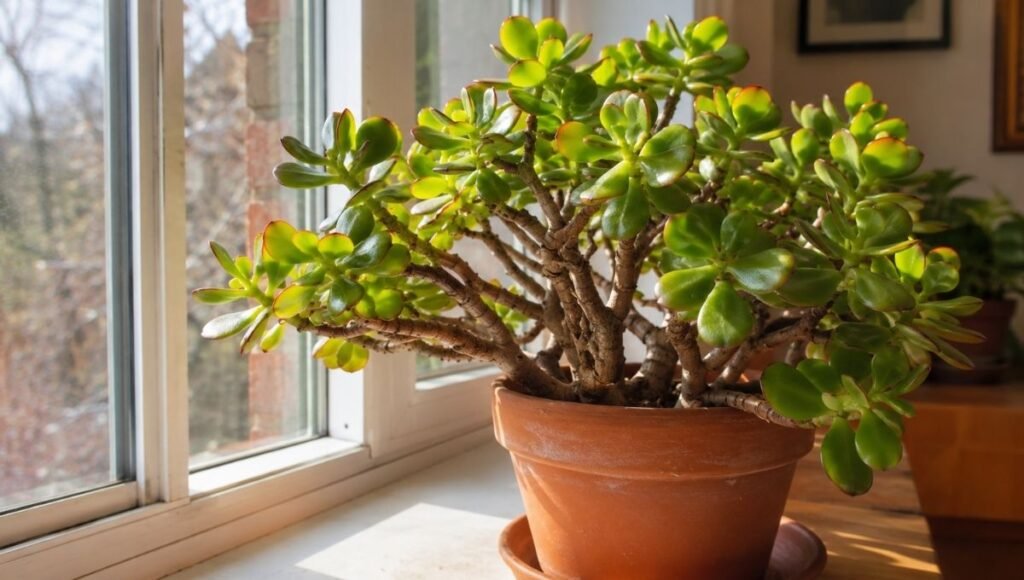
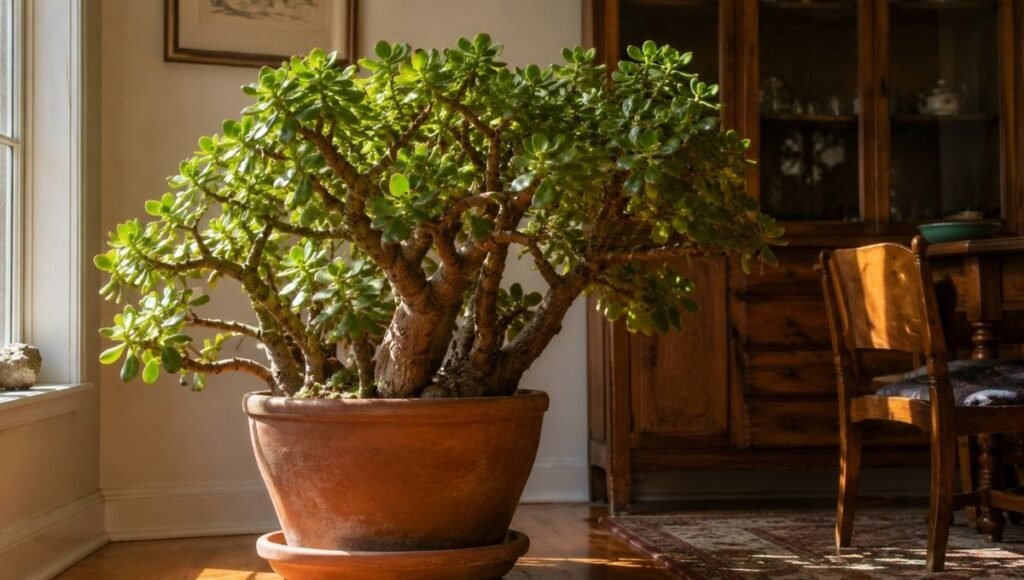
There’s a jade plant that lives in my aunt’s kitchen. Has done for at least thirty years. It’s enormous — probably two feet across, with a thick woody trunk that looks like it’s been through things. She has never repotted it. She waters it when she remembers, which is not very often. She’s moved it around the kitchen three times over the decades. It just keeps going.
I tell you this not to suggest that jade plant care is completely effortless — it isn’t — but to make a point about what these plants are fundamentally like. Tough. Resilient. Built for a kind of benign neglect that would finish off most other houseplants within a season. The jade plant (Crassula ovata) has been passed between households, propagated from cuttings, grown from near-dead stems, and kept alive by people who had no idea what they were doing. It is, in many ways, the houseplant that forgives you.
And yet people still manage to kill it. Almost always in the same way — too much water, not enough light — and almost always because nobody told them the specific things about this plant that matter. This is that guide.
Key Takeaways
- Jade plants store water in their fleshy leaves and stems — overwatering is the most common cause of death, not underwatering
- They need at least 6 hours of bright light — a south or west-facing window, not a dim shelf; insufficient light causes leggy, weak growth
- Jade plants are slow growers with surprisingly long lifespans — some specimens live for 50–100 years with basic care
- Jade plants are toxic to cats and dogs — ingestion causes vomiting and loss of coordination; keep out of pet reach
- In feng shui tradition, jade plants symbolize prosperity and good luck — they’re among the most commonly gifted houseplants globally, and for practical reasons: they’re genuinely hard to kill
What a Jade Plant Actually Is
The jade plant (Crassula ovata) is a succulent native to South Africa and Mozambique, where it grows in dry, rocky, well-drained hillside conditions with intense sun and minimal rainfall. In its natural habitat, it becomes a large shrub — sometimes reaching 9 feet — with a thick woody trunk and rounded, glossy leaves that catch and store every drop of moisture. Those same fleshy leaves and stems are why jade plants tolerate drought so well indoors: they’re essentially a living water reservoir.
Indoors, as a houseplant, jade plants stay much smaller — typically 1–2 feet tall with consistent pruning, up to 3 feet if left to grow unchecked over many years. The compact form, glossy deep green leaves (sometimes edged in red from sun exposure), and gradually thickening trunk give them an almost bonsai-like quality with age. There’s a reason some people actually do train jade plants as bonsai — the results are genuinely striking.
Several other Crassula varieties exist beyond the classic ovata: the variegated jade (cream and green leaves), Sunset jade (golden-yellow tips), and others. The care principles are essentially identical across all of them, with light being the main variable — variegated varieties generally need somewhat more protection from intense direct sun.
Jade Plant Care: The Light Requirement That Most People Get Wrong
Here’s the opinion I’ll state plainly: most jade plants sold in home décor shops and supermarkets are being kept in conditions that are slowly weakening them. Low light shelves, dim corners, windowsills that get two hours of morning sun — none of these are adequate for a jade plant to truly thrive.
Jade plants need at least 6 hours of bright light per day. A south or west-facing window is ideal. They love direct sun and can handle some, though intense afternoon sun through glass in summer can scorch the leaves — position a few inches back from the glass rather than pressed against it.
What happens with insufficient light: the plant becomes leggy — stems stretch toward the nearest light source, growing long and thin, with leaves spaced increasingly far apart. New growth comes in small and pale. The plant looks sparse and tired. This isn’t a death sentence, but it is the plant telling you, in the only way it can, that it needs to move.
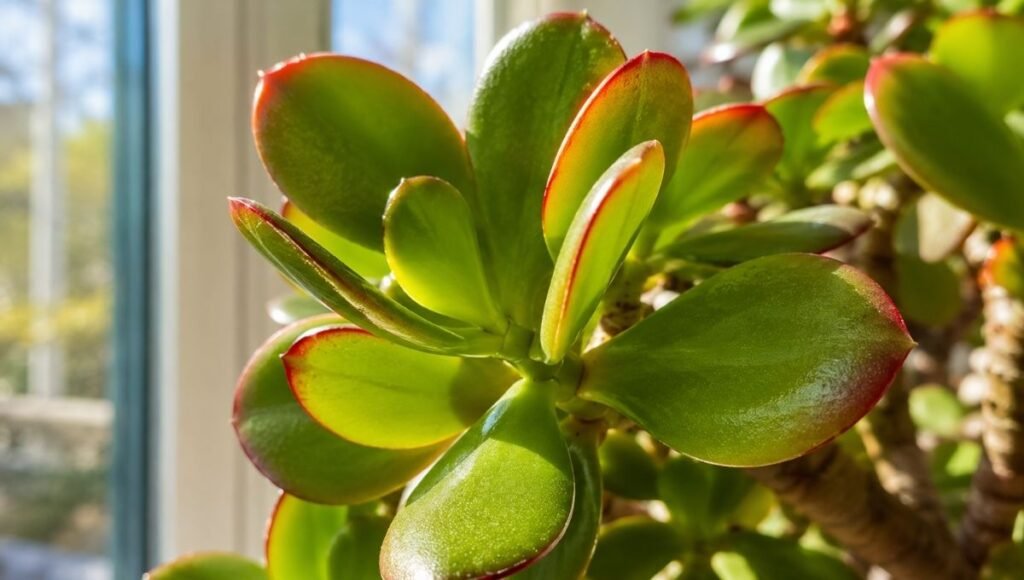
The red-edged leaf secret: jade plants develop beautiful reddish or orange tinges on their leaf edges when they receive adequate bright light. If your jade’s leaves are purely flat green, it wants more sun. If the edges have that warm blush — that’s a well-lit, content plant.
Can jade plants go outside in summer? Yes, and they generally love it. A covered porch, patio, or sheltered spot with bright indirect outdoor light suits them well. Avoid full exposure to intense afternoon sun if temperatures regularly exceed 90°F. Bring them back inside before nighttime temperatures drop below 50°F — and hose them down first to check for any pests before they come indoors.
How to Water a Jade Plant (The Most Important Thing You’ll Read)
Jade plants are succulents. They store water in their leaves, stems, and roots. This means they have genuine drought tolerance — and they need you to respect that by not watering before they actually need it.
The rule: wait until the soil is completely dry — top to bottom — before watering. Then water thoroughly until it drains from the pot. Then wait again.
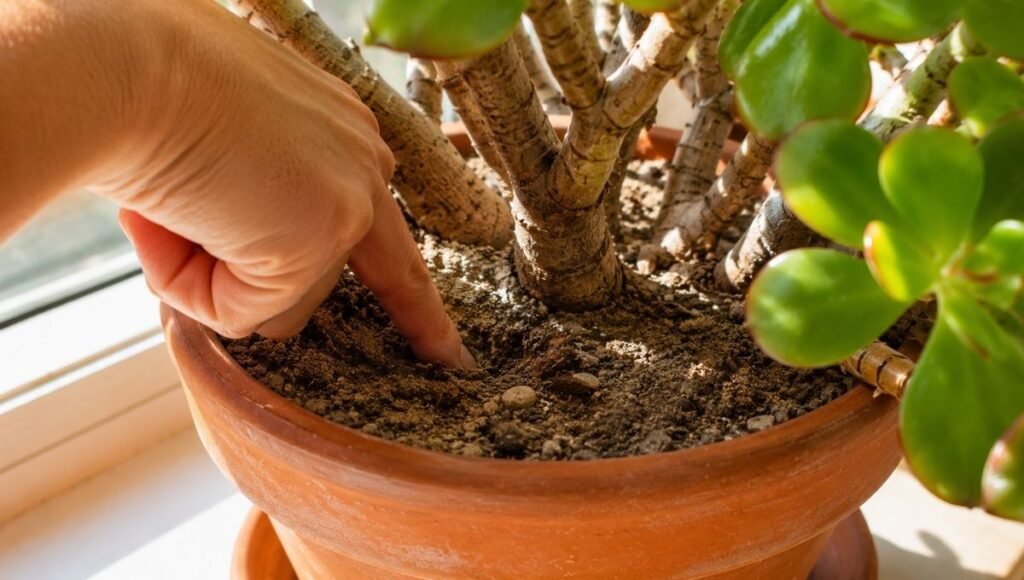
In practice: every 2–3 weeks in spring and summer, once a month or less in winter. But honestly, ignore the schedule and check the soil. Press your finger 2 inches in. If there’s any moisture at all, wait. If it’s completely dry — water now.
Why overwatering kills jade plants: their roots need oxygen just as much as water. When soil stays consistently wet, roots lose access to air, weaken, and become susceptible to fungal root rot. Unlike some plants that show stress symptoms quickly, jade plant root rot often advances silently — you don’t see the visible signs (yellowing, mushy stems, leaves that drop at a touch) until the root system is already seriously compromised.
Signs of overwatering: leaves that feel soft or slightly squishy rather than firm; lower leaves yellowing; stems turning dark or mushy at the soil line; leaves dropping when barely touched.
Signs of underwatering: leaves that feel thin and slightly wrinkled rather than plump; new growth that’s small and pale; dry soil pulling away from the pot sides.
The key difference from most other succulents: jade plants actually prefer a bit more water than cacti and ultra-dry succulents. The goal isn’t to keep them parched — it’s to avoid the constant dampness that kills their roots.
One thing worth saying explicitly: jade plants are genuinely great for people who travel or have unpredictable schedules. They can go 3–4 weeks without water in cooler months without showing any distress. If that describes you, jade plant is your plant.
Soil and Pots: What the Roots Need
Fast drainage is everything. Dense, moisture-retentive potting mixes that work for tropical houseplants are wrong for jade plants — they hold water around the roots longer than jade can tolerate.
Use a cactus and succulent potting mix, or improve standard potting mix with 30–50% perlite or coarse sand. The soil should feel gritty and drain freely within seconds of watering — no pooling, no slow seeping.
Garden soil is not an option. It compacts, blocks drainage, and creates the waterlogged conditions that cause root rot. Always use potting mix.
On pots: terracotta is excellent for jade plants. The porous walls allow moisture to evaporate through the sides, helping the soil dry faster between waterings — which suits jade’s needs perfectly. Clay also adds weight, which helps stabilize older, top-heavy plants.
Drainage holes: non-negotiable. A jade plant in a pot without drainage will develop root rot. If you love a decorative pot without holes, use it as a sleeve — keep the jade in a nursery pot inside, removing it to water over a sink.
On pot size: jade plants actually like being somewhat constrained. A pot that’s too large holds excess soil that stays wet. When repotting, go up only one size. And don’t be in a rush — jade plants grow slowly and can stay in the same pot for 4–5 years before needing a change.
Temperature: Comfortable for You, Comfortable for the Jade
Jade plants prefer temperatures between 65–75°F (18–24°C) — essentially standard room temperature. They tolerate some variation, but specific things damage them:
Cold drafts from open windows or exterior doors cause leaf drop and dark patches on leaves. Keep jade away from drafty spots in winter.
Air conditioning vents blowing directly on the plant create temperature fluctuations and dry air that the plant dislikes.
Direct heating sources — radiators, baseboard heaters — dry the air excessively and can scorch leaves if the plant is too close.
Below 50°F (10°C), jade plants struggle. Sustained cold damages leaves. They can recover from a very light frost, but consistent cold exposure causes deterioration that’s hard to reverse.
One pleasant jade plant trait: they actually require cool winter temperatures (around 55–60°F) and reduced watering to bloom. If you have a cool but bright room — a cool bedroom, a sunroom — your jade may reward you with clusters of tiny star-shaped white or pink flowers in late winter. Indoors this is relatively rare, but it happens with the right conditions.
How Often to Feed a Jade Plant
Jade plants are light feeders. They evolved in poor, rocky soil and don’t expect rich nutrition. But during active growth, a light feeding supports their slow-but-steady progress.
Once a month during spring and summer with a balanced liquid fertilizer at half strength — that’s sufficient. Some growers skip feeding entirely for years and have healthy plants. Over-fertilizing is genuinely more dangerous than underfeeding: excess fertilizer salts accumulate in the soil and eventually damage roots, causing brown leaf tips.
Stop feeding completely in autumn and don’t feed through winter. The plant’s growth slows to almost nothing in the colder, shorter-day months. Fertilizer it can’t use just sits in the soil, building up.
If you notice white crusty deposits on the soil surface or the inside of the pot rim, flush the soil thoroughly with water to wash out accumulated mineral salts.
Pruning and Shaping: Optional but Satisfying
Jade plants grow slowly enough that pruning is never urgent. But it’s worth doing occasionally, for two reasons: shape and propagation.
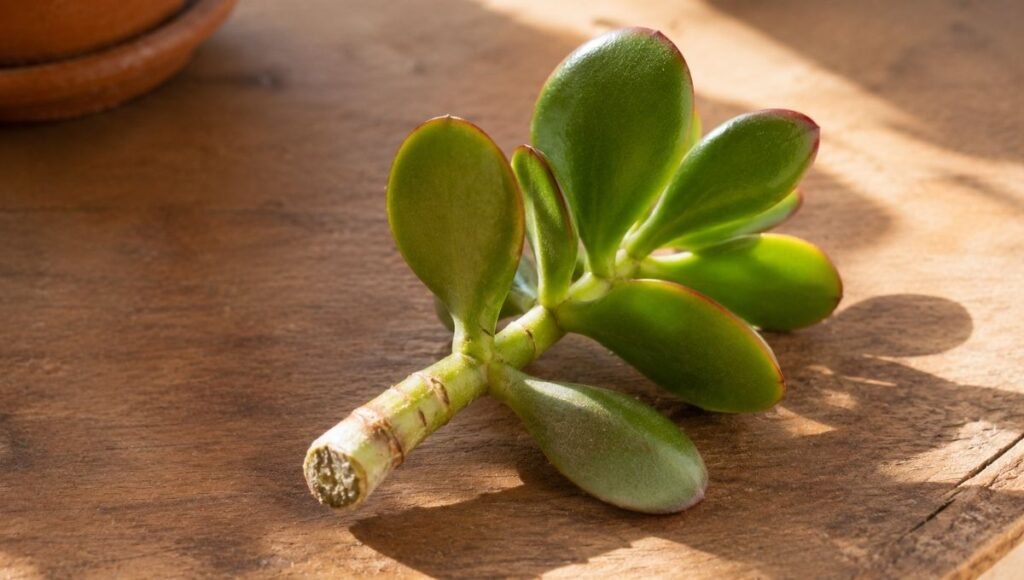
For shape: cut leggy stems back to just above a leaf node (the small bump where a leaf attaches). The plant will branch from that point, producing two stems where there was one and gradually becoming bushier. Always use clean, sharp scissors or pruning shears to avoid tearing.
For propagation: jade plants are extraordinarily easy to propagate from stem cuttings, which is how those multi-generation family jade plants happen. Cut a healthy stem 3–5 inches long, let the cut end air-dry for 5–14 days (this is important — don’t skip this step; the cut needs to callous over before it touches soil), then plant in dry cactus mix and wait. Don’t water for a week after planting. Roots develop in 2–4 weeks.
Single leaves can also produce new plants, but since jade grows so slowly, stem cuttings are the practical choice — you get a more established plant much faster.
Common Jade Plant Problems (With Real Honest Answers)
Why are my jade plant leaves turning yellow?
The most likely cause is overwatering. Jade leaves should be firm and plump — if they’re yellowing and feel slightly soft, the roots are sitting in too much moisture. Let the soil dry completely, check the pot has drainage, and reduce watering frequency significantly.
Less commonly: too little light can cause gradual yellowing of lower leaves. And very occasional yellowing of the oldest, lowest leaves is natural aging — not a problem.
Why are my jade plant leaves falling off?
Leaves that drop at the lightest touch — or fall unprompted — usually indicate one of two things: overwatering (when combined with soft, yellowing leaves) or sudden temperature change or cold draft exposure (when leaves look otherwise healthy). Check which applies.
Why is my jade plant leggy?
Insufficient light. The plant is stretching toward the nearest light source. Move it to a south or west-facing window where it gets 6+ hours of bright light. Prune the leggy sections back to encourage bushier growth.
Why does my jade plant have brown spots on the leaves?
Brown or translucent mushy spots: usually overwatering or root rot. Brown, dry, crispy patches on the sun-facing side: sunscorch from too much intense direct sun through glass. Corky, rough patches: edema, which occurs when roots absorb water faster than leaves can release it — usually harmless and cosmetic.
My jade plant won’t grow. Is something wrong?
Probably not. Jade plants grow very slowly — sometimes only an inch or two per year indoors. In winter they may show almost no visible growth at all. As long as the leaves look plump and healthy, the plant is fine. Adequate light is the biggest growth accelerator: moving a jade from a dim corner to a sunny window often produces visible new growth within weeks.
⚠️ Jade Plants and Pets
Jade plants are toxic to cats and dogs. Ingestion causes vomiting, depression, and loss of muscle coordination. The exact toxic compound isn’t fully identified, but the effects are consistent and documented.
The ASPCA lists jade plant as toxic to both cats and dogs. Keep it out of reach of pets that chew on plants, and contact your veterinarian if ingestion occurs.
If You Only Have 5 Minutes Right Now
Check when you last watered your jade. If it was less than two weeks ago and the plant isn’t in drought conditions, don’t water today. Check whether it’s getting at least 6 hours of light — if it’s on a shelf more than 5 feet from a window, that’s why it looks leggy. Move it closer to the brightest window you have.
Those two adjustments — less water, more light — fix the vast majority of jade plant problems.
FAQ
How often should I water a jade plant? Every 2–3 weeks in spring and summer; once a month or less in winter. But always check the soil first — stick your finger 2 inches in. If it feels dry all the way through, water thoroughly. If it’s still moist, wait another week regardless of schedule. Jade plants strongly prefer being slightly underwatered to overwatered.
Why are my jade plant leaves turning yellow? Almost always overwatering. The roots are sitting in wet soil longer than they should, causing root stress and rot. Let the soil dry completely, ensure the pot drains freely, and reduce watering frequency. Less commonly: insufficient light or very occasional natural leaf aging at the lowest, oldest leaves.
How long do jade plants live? A long time. Well-cared-for jade plants regularly live 20–30 years; some specimens in ideal conditions reach 50–100 years. The plant in my aunt’s kitchen is a good example — decades of existence in a kitchen window with minimal fuss. They’re genuinely long-term companions if you get the basics right.
Are jade plants safe for cats and dogs? No — jade plants are toxic to cats and dogs. Ingestion causes vomiting, lethargy, and loss of coordination. Keep out of reach. Contact your vet if your pet has chewed on jade leaves or stems.
Can jade plants grow in low light? They tolerate it briefly but don’t thrive in it. Low light produces leggy, weak growth, pale leaves, and eventually a plant that looks nothing like what you bought. A south or west-facing window with 6+ hours of bright light is genuinely necessary for a healthy jade plant. If you have a genuinely dim home, choose a pothos or ZZ plant instead — they’re better adapted to low light conditions.
How do I make my jade plant grow faster? More light is the single biggest lever. Move to the brightest window you have. Feed monthly with a diluted balanced fertilizer in spring and summer. Make sure the pot isn’t dramatically too large (oversized pots slow growth by keeping soil wet). And accept that jade plants are slow growers — that’s their nature, not a problem to fix.
The Long View
There’s something I find genuinely comforting about jade plants that I don’t feel about most other houseplants. They outlive us if we take care of them. They get passed down. They carry a family’s history in their thick trunk and gnarled branches. A jade plant that’s been in a household for twenty years looks completely different from a young nursery plant — more sculptural, more substantial, more like a small tree than a houseplant.
A 2022 scoping review published in Environmental Research found that having indoor plants in living spaces is consistently associated with reduced stress, improved mood, and stronger sense of home and belonging. The jade plant, slow and quiet and enduring, is a particular expression of that relationship. It asks very little. It stays for a very long time.
Give it the light it needs, water it less than you think, and let it grow at its own pace. It’ll be there long after you’ve forgotten this article.
Keep Growing
- 🌵 [Aloe Vera Care: Complete Guide] — another succulent that’s useful as well as beautiful
- 🌿 [Low Maintenance Indoor Plants: 12 Hard-to-Kill Picks] — jade’s neighbors in the easy-care category
- 💛 [Plant Leaves Turning Yellow? 7 Real Causes and Fixes] — diagnose any struggling plant
- 🔄 [How to Repot a Plant: Step-by-Step for Beginners] — when your jade finally outgrows its pot
References: Largo-Wight, E., et al. (2022). When green enters a room: A scoping review of epidemiological studies on indoor plants and mental health. Environmental Research, 214. ASPCA Animal Poison Control Center. Toxic and Non-Toxic Plant List — Jade Plant (Crassula ovata). Missouri Botanical Garden Plant Finder (2024). Crassula ovata — Jade Plant. University of Wisconsin-Madison Division of Extension (2023). Jade Plant — Crassula ovata Care. Old Farmer’s Almanac (2025). Jade Plant Growing Guide.