
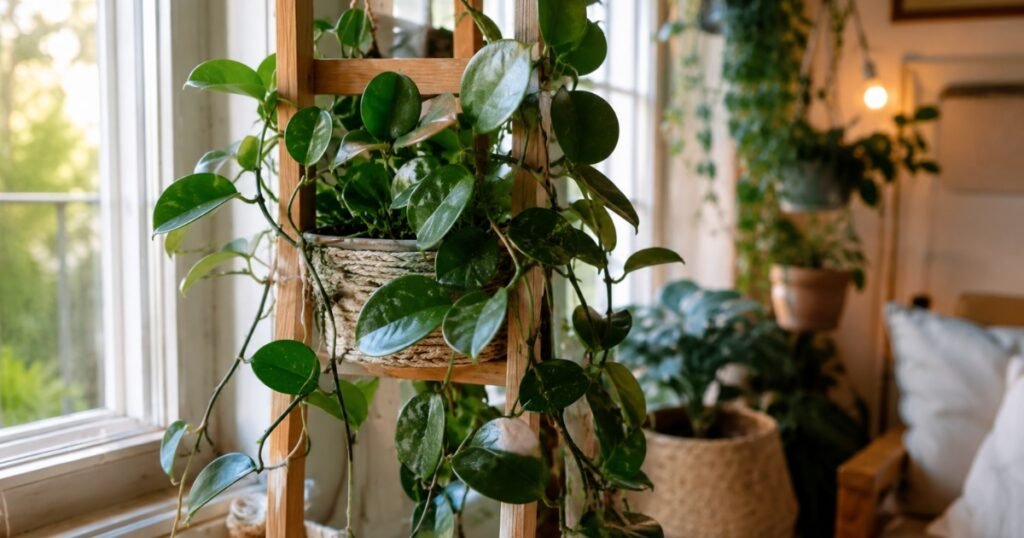
You bring home a healthy-looking plant with thick, waxy leaves. You find the right spot by the window, remember to water it, and check for new growth more often than you want to admit.
Then weeks pass.
Maybe months.
The plant still looks alive — but almost exactly the same.
No new vines. No flowers. No obvious sign that anything is happening.
That’s when you start wondering whether you’re helping your plant — or accidentally holding it back.
Am I watering it wrong?
Does it need more light?
Should I be doing something else?
Usually, the answer is simpler than that.
Hoyas are not plants that reward constant attention. They grow slowly, adjust quietly, and often spend more time building strength than showing progress.
Good hoya care is less about finding another thing to do — and more about learning when your plant actually needs your help.
This guide covers the light, watering, soil, and small care habits that help hoyas grow without turning plant care into a guessing game.
Key Takeaways
- Hoya is a semi-succulent — its thick, waxy leaves store water, which means it needs far less frequent watering than most tropical houseplants
- Overwatering is the most common cause of hoya decline; the “Taco Test” (feeling the oldest leaves for firmness) is more reliable than any watering schedule
- Long bare vines with no leaves are normal — they are searching vines, not dead growth; do not cut them
- Hoyas can take 1–4 years to flower indoors, and old flower spurs must never be removed — they rebloom from the same points
- Hoya is generally considered safe for pets — the milky sap can cause mild irritation and is not recommended for ingestion, but it is not classified as toxic by the ASPCA the way many other popular houseplants are
What Makes Hoya Plants Different From Other Houseplants?
Hoya Is a Semi-Succulent Plant
Hoya (Hoya spp., also called wax plant) is native to tropical and subtropical Asia and Australia, where most species grow as epiphytes — climbing trees and rocks, their roots anchored to surfaces rather than buried in deep soil. This origin explains almost everything about how they should be cared for.
Because they evolved without consistent soil moisture, hoyas developed thick, fleshy leaves that store water internally. Think of this as a built-in drought buffer. When water becomes available, the leaves fill. When the environment dries out, the plant draws on those internal reserves. This is why hoyas can go weeks between waterings without showing distress — and why consistently wet soil is so damaging to them.
Why Hoyas Are Perfect Low-Maintenance Indoor Plants
You go away for a week. Your pothos droops. Your peace lily has a minor crisis. Your hoya? Usually fine. The same water storage that makes hoyas drought-tolerant also makes them ideal for apartment living, unpredictable schedules, and the generally imperfect conditions of real life.
This is a plant you can honestly forget about for a while and return to find unchanged. That’s not a flaw — it’s exactly what makes hoyas such a good choice for busy people, beginners who are still learning their rhythms, and anyone who finds the constant monitoring that some plants require genuinely stressful.
The best hoya care is not giving your plant more water, more fertilizer, or more attention. It is creating the right environment and letting your hoya grow at its own slow rhythm.
Hoya Light Requirements: Where Should You Place Your Plant?
Bright Indirect Light Is the Sweet Spot
Hoyas want bright indirect light — positioned near a window where they receive several hours of filtered or indirect natural light daily. East and west-facing windows are excellent. South-facing windows work well if the plant is a few feet back from the glass or the light is filtered through a sheer curtain.
The “bright indirect” description matters more for hoyas than for most plants because light directly influences two things: leaf health and flowering. A hoya in adequate light grows steadily, maintains waxy, firm leaves, and — eventually — flowers. A hoya in insufficient light produces paler, softer leaves and rarely if ever flowers.
Signs Your Hoya Is Getting Too Little Light
The clearest signal is etiolation — long stretches of stem between leaves, where the plant is reaching toward whatever light it can find. In a hoya, this typically looks like a vine with 8–10 centimeters or more between each leaf node. The leaves themselves may also look paler, softer, or slightly translucent compared to a well-lit plant.
If you’ve been wondering why your hoya won’t flower, light is almost always the first thing to check. Not pot size, not feeding schedule, not the specific variety — light first.
Can Hoya Grow on a Small Apartment Balcony?
Yes — and it often thrives there. A covered or semi-shaded balcony that gets morning sun and afternoon filtered light is close to ideal for most hoya varieties. Balcony air circulation, natural humidity variation, and the slightly more intense light outdoors compared to indoors all benefit hoyas during warmer months.
The one caveat: avoid prolonged intense afternoon summer sun, which can scorch the leaves. A position that gets morning light and afternoon shade, or filtered light throughout the day, suits most varieties well.
How Often Should You Water a Hoya Plant?
Why Overwatering Is the Biggest Hoya Killer
Hoya roots evolved in environments without consistent soil moisture. Put them in a pot with dense, water-retentive soil and water on a regular schedule, and those roots — designed to absorb efficiently and then dry out — sit in moisture they can’t handle. Root rot develops silently. By the time you see yellowing leaves or a wilting plant, the root system is already significantly compromised.
The advice to “water every week” or “water on a schedule” that works for moisture-loving plants is actively harmful for hoyas. The schedule approach ignores the most important variable: what the plant actually needs right now.
Forget the Calendar — Try the Taco Test Instead
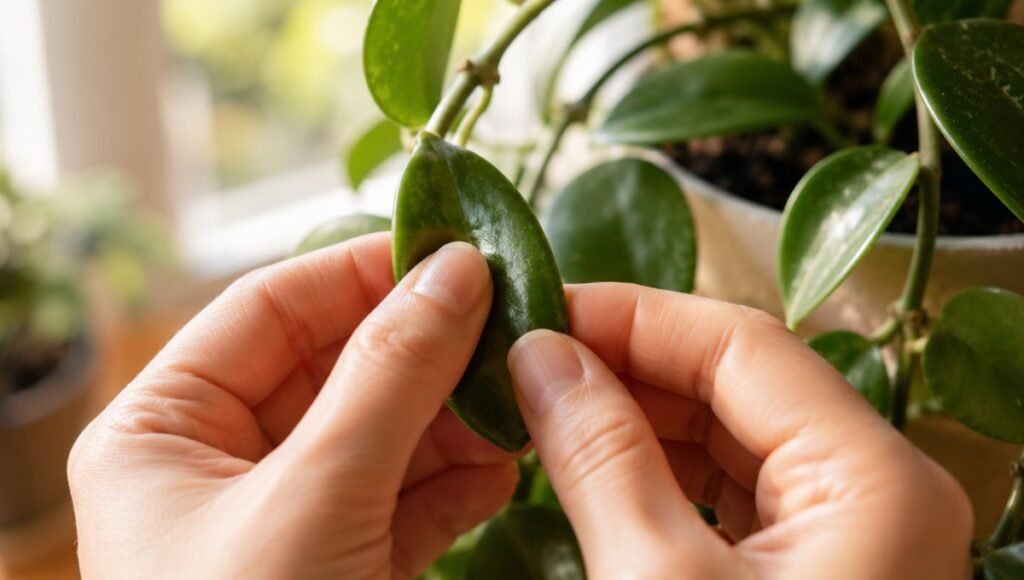
The Taco Test is the most useful hoya watering technique available, and it’s significantly more reliable than any schedule. Here’s how it works:
Find the oldest, largest leaves on your hoya — these are typically at the base of the longest vines. Gently pinch one between your fingers.
Firm and turgid: the leaf is full of water. The plant doesn’t need watering yet. Come back in a few days.
Slightly soft, with just a little give: the leaf’s water reserves are starting to deplete. This is the ideal time to water. The plant is ready but not stressed.
Noticeably soft or starting to wrinkle: the plant has been waiting longer than ideal. Water now, thoroughly.
The name comes from the slight curve a slightly dehydrated hoya leaf develops — a subtle taco shape as the leaf edges curl very gently inward. Once you’ve seen it, you’ll always recognize it. And you’ll stop second-guessing whether to water.
How Watering Changes Between Summer and Winter
In spring and summer, when hoyas are actively growing, you may water every 1–2 weeks depending on your pot size, soil, and light conditions. In autumn, begin stretching intervals. In winter, many hoyas enter a period of slower growth or semi-dormancy — watering once every 3–4 weeks, or even less, is completely appropriate. Some experienced hoya growers barely water their plants at all through the coldest months.
The Taco Test remains accurate year-round and automatically adjusts for seasonal changes in the plant’s water use. The calendar doesn’t.
The Best Soil Mix for Hoya Plants (Simple Beginner Recipe)
Why Hoyas Need Chunky, Airy Soil
Standard potting mix — the kind that works well for pothos, peace lilies, and most tropical houseplants — holds too much moisture for hoyas. It stays wet between waterings for too long, creating exactly the conditions that lead to root rot.
Hoyas need what growers often call a “chunky” mix: soil with large particles and significant air pockets that allow roots to dry out relatively quickly after watering. This mimics the loose, well-draining conditions epiphytic plants experience in nature.
A Low-Cost DIY Hoya Soil Mix at Home
You don’t need expensive specialty products. A practical, affordable hoya mix can be made from materials available at most garden centers:
Simple DIY mix:
- 2 parts standard all-purpose potting mix
- 1 part perlite
- 1 part orchid bark (or coarse coconut coir)
The perlite improves drainage and prevents compaction. The orchid bark creates the larger air pockets that hoya roots appreciate. The potting mix provides structure and some moisture retention. The whole mix dries out faster than standard potting mix alone — which is exactly what you want.
If orchid bark is unavailable, increase the perlite to 2 parts and add a handful of coarse sand. The goal is a mix that feels light, slightly gritty, and drains within seconds of watering.
Does Hoya Need High Humidity?
Can Hoya Survive Normal Indoor Humidity?
Yes — most hoya varieties manage well at average household humidity (40–60%). Unlike calathea, prayer plants, or Boston ferns, which clearly suffer in dry air, hoyas are reasonably tolerant of the humidity conditions most homes provide.
The semi-succulent leaves retain moisture independently of the surrounding air, which means low humidity doesn’t cause the same immediate visible stress it does in plants with more delicate leaves.
Cheap Ways to Increase Humidity Without Buying Equipment
If you want to improve humidity for your hoya — particularly in dry winter conditions — a few simple approaches work well:
Grouping plants together is the most effective passive method. Plants transpire moisture, and a cluster of plants creates a shared microclimate of elevated humidity. Put your hoya near your other tropical plants.
Pebble tray: a shallow tray filled with pebbles and water, with the pot sitting above the waterline, creates evaporative humidity around the plant. Low effort, zero cost once set up.
Bathroom with a window: steam from showers naturally raises humidity to levels most tropical plants enjoy. A hoya on a bathroom shelf with adequate indirect light is often an excellent placement.
You don’t need a humidifier for hoyas the way you might for calathea. Most varieties will do fine without one.
Why Is My Hoya Growing Long Bare Vines With No Leaves?
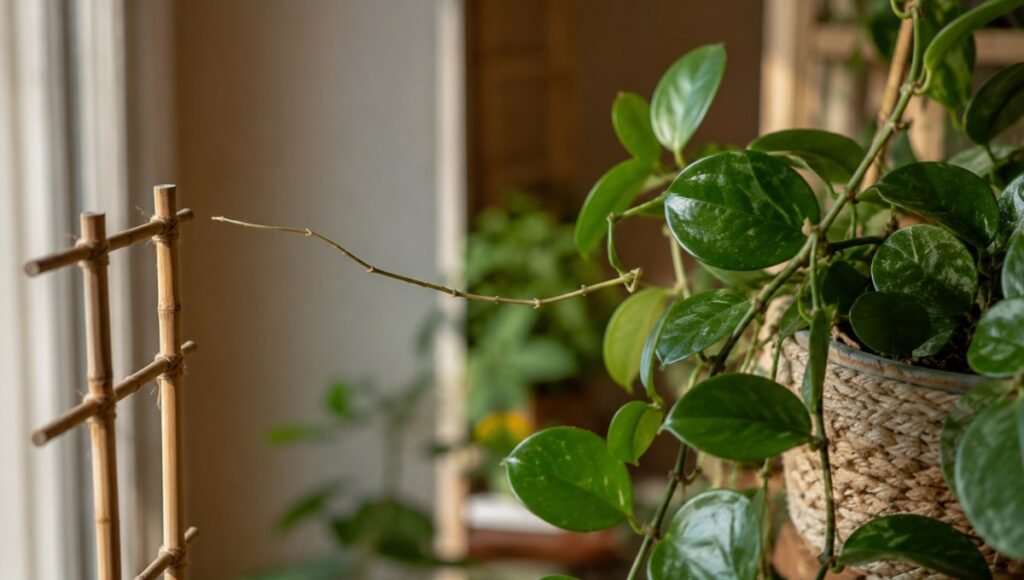
Don’t Cut Those Empty Hoya Vines
This is the question that sends most new hoya owners into a spiral of concern — and the answer is direct: do not cut the bare vines.
What you’re looking at is called a searching vine or tendrils. In the hoya’s natural habitat, these long, leafless stems grow outward from the plant until they find something to anchor to — a branch, a surface, a support. Once anchored, leaves and eventually flowers develop along the vine.
Indoors, the same thing happens. The plant sends out a long bare vine, looking for something to grab. It isn’t dying. It isn’t etiolating from light deprivation (you’d see that in existing leaf-bearing stems). It’s doing exactly what it evolved to do.
When Will Leaves Grow on Hoya Vines?
Once the vine finds a support — or once you give it one — leaves will begin to develop. Providing a small trellis, a moss pole, or even a simple bamboo stake for the vine to wind around gives it the anchor it’s looking for. After that, new leaf nodes develop along the vine within weeks.
Many first-time hoya owners see these bare vines and assume the plant is struggling or elongating from insufficient light. It’s an understandable read — a long stem with no leaves looks like a symptom. But in this case, it’s actually a sign of an active, growing plant doing something deliberate. Leave it alone. Give it something to grab. Watch what follows.
How to Encourage Your Hoya Plant to Bloom
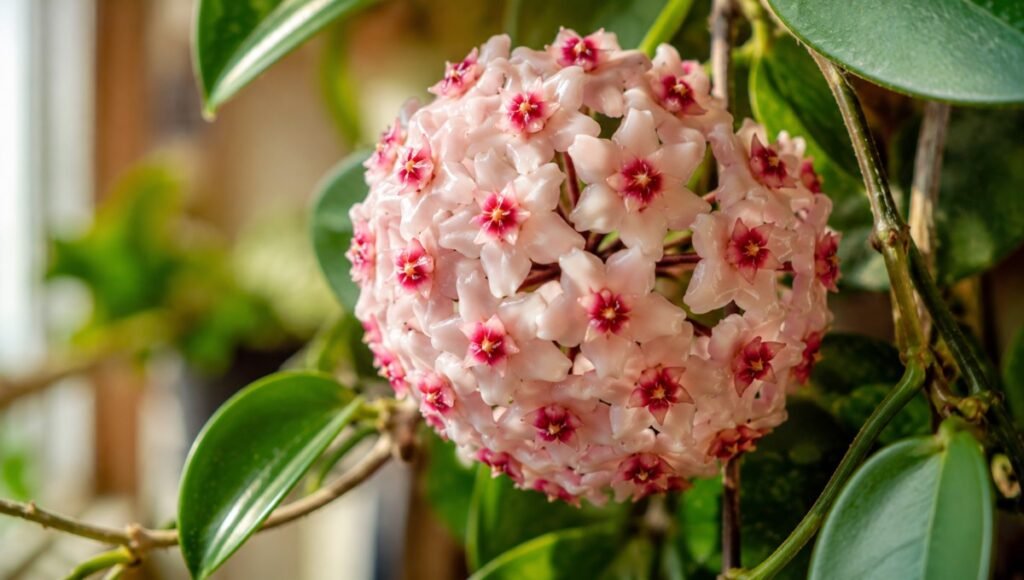
Give Your Hoya Enough Light
Flowering is the reward for getting the environment right — and light is the most important element. A hoya in insufficient light will grow, but almost never flower. Before adjusting anything else, make sure your plant is positioned in the brightest indirect light your space can provide.
Don’t Remove Old Flower Spurs
This is the most important hoya flowering rule, and one of the most commonly broken by people who are trying to tidy up the plant: never remove old flower spurs.
After a hoya flowers, the stem where the flowers emerged — called the spur or peduncle — looks dried, woody, and finished. The instinct is to trim it. Don’t. Hoyas rebloom from the same spurs repeatedly. Removing them eliminates future flowering sites and the plant has to develop entirely new ones, which takes significantly longer.
If you’ve been trimming your hoya’s old flower spurs in the name of tidiness, that’s likely why it hasn’t reflowered. Leave the spurs intact. They will bloom again.
Be Patient: Hoyas Can Take Years Before Flowering
A young hoya purchased from a shop may take 1–3 years of good care before producing its first flowers. Some species take even longer. The woody appearance of mature stems is a reliable indicator that flowering is closer — young, soft-stemmed plants typically won’t flower regardless of care.
This is perhaps the most important mindset adjustment for hoya ownership: flowering is not a measure of your success as a plant keeper. It’s a milestone that arrives when the plant is mature enough and conditions are consistently right. Your job is the conditions. The timing is the plant’s.
Common Hoya Problems and How to Fix Them
Wrinkled Leaves: Underwatering or Root Rot?
Wrinkled hoya leaves are the most commonly misdiagnosed problem in hoya care, and getting the diagnosis wrong makes things significantly worse.
Wrinkled leaves can mean two opposite things: the plant is thirsty (underwatering) or the roots have rotted and can no longer deliver water to the leaves even when the soil is wet (overwatering damage).
Check the soil first. If it’s dry and has been dry for a while — water thoroughly. The leaves should plump back within 24–48 hours.
If the soil is wet or has been consistently wet — stop watering immediately and unpot the plant to inspect the roots. Healthy roots are white or light tan and firm. Rotted roots are brown or black and mushy. Trim all damaged roots, let the remaining root system air-dry for an hour, and repot in fresh, well-draining soil. Do not water for at least a week.
Adding water to a hoya with root rot makes the problem worse, not better. The diagnosis matters before the treatment.
Yellow Leaves
Yellow leaves on a hoya are most commonly caused by overwatering or root rot — the same root cause as wrinkled leaves from overwatering. Check soil moisture and root health. Less commonly: sudden cold exposure, which causes the leaves near an uninsulated window to yellow quickly; or natural aging of the very oldest leaves at the base of long vines.
Dropping Leaves
Sudden leaf drop — leaves detaching and falling — is almost always caused by a dramatic environmental change: being moved to a significantly different light level, cold shock from a drafty window in winter, or overwatering damage. Identify which change happened most recently and address it. Some leaf drop during a major adjustment is temporary; ongoing drop suggests the stressor hasn’t been removed.
Is Hoya Safe Around Pets and Kids?
Understanding Hoya’s Milky Sap
When you prune or propagate a hoya, you’ll notice a milky white sap that drips from the cut point. This sap can cause mild skin irritation in sensitive individuals and should be washed off promptly. It can also drip onto furniture and leaves a residue — place a paper towel under any cutting you’re working with.
For pets: the ASPCA does not currently list hoya as toxic to cats and dogs, which makes it significantly safer than many popular houseplants. However, the milky sap is a mild irritant and ingesting large amounts of any plant material is not advisable for pets. If your pet chews on plants regularly, elevation is still the sensible approach — a hanging basket or high shelf keeps the plant accessible to you and out of reach of curious animals.
For children: the sap is a mild irritant. Keep the plant out of reach of very young children and wash hands after pruning or taking cuttings.
Beginner Hoya Care Routine Checklist
Daily: Nothing required. Observe when you walk past — does anything look dramatically different? Usually no.
Weekly:
- Check the oldest leaves using the Taco Test
- Look under leaves for any pests (particularly spider mites, which like warm, dry conditions)
- Check if bare vines have found something to grab
Monthly:
- Rotate the pot a quarter turn for even light distribution
- Check if the pot is drying out much faster than before (may indicate rootbound conditions)
- Feed with diluted balanced liquid fertilizer during spring and summer only
Seasonally:
- Adjust watering frequency as seasons change (less in winter, check more frequently in summer)
- In spring: assess whether repotting is needed (roots escaping drainage holes, very rapid drying)
- In autumn: stop fertilizing, begin extending intervals between waterings
If You Only Have 5 Minutes Right Now
Pick up the oldest leaf on your hoya between two fingers. Firm? Walk away. Slightly soft? Water thoroughly until it drains. That’s the entire watering decision. Everything else — the bare vines, the slow growth, the absence of flowers — is probably exactly as it should be.
FAQ
Why is my hoya growing a long vine with no leaves? This is a normal searching vine — your hoya is extending outward looking for a surface to anchor to. Do not cut it. Give it a trellis, bamboo stake, or moss pole to wind around, and leaves will develop along the vine once it finds support. It is a sign of an active, growing plant, not a struggling one.
How often should I water my hoya? There is no fixed schedule. Use the Taco Test: gently feel the oldest, firmest leaves on the plant. If they feel firm and turgid, don’t water. If they feel slightly soft with a little give, water now. This approach adjusts automatically for seasonal changes and is more reliable than any calendar schedule.
Why is my hoya not flowering? The most common reasons: insufficient light (the biggest factor), plant not yet mature enough (can take 1–4 years), old flower spurs were removed (hoyas rebloom from the same spurs — never remove them), or the pot is too large. Address light first, then check whether you’ve accidentally removed spurs.
Should I cut old hoya flower stems? No — never remove old flower spurs. Hoyas rebloom from the same peduncles repeatedly. Removing them means the plant must develop entirely new ones, which significantly delays the next flowering. Leave the dried woody spurs in place.
Do hoyas like small pots? Yes. Slightly root-bound conditions encourage hoyas to bloom and keep the soil drying at an appropriate rate. Repot only when roots are actively escaping drainage holes or the plant is drying out within a day of watering. Go up one pot size only.
Are wrinkled hoya leaves always a sign of thirst? No — this is the most common hoya misdiagnosis. Wrinkled leaves can mean underwatering (soil dry, plant thirsty) or root rot from overwatering (roots can’t deliver water, even though soil is wet). Check the soil before watering. If the soil is wet and the leaves are wrinkled, you have a root problem, not a thirst problem.
Hoya Rewards Patience
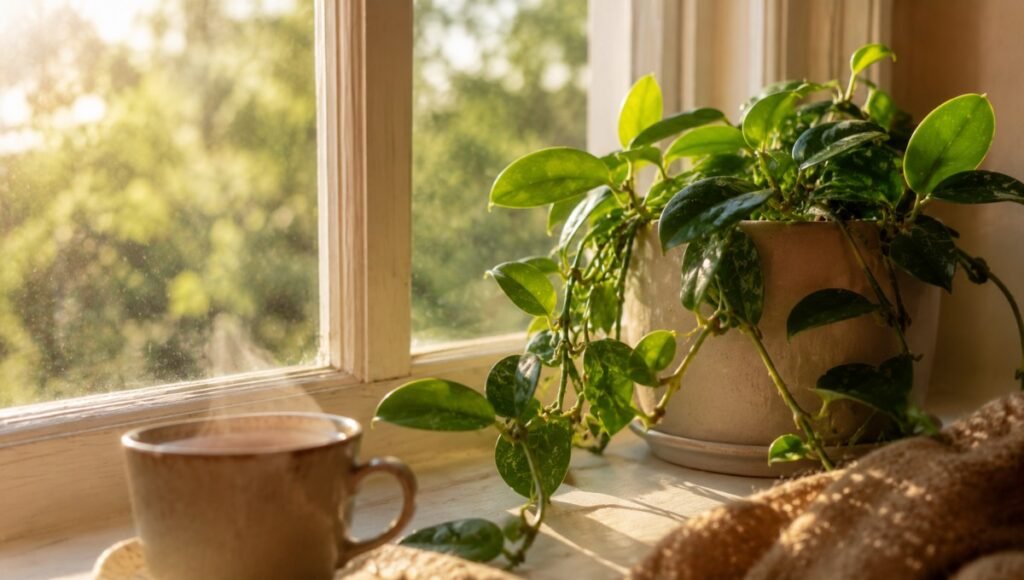
There’s a particular kind of plant owner that hoyas suit — not the one who wants constant visible progress or dramatic daily change, but the one who finds satisfaction in the slow reveal. The month where nothing visible happens, followed by a new vine that appeared while you weren’t watching. The years of good care followed by a cluster of perfectly waxy flowers that smell faintly sweet in the morning.
Research from the University of Exeter found that people who engage regularly with plants — even slow-growing ones that require little intervention — report measurably higher wellbeing and stronger sense of daily presence. There’s something in the attention itself, separate from the outcome.
A hoya doesn’t demand your attention. It rewards the kind you give it anyway — the quiet weekly check, the gentle observation, the patience to let something grow at its own speed.
That’s a rare thing in a plant. And in a life.
🌱 DirtZip Growing Notes: The Research Behind This Guide
Good plant care is rarely about doing more. Sometimes, the healthiest thing you can give a plant is the right environment — and enough patience to let it grow at its own pace.
This guide combines practical home-growing experience with research from plant science resources and trusted organizations, including the University of Florida IFAS Extension, ASPCA plant safety resources, and professional horticulture references.
Because understanding your plant matters more than following a perfect schedule.
A healthy hoya does not need constant attention — it needs light, breathable soil, careful watering, and time.
Keep Growing
- 🌱 [How to Care for Pothos] — another trailing plant, significantly faster-growing
- 🌿 [Low Maintenance Indoor Plants: 12 Hard-to-Kill Picks] — hoya’s neighbors in the easy-care world
- 💛 [Plant Leaves Turning Yellow? 7 Real Causes and Fixes] — diagnose any struggling plant
- 🔄 [How to Repot a Plant: Step-by-Step for Beginners] — when your hoya finally outgrows its pot
At DirtZip, we believe caring for plants should feel less like a test and more like building a quiet relationship with something living.