
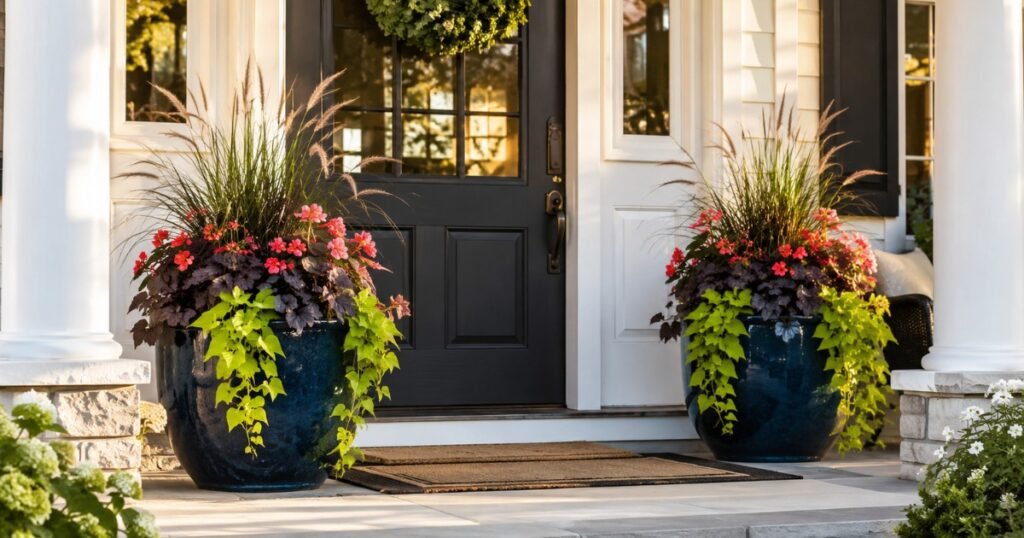
It’s easy to fall in love with a healthy-looking plant at the garden center. A lush Boston fern, a colorful begonia, or a neat little boxwood can all seem like the perfect way to dress up your front porch.
Then a few weeks later, one starts turning brown, another wilts every afternoon, and the one you thought would be the easiest somehow looks the worst.
More often than not, the problem isn’t your watering routine or your gardening skills. It’s that the plant and the porch simply aren’t a good match.
That’s why the first step isn’t choosing a beautiful plant—it’s understanding the space you’re asking it to grow in.
The single most useful shift you can make as a beginning porch gardener is to understand your porch’s environment before you buy anything. Not the plants you want — the conditions you actually have. Light, wind, heat, drainage. Once you know those things, choosing plants becomes significantly easier, because you’re working with your space instead of fighting it.
This guide starts there. Everything else follows from it.
Key Takeaways
- Matching plant to porch environment — not porch to desired plant — is the difference between plants that thrive and plants that quietly fail
- The shadow test is more reliable than guessing sun exposure from memory — do it once and you’ll know exactly what you’re working with
- The Thriller-Filler-Spiller formula works for any budget; you can build a $40 planter that looks like it cost $150
- Drainage holes are not optional — a pot without drainage is a slow-motion death sentence for most porch plants
- Don’t bring brand-new plants home and immediately put them in the hottest, sunniest, or windiest spot on your porch — give them a week to acclimate first
Start Here: What Kind of Front Porch Do You Actually Have?
Before the plant list, before the pots, before anything else: figure out your light. This is the step that separates successful porch gardens from the ones that become expensive mulch.
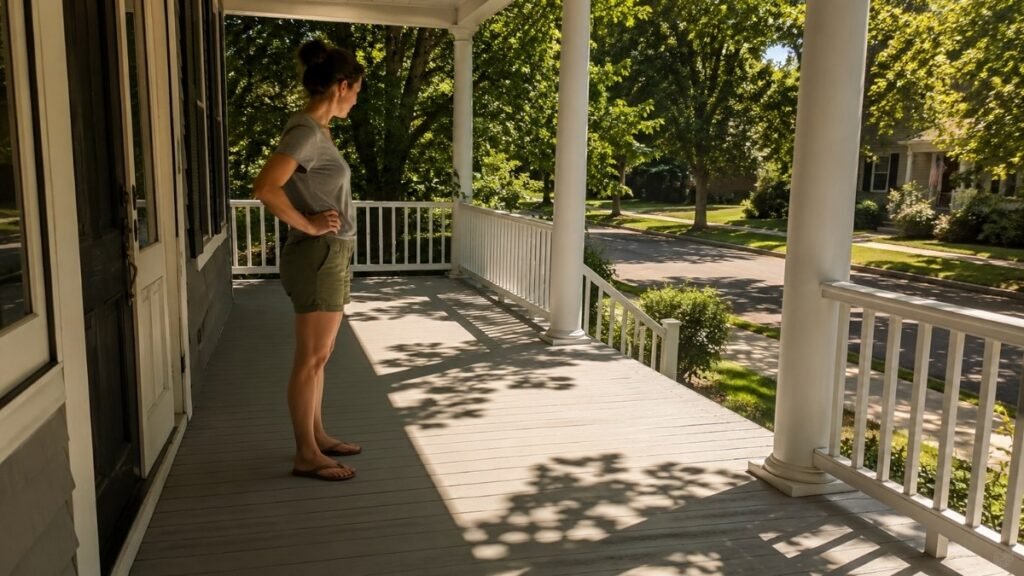
Here’s the most reliable method. On a clear day around noon, go stand on your porch and look at the shadows. Sharp, defined shadows? That’s full sun territory. Soft, diffuse shadows? Partial sun or morning sun conditions. No shadows at all, or very faint ones? You’re in shade.
Do this in summer, not spring — the sun angle changes significantly, and what feels like shade in April can become afternoon sun by July.
Full Sun
Your porch receives more than 6 hours of direct sunlight daily. South-facing and west-facing porches often fall into this category, especially open, unroofed porches. This is actually a great environment for plants — you have the widest selection. The challenge is heat and drying. Containers in full sun need more frequent watering and should be chosen for heat tolerance.
Morning Sun
East-facing porches typically get 3–4 hours of direct morning sun before the angle shifts. Morning sun is gentler than afternoon sun — it’s bright without the intensity that bakes plants. This is one of the easiest porch environments to garden in. Many popular plants thrive here, including varieties that would struggle in harsh afternoon heat.
Afternoon Sun
West-facing porches receive the hottest, most intense sun of the day. Plants that can’t handle heat stress will fade, scorch, or wilt every afternoon despite looking fine in the morning. Stick to genuinely heat-tolerant varieties and expect higher watering frequency.
Bright Shade
A covered porch, or one shaded by a tree or overhang, that still receives significant ambient light — you can read comfortably without turning on lights. This is what gardeners call “bright shade” or “high shade.” A good range of plants works here, including many beautiful shade-lovers.
Deep Covered Porch
A fully covered porch, particularly one that faces north or is heavily shaded, where direct sun never reaches the floor. This is the most limiting environment but absolutely not a dead end. Certain plants genuinely prefer these conditions and will look dramatically better here than anywhere else on your property.
12 Beginner-Friendly Front Porch Plants That Thrive in Real Homes
Now that you know what kind of light your porch gets, choosing plants becomes much easier. Instead of picking whatever looks good at the garden center, focus on plants that naturally thrive in your conditions. The options below are beginner-friendly, widely available, and proven to perform well on real front porches—not just in perfectly staged photos.
Plants for Deep Shade
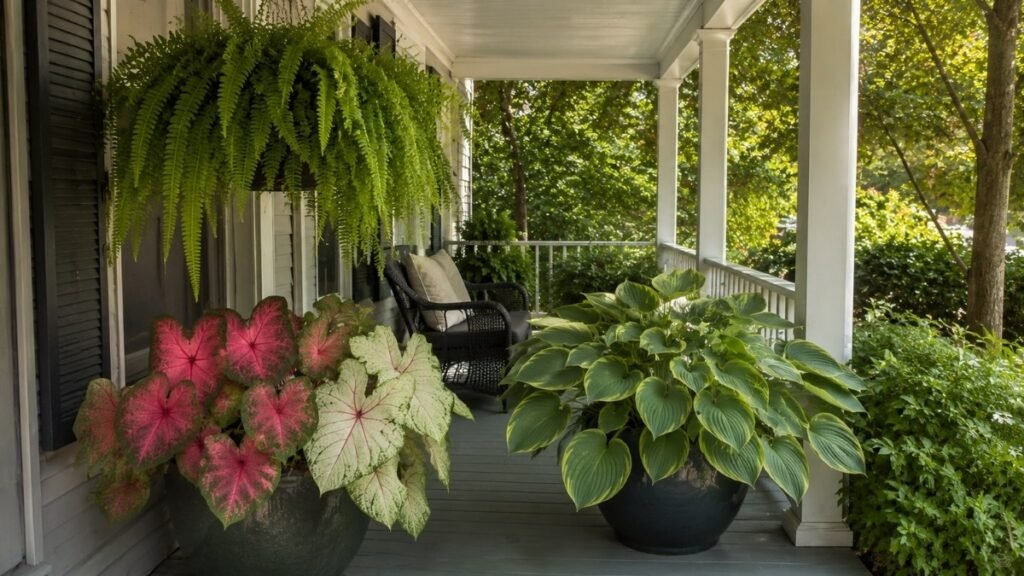
Boston Fern — The classic porch plant for good reason. Lush, arching fronds, extraordinary texture, and a genuinely tropical look that transforms a covered porch. Does not tolerate direct afternoon sun. Needs consistent moisture; check every 1–2 days in warm weather. Hanging baskets show it off best. See our full care guide: [Boston Fern Care: Why They Keep Dying (And the Humidity Secret)].
Cast Iron Plant (Aspidistra) — Lives up to its name. Dark, glossy, upright leaves and an extraordinary tolerance for neglect, low light, and heat. Not glamorous in the way a fern is, but reliably excellent in conditions where other plants give up. Ideal for the deeply shaded porch corner that’s stumped you for years.
Hosta — Bold foliage in every shade from chartreuse to blue-green to cream-variegated. Hostas love shade and look genuinely spectacular in large containers flanking a front door. They’re perennials in most zones (3–9), which means the same plant comes back each year — real value for money.
Caladium — The most dramatic shade plant on this list. Enormous heart-shaped leaves in combinations of white, pink, red, and green that look almost painted. Requires consistent moisture and warmth (they struggle below 60°F). In the right conditions, a pair of caladium pots flanking a front door stops visitors in their tracks.
Plants for Partial Sun
Heuchera (Coral Bells) — Low-growing, mounding perennial with foliage in burgundy, copper, lime, silver, and almost every tone between. Genuinely beautiful year-round in zones 4–9. Blooms with delicate flower spikes in late spring. Works as a filler in mixed containers or as a standalone statement.
Begonia — Reliable, colorful, and remarkably forgiving. Wax begonias handle partial sun and even some direct morning sun. Tuberous begonias are showier but prefer full shade. Both bloom prolifically without much attention. One of the best bang-for-your-buck porch plants available.
Coleus — Grown entirely for its foliage, which comes in an overwhelming range of colors and patterns. Thrives in partial shade; direct afternoon sun fades the colors. Pinch off any flower buds to keep the plant producing its best leaf growth. Fast-growing, inexpensive, and visually dramatic in mixed containers.
Hydrangea (Container) — Yes, hydrangeas grow in containers, and they look magnificent on a front porch. ‘Incrediball’, ‘Limelight’, and the Endless Summer series all perform well in large pots. They need consistent moisture (don’t let them dry out), partial sun, and a pot that’s at least 16 inches across. Treat them as statement plants that anchor the whole composition.
Plants for Full Sun
Lantana — Heat-tolerant, drought-tolerant, attracts butterflies, blooms from late spring to frost in clusters of orange, yellow, pink, and red. Once established, lantana thrives on neglect in hot full-sun positions. One of the best choices for a south or west-facing porch that bakes all afternoon.
Angelonia — Sometimes called summer snapdragon. Upright, colorful, and genuinely heat-hardy in a way that many summer annuals aren’t. Blooms continuously without deadheading. Goes well in mixed containers as a filler or can carry a pot on its own.
Petunia — The classic full-sun annual for good reason. Wide color range, long bloom season, and excellent trailing habit for spillers in mixed arrangements. Wave petunias are particularly vigorous. Deadhead regularly or choose self-cleaning varieties for lower maintenance.
Lavender — Perennial in zones 5–8, grown as an annual elsewhere. Fragrant, drought-tolerant, deer-resistant, and beloved by pollinators. Needs very well-draining soil and full sun. Plant in terracotta or fabric pots for best drainage. One of the few porch plants that smells as good as it looks.
Boxwood — The backbone of formal porch arrangements. Dark green, dense, slow-growing, and evergreen. A pair of boxwood topiaries flanking a front door works in almost any architectural style. Hardy in zones 5–9. Requires minimal care once established. Expensive upfront, but lasting.
Plants That Help Keep Mosquitoes Away
This is one of the most searched-for pieces of porch plant advice — and one that most plant guides barely mention.
Rosemary — Genuinely repels mosquitoes through its aromatic oils, thrives in full sun containers, and gives you fresh herbs for cooking at the same time. One of the few plants where the mosquito-repelling claim has genuine research backing. Plant in well-draining soil and don’t overwater.
Citronella Grass — The plant most associated with mosquito repulsion. The scent is released when the leaves are brushed or bruised. Grows as a striking ornamental grass in containers; treat as an annual north of zone 9–10. Effective mostly when actively crushed or near a heat source — the passive ambient effect is modest, but the plant itself is attractive.
Lavender — Already on the full-sun list, but worth noting here: lavender’s scent, particularly in warm weather, is documented to repel mosquitoes and other insects. A dual-purpose choice.
Lantana — Also on the full-sun list. Research from the USDA has found lantana to be among the most effective mosquito-repelling plants. The combination of ornamental value, heat tolerance, and insect repulsion makes it one of the most practical front porch plants for hot climates.
The Beginner’s Formula for Gorgeous Porch Planters
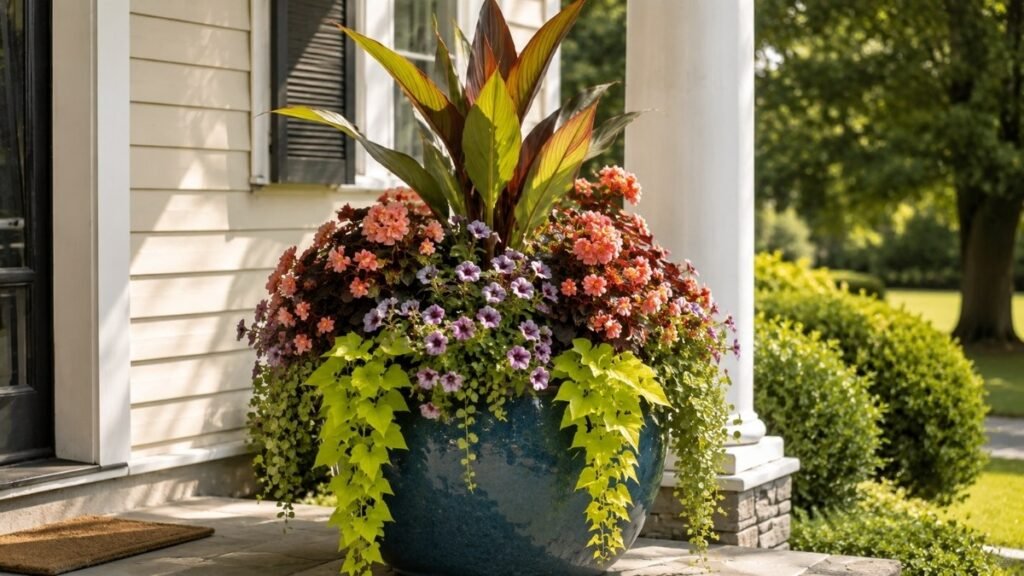
The Thriller-Filler-Spiller method is the best organizing principle for front porch container arrangements. It’s been around for decades in professional landscaping precisely because it works consistently across every light condition, budget, and style.
Thriller: one tall, dramatic plant in the center or back of the pot. Creates height and visual focus. Examples: canna lily, ornamental grass, upright coleus, lantana, caladium.
Filler: medium-height plants that fill the body of the container with color and texture. Examples: begonia, heuchera, impatiens, petunia, sweet potato vine (compact varieties).
Spiller: trailing plants that cascade over the container’s edge, softening the lines of the pot. Examples: creeping Jenny, trailing petunia, sweet potato vine, ivy, bacopa.
Making it work on a real budget:
A single-container arrangement using this formula doesn’t have to be expensive. The thriller plant is usually the most significant cost — buy one larger specimen and fill around it with inexpensive 4-inch pots of fillers and spillers. A 16-inch pot with one thriller, two fillers, and two spillers typically costs $35–50 at a garden center and can look as composed and deliberate as an arrangement three times the price.
Budget alternatives to consider:
- Coleus as both thriller and filler — buy two or three varieties in contrasting colors and fill an entire pot
- Sweet potato vine as the primary spiller — grows prolifically from inexpensive starts, fills a container in weeks
- Marigolds as budget fillers — unfairly overlooked, reliable blooms all season
- Creeping Jenny for the spiller role — extremely fast-growing and often available cheaply
The seasonal swap strategy: rather than buying an entirely new container arrangement each season, keep one permanent “thriller” (boxwood, ornamental grass, a hardy perennial) and swap out only the fillers and spillers with whatever’s appropriate for the season. This cuts seasonal replanting costs significantly.
Typical Budget for a Front Porch Planter:
| Budget | What You Can Create | Best For |
|---|---|---|
| Under $30 | One medium planter with 2–3 easy-care annuals | Apartments, small porches, first-time gardeners |
| $30–60 | A complete Thriller-Filler-Spiller arrangement in one large container | Most beginner front porches |
| $60–100 | Two matching entryway planters for a balanced front door | Boosting curb appeal on a budget |
| $100–200 | Large decorative containers with a mix of annuals and perennials | Homeowners wanting a polished, magazine-style entrance |
| $200+ | Premium containers, evergreen shrubs, and seasonal plant swaps | Long-term landscaping investment |
Good curb appeal doesn’t have to be expensive. For most beginners, spending around $40–60 on one well-designed container creates far more impact than filling a porch with several small mismatched pots. You can always add more planters over time as your confidence grows.
Don’t Buy a Plant Until You Check These 6 Things
It’s surprisingly easy to buy a plant that’s already struggling—or bring home one that’s simply a poor match for your porch. A quick inspection before you buy can prevent problems like root rot, transplant shock, and early leaf drop. These are the checks experienced gardeners make without even thinking, and they’re easy habits for beginners to learn too.
Drainage Holes Matter
This is not negotiable. A pot without drainage holes holds water against the roots until root rot develops. Most porch plant deaths that seem mysterious are drainage problems in disguise — the plant drowns slowly while appearing to receive appropriate care.
If you fall in love with a pot that has no drainage hole, drill one (a standard power drill with a masonry bit works on ceramic and terracotta). If drilling isn’t possible, use the pot as a decorative sleeve — keep the plant in a nursery pot inside it and remove for watering.
Avoid Stressed Big-Box Store Plants
Garden center plants at big-box retailers are often displayed in poor conditions — too much or too little water, full sun when they’re shade plants, or crowded and root-bound after weeks in small pots. Before buying, apply the three-look test:
Look at the roots: tip the pot sideways and check the drainage hole. Roots densely circling the outside of the root ball signal a severely rootbound plant that’s been waiting too long. Not necessarily a dealbreaker, but requires prompt repotting.
Look at the leaves: yellowing, spotted, or mushy leaves indicate stress or disease. Leggy, stretched growth suggests the plant was kept in insufficient light. Healthy plants have firm leaves with good color at the base of the plant, not just at the tips.
Look at the soil: very dry, cracked, or pulling away from the pot sides means the plant has been underwatered. Wet, dark, or musty-smelling soil may indicate overwatering. Neither is ideal, but underwatered plants recover faster.
How to Help a New Plant Adjust After Bringing It Home
This is the step most beginners skip entirely, and it causes a lot of early failures. A plant that’s been growing in a greenhouse or nursery is acclimated to specific conditions — usually very bright light, controlled temperature, and consistent watering. Putting it directly in your hottest, sunniest, or windiest porch position can shock it.
Spend the first week keeping new plants in a more sheltered position — shadier than their final spot, protected from wind, watered carefully. After 5–7 days, move them to their intended position. This transition, called acclimation or hardening off, dramatically reduces transplant stress and early leaf drop.
Porch Problems Nobody Warns Beginners About
Some of the biggest frustrations don’t come from the plants themselves—they come from the porch. Wind, heat, wildlife, and changing weather can undo weeks of careful care if you’re not prepared. After a few seasons of trial and error, these are the simple tricks that make the biggest difference.
Wind Knocking Over Containers
The first time a pot rolls down your porch steps in a summer thunderstorm is memorable. Lightweight plastic pots, tall thrillers, and upper-story porches are the worst combination. Practical solutions:
Place a brick or two inside the pot on top of the soil (cover with mulch to hide them). The added weight at the base dramatically improves stability. Alternatively, fill the bottom 2–3 inches of the pot with stones or gravel before adding soil — heavier base, lower center of gravity.
For hanging baskets, use a hook with a locking mechanism rather than a simple open hook. In truly windy conditions, take baskets down and set them on the porch floor during storms.
Hanging Baskets Drying Out Too Fast
Hanging baskets are beautiful but they’re the thirstiest containers in any porch garden — small soil volume, exposed on all sides, often in a breezy position. In summer heat, daily watering isn’t unusual.
One practical trick: place a coffee filter in the bottom of the basket before adding soil. It lets water drain while slowing the rate at which soil dries at the base — a meaningful difference on hot days. Self-watering hanging baskets are worth the extra cost if this is a consistent problem.
Cats and Squirrels Digging Up Pots
A freshly planted pot is, apparently, a very attractive litter box or nut-storage location. A few deterrents that actually work:
Cinnamon: sprinkle generously on the soil surface. Most animals dislike the scent and will avoid the pot. Reapply after rain.
Pebble or stone mulch layer: a 1-inch layer of decorative pebbles on the soil surface is physically uncomfortable for digging and discourages most animals.
Mulch layer: bark mulch works similarly. Less aesthetically polished but effective, and it also helps retain moisture.
Protecting Wooden Porch Floors
This one almost nobody mentions until they lift a pot and find a perfect ring of rot underneath. Water drains from containers, sits between the pot bottom and the wood floor, and over time stains or damages the surface.
Pot feet: small terracotta, metal, or stone feet that lift the pot an inch above the surface, allowing air and water to flow freely underneath. Inexpensive and widely available wherever pots are sold. Use them on every pot on a wooden porch.
Rolling plant caddies: a wheeled tray that the pot sits on. Lifts the pot off the surface, allows drainage, and makes it easy to move heavy containers for cleaning or seasonal rearranging.
Bottle cap hack: no pot feet available? Three bottle caps under a pot create enough gap for drainage to clear. Not the most elegant solution, but genuinely effective in a pinch.
How to Keep Porch Plants Alive Through Every Season
One of the biggest surprises for new gardeners is how quickly a front porch changes with the seasons. A planter that thrives in May may struggle by August, and the flowers that brighten your entryway in summer won’t necessarily survive the first frost. The good news is that you don’t need a completely new setup each season—just a few timely adjustments.
Spring
This is your planting season. Wait until nighttime temperatures are consistently above 50°F before putting heat-loving plants (begonias, caladiums, petunias, lantana) outside. Cool-season plants — pansies, snapdragons, ornamental kale — can go out earlier and actually prefer the cooler temperatures of early spring.
Start with two or three pots rather than trying to plant everything at once. Learn what works in your specific porch conditions before scaling up.
Summer
Peak maintenance season. Water consistently — porch containers typically need attention every 1–3 days in hot weather, depending on pot size and sun exposure. Feed monthly with a balanced liquid fertilizer. Deadhead flowering plants to keep them blooming rather than going to seed.
In extreme heat waves (sustained temperatures above 95°F), consider moving heat-sensitive plants to a slightly more sheltered position temporarily, or adding shade cloth for the hottest part of the day.
Fall
As temperatures drop below 60°F consistently, tropical plants — begonias, caladiums, impatiens, lantana — begin to struggle. Replace them with cool-season plants: mums, ornamental peppers, pansies, ornamental kale. These thrive in fall temperatures and often look better than their summer counterparts.
Winter
Here’s the question everyone has: when do you bring porch plants inside?
The answer depends on the plant. Hardy perennials (hostas, boxwood, heuchera in appropriate zones) can stay outside through winter in their containers. Tropical plants need to come in before the first frost.
The practical rule: when the weather forecast shows nighttime temperatures approaching 40°F, it’s time to move tender plants inside. Don’t wait until you see frost in the forecast — by the time frost arrives, damage is already done to cold-sensitive plants. The first soft warning at 40°F is your signal to act.
If you forget and plants experience a light frost: bring them inside immediately and cut back any damaged growth. Some will recover, some won’t — but immediate indoor shelter gives them the best chance.
Easy Styling Ideas That Make Any Porch Look More Expensive
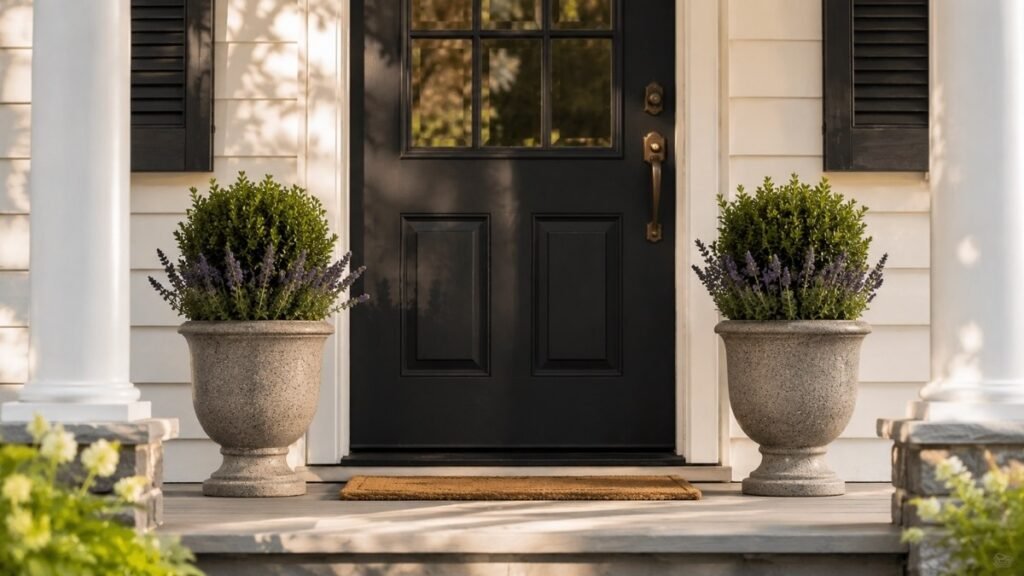
Symmetry works in your favor. Two matching pots flanking the front door is the single most impactful arrangement change you can make, and it doesn’t require expensive plants. Two identical containers with the same planting make a porch look composed and intentional even with basic, affordable plants inside.
Layer heights deliberately. A tall container or plant in the back, medium pots in the middle, low-growing plants at the front or floor level — this creates visual depth and makes a small porch feel more planted. A tiered plant stand is one of the most efficient investments for a small porch.
Match containers to your door color. Dark door? Use dark green boxwood or deep burgundy heuchera. White or light door? Bright flowers or lime-green foliage pops. The contrast between door and planters creates the visual interest that makes porches feel curated rather than assembled.
Repeat containers for cohesion. Three mismatched pots look like an accident. Three matching pots look like a decision. You don’t need expensive containers — inexpensive resin pots from a big-box store all in the same style and color create a unified, professional look.
The stone spray paint trick: inexpensive resin or plastic pots sprayed with stone-finish spray paint (widely available at hardware stores for around $8 a can) are genuinely convincing at a distance. Two or three applications create a realistic texture that reads as genuine stone or concrete from the street. At $25 total versus $80 or more for actual stone planters, the cost-to-impression ratio is hard to beat.
Quick Rescue Guide: Why Your Porch Plants Are Struggling
A porch plant rarely fails without leaving clues. Brown leaf edges, yellowing foliage, afternoon wilting, or a sudden drop in flowers are all signs that something isn’t quite right. Instead of guessing, use these common symptoms to narrow down the cause and decide what to do next.
Leaves Turning Brown
Brown at the edges: usually underwatering or low humidity. Check soil moisture and increase watering frequency. Brown edges can also indicate salt buildup from fertilizer — flush the soil thoroughly with water to remove accumulated minerals.
Brown patches on sun-facing leaves: sunscorch. The plant is getting more direct sun than it can handle. Move to a slightly more sheltered position or add shade cloth during peak afternoon hours.
Yellow Leaves
Almost always overwatering or waterlogged soil. Check that drainage holes are clear and functional. Let the soil dry out more thoroughly between waterings. In mixed containers, check whether one plant is hogging water while others are drowning.
Wilting Every Afternoon
Two possible causes that require different responses. If the soil is dry: the plant is thirsty and the afternoon heat is amplifying it. Water in the morning so plants are hydrated before peak heat. If the soil is moist: the roots may be overheated — a black pot in direct afternoon sun can reach temperatures that effectively cook root systems. Switch to a lighter-colored container or insulate the pot with burlap.
No Flowers
The most common culprits: not enough light for the variety, too much nitrogen fertilizer (promotes leafy growth at the expense of blooms), or a plant that hasn’t been deadheaded and is directing energy into seed production. Switch to a fertilizer higher in phosphorus during the bloom season, check light conditions, and deadhead spent flowers regularly.
Plant Suddenly Dying
Sudden collapse — from healthy-looking to wilting in 24–48 hours — almost always indicates root rot, particularly if the soil has been consistently wet. Unpot immediately, inspect the roots, and trim away all brown or mushy root material. Repot in fresh dry soil with excellent drainage. Don’t water for at least a week after repotting. Some plants recover; others don’t — but intervention is always worth attempting.
Before You Buy: A Simple Checklist for First-Time Porch Gardeners
Run through this before you spend a dollar at the garden center:
✔ Light: How many hours of direct sun does my porch actually receive? (Use the shadow test.)
✔ Drainage: Do my pots have drainage holes? If not, can I drill them or find pots that do?
✔ Pot size: Is the pot large enough for the plants I want? Most arrangements need at least a 12-inch diameter; thriller-filler-spiller combos want 16 inches or more.
✔ Wind: Is my porch exposed to significant wind? If so, am I using weighted containers and wind-tolerant plants?
✔ Winter plan: Are these plants perennials in my zone, or will I need to replace them each year? Do any need to come inside before first frost?
✔ Watering schedule: Realistically, how often can I water? If the answer is “twice a week at best,” choose drought-tolerant plants and larger containers that hold moisture longer.
FAQ
Can I grow plants on a front porch that never gets direct sunlight? Yes — and several plants genuinely prefer it. Boston fern, cast iron plant, caladium, and hosta all thrive in deep shade conditions. Focus on foliage interest rather than flowers, as most shade plants are grown for their leaf color and texture rather than blooms.
How often should I water outdoor porch plants in summer? Check daily in peak summer. Most porch containers need watering every 1–3 days depending on pot size, plant type, and sun exposure. Small pots in full sun may need daily watering. Larger containers in shade may only need water every 3–4 days. Always check the soil rather than following a fixed schedule.
Which front porch plants are hardest to kill? Cast iron plant (Aspidistra), lantana in hot climates, boxwood, and wave petunias are among the most resilient options. For shade porches, Boston ferns in humid climates and hostas in zones 3–9 are reliable survivors with basic care.
How do I stop lightweight pots from blowing over? Place bricks or stones inside the pot under the soil, or fill the bottom few inches with gravel before adding potting mix. This lowers the center of gravity and adds weight. For hanging baskets, use locking hooks and take baskets down during storms.
Should I bring porch plants indoors during winter? It depends on the plant and your climate. Hardy perennials in their appropriate zones can stay outside. Tropical plants — begonias, caladiums, impatiens, most annuals — should come inside when nighttime temperatures approach 40°F. Tender perennials like lantana and coleus can often be overwintered indoors if brought in before frost.
What’s the best plant for a welcoming front entrance? A matched pair of containers flanking the front door with a simple, well-executed planting creates the most welcoming entrance. The specific plant matters less than the arrangement and the health of the plants. For low-maintenance welcoming impact, a matched pair of boxwood topiaries or hostas requires minimal care and looks polished year-round.
Can I use decorative pots without drainage holes? Technically yes, with modification. Either drill drainage holes (a masonry drill bit works on ceramic and terracotta), or use the decorative pot as a sleeve — keep the plant in a standard nursery pot inside and remove it for watering. Using a pot without drainage and without any modification leads to root rot in almost every case.
How do I keep squirrels and neighborhood cats out of my planters? A layer of cinnamon on the soil surface works well — the scent deters most animals and is harmless to plants. A layer of pebbles or stone mulch makes the soil surface uncomfortable for digging. Pine cones scattered across the soil also work and look natural.
Editor’s Note: Start Small, Grow with Confidence
Beautiful front porches rarely come together overnight. Most are built one planter, one season, and one lesson at a time.
If there’s one piece of advice we’d give every beginner, it’s this: spend more time observing your porch than shopping for plants. Notice where the morning sun falls, how quickly containers dry after a hot day, and which corners stay cool after a summer storm. Those simple observations will help you choose better plants than any label at the garden center ever could.
Gardening isn’t about getting everything perfect on the first try. It’s about creating a welcoming space that becomes a little greener and a little more personal each season.
Final Thoughts
A welcoming porch isn’t created by expensive plants. It’s created by choosing plants that fit your space.
Once your containers match your porch’s light, wind, and climate, keeping them healthy becomes much easier — even if this is your first season gardening. You stop fighting the conditions and start working with them.
Start with one or two pots, not twelve. Learn what your specific porch does to plants through a full season. Then expand. The gardeners with the most beautiful porches aren’t the ones who spent the most in May — they’re the ones who paid attention in July and August and adjusted accordingly.
Your porch will tell you what it needs. The plants you choose are just the beginning of that conversation.
Keep Growing
- 🌿 [Balcony Garden: How to Transform Any Small Outdoor Space] — the complete guide to outdoor container gardening
- 🪴 [Container Gardening: The Complete Beginner’s Guide] — pots, soil, and what actually works
- 🌿 [Boston Fern Care: Why They Keep Dying] — deep-dive on the porch shade classic
- 🍅 [Growing Tomatoes in Pots] — if you want your porch to feed you too
From the DirtZip Team
At DirtZip, we believe every home deserves a little more green—and every gardener deserves advice that’s practical, affordable, and easy to follow. Whether you’re caring for your very first porch planter or adding the finishing touches to an outdoor space you’ve nurtured for years, we’re here to help you grow with confidence, one season at a time.