
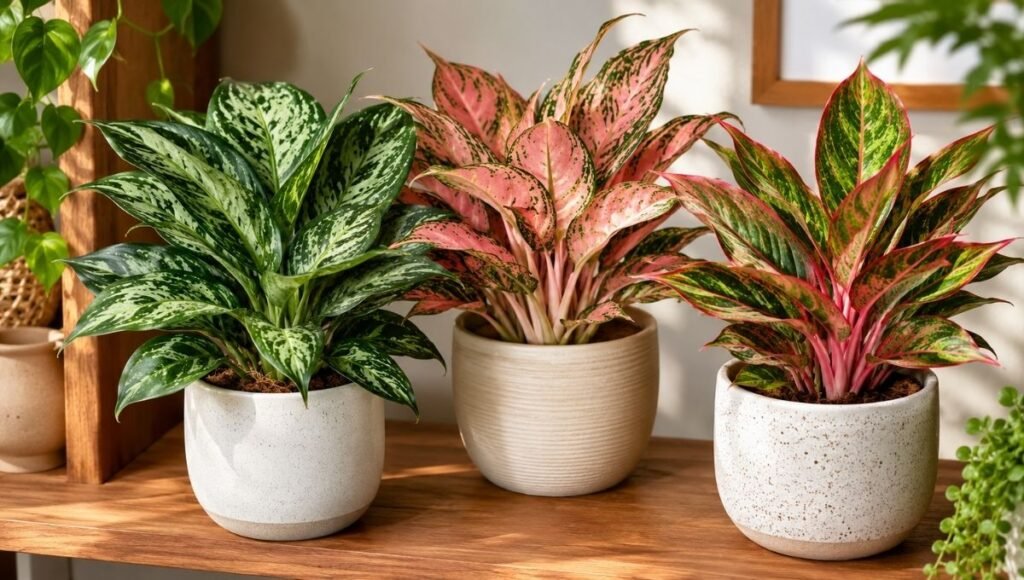
Every plant conversation seems to start with pothos, or snake plants, or monstera. Chinese evergreen — Aglaonema — rarely gets the opening sentence it deserves. Which is a genuine shame, because in almost every practical way, it’s the superior beginner plant.
It tolerates low light in a way that even pothos can’t match. It comes in an almost bewildering range of colors — deep green, silver-streaked, pink-flushed, red-tipped — so there’s a variety for every aesthetic. It forgives inconsistent watering without immediately showing distress. And it has that particular quality of a plant that looks well-tended even when it isn’t, which is both practically useful and slightly reassuring.
I’ve recommended Chinese evergreen care to more people than any other plant, for one specific reason: it’s the plant that rebuilds confidence. If you’ve killed things before and you’re not sure you can do this, the Chinese evergreen is where I’d start. It gives you time. It lets you learn without immediately penalizing every mistake.
This guide covers everything that actually matters, plus the one thing most care articles miss: which variety to choose for your specific light situation.
Key Takeaways
- Chinese evergreen (Aglaonema) is one of the most light-adaptable houseplants available — varieties exist that genuinely thrive in low, medium, and bright indirect light
- Green varieties tolerate low light best; pink and red varieties need more light — matching variety to your light level is the most important purchase decision
- Water when the top 1–2 inches of soil feel dry; Chinese evergreen tolerates inconsistency better than most tropical plants
- NASA’s 1989 Clean Air Study identified Aglaonema as one of the top air-purifying houseplants, effective at removing benzene and formaldehyde from indoor air
- Chinese evergreen is toxic to cats, dogs, and children — contains calcium oxalate crystals; keep out of reach of pets and young children
Why Chinese Evergreen Is the Most Underrated Beginner Plant
Walk into any plant shop and you’ll see three kinds of Chinese evergreen customers. The first bought one because it was on sale and they weren’t sure what else to get. The second bought one specifically because they’d killed everything else and needed something forgiving. The third is the experienced plant person who knows exactly what they’re doing and keeps coming back for the new varieties.
All three end up in the same place: genuinely charmed by a plant they underestimated.
Aglaonema has been cultivated in Asia for centuries — in Chinese culture, it’s considered a symbol of good fortune, and it’s a traditional housewarming and office gift for this reason. The modern houseplant versions have been extensively bred to produce an extraordinary range of leaf colors and patterns. The classic varieties are silver-green, striped, and deep emerald. The newer cultivars push into flamingo pink, deep crimson, and cream-splashed patterns that look almost painted.
What hasn’t changed is the care profile: adaptable, forgiving, and quietly dramatic in a way that doesn’t demand constant attention to pull off.
Chinese Evergreen Care: The Most Important Decision — Choosing the Right Variety
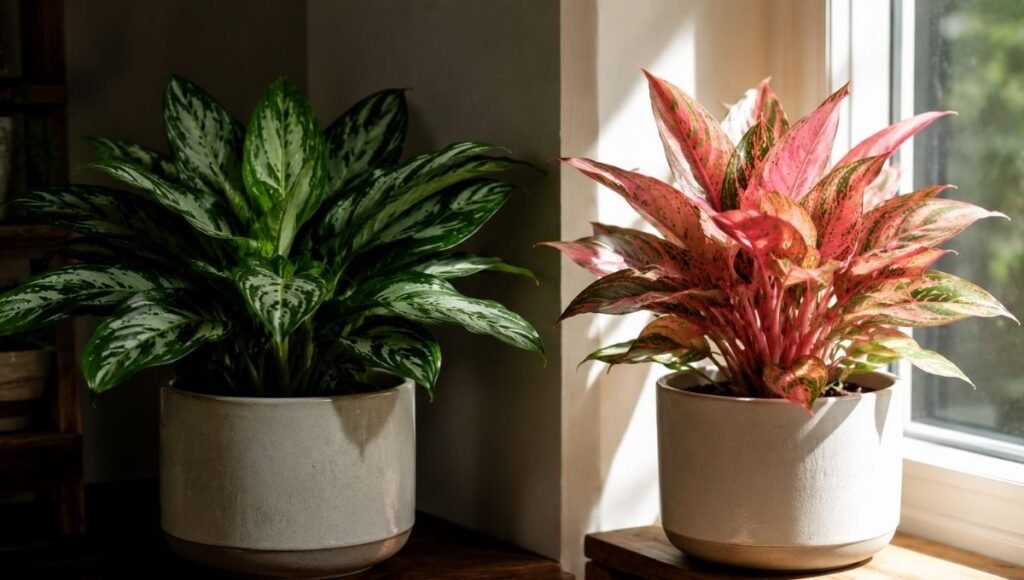
Most Chinese evergreen care guides treat all varieties identically. This is the thing they get wrong, and it’s the source of most Chinese evergreen disappointment.
Here’s the rule that actually matters: the more color in the leaves, the more light the plant needs.
Deep green and silver-patterned varieties (Aglaonema commutatum, ‘Silver Bay’, ‘Silver Queen’) have more chlorophyll and can tolerate genuinely low light — north-facing windows, dim corners, offices with small windows. These are the varieties for challenging light situations.
Pink, red, and orange varieties (‘Siam Aurora’, ‘Valentine’, ‘Wishes’) have less chlorophyll in the colorful portions of their leaves and need medium to bright indirect light to maintain their color. In low light, they survive but the vibrant colors fade toward green, which defeats the entire point of buying them.
The practical guide:
- North-facing room, dim corner, office with fluorescent light: choose deep green or silver varieties. They’re the most light-flexible plants in the entire houseplant world.
- East or west-facing window, medium indirect light: almost any variety works, including moderately colored ones.
- Bright indirect light, near a south-facing window: pink, red, and the most vibrant patterned varieties are at their best here. Just keep them away from direct harsh sun, which scorches the leaves.
Getting this one decision right means you’ll have a plant that looks the way you expected it to, rather than one that slowly becomes less vibrant and you can’t figure out why.
Chinese Evergreen Care: Light Requirements
The reason Chinese evergreens appear in airport lounges, hospital waiting rooms, hotel lobbies, and every shopping center that has plants is not because they’re cheap. It’s because they genuinely survive in the kind of light those spaces provide — typically fluorescent overhead lighting with very little natural sun.
Low light (north-facing rooms, dim corners): green and silver varieties survive and look healthy. Growth is slow. New leaves emerge gradually. The plant maintains its appearance without declining.
Medium indirect light (east-facing windows, a few feet from a south or west window): most varieties look their best here. Growth is steadier, colors are more vibrant, and the plant produces new leaves regularly.
Bright indirect light (near a south or west window, filtered through a sheer curtain): ideal for the most colorful varieties. The pink and red tones intensify with more light.
Direct harsh sunlight: avoid. Direct afternoon sun scorches Chinese evergreen leaves, producing bleached, papery patches that don’t reverse. Even sun-loving varieties want bright indirect light, not direct rays.
One useful maintenance note: Chinese evergreen leaves accumulate dust on their broad, flat surfaces. A quick wipe with a damp cloth every 3–4 weeks helps the plant absorb available light more efficiently. It also makes the leaves look genuinely polished — which, for a plant this attractive, is worth a few minutes.
How to Water a Chinese Evergreen
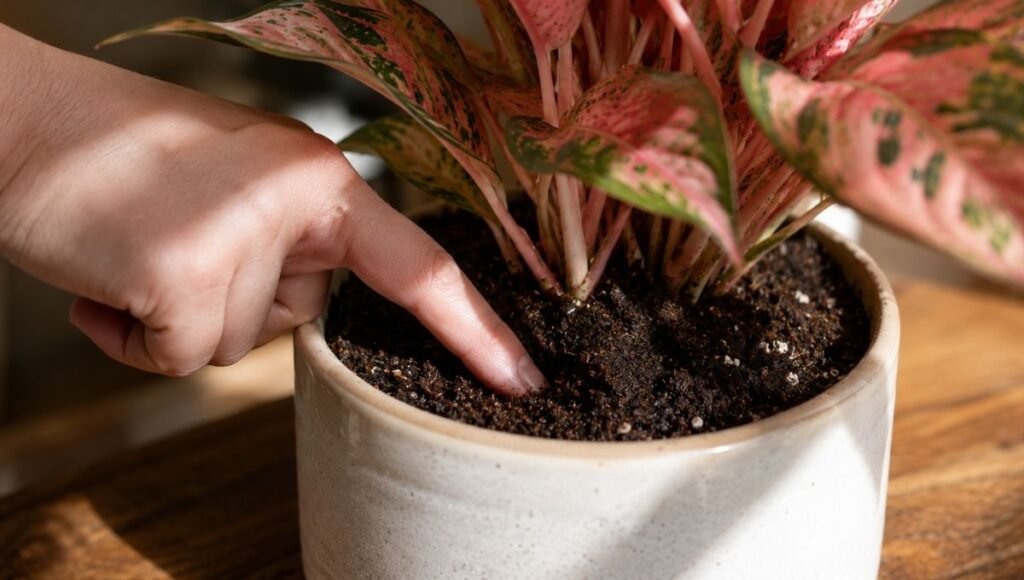
Chinese evergreen is more forgiving of watering inconsistency than most tropical houseplants — a consequence of its fleshy stems that hold some moisture reserve. But it’s not indestructible, and overwatering remains the most common way to damage it.
The rule: let the top 1–2 inches of soil dry out before watering. When you water, water thoroughly — until it drains from the pot bottom. Then let it dry to that depth again before the next watering.
Frequency: every 7–10 days in spring and summer; every 10–14 days in autumn and winter. But the soil test overrides the calendar — actual frequency depends on your pot material, light level, and home temperature.
Signs of overwatering: yellow leaves, particularly lower leaves that yellow with some softness; mushy stems near the soil; a musty smell from the pot; soil that stays wet for more than 10 days. Overwatering combined with a pot without drainage is the fastest way to kill a Chinese evergreen.
Signs of underwatering: leaves that curl inward slightly; stems that look less turgid than usual; soil pulling away from the pot sides. Chinese evergreen recovers from underwatering more readily than most tropical plants — water thoroughly and it usually bounces back within a day or two.
On water temperature: use room-temperature water. Cold water from the tap can shock the roots of tropical plants adapted to consistently warm conditions. Letting tap water sit for an hour or overnight before using also allows chlorine to dissipate — particularly helpful for plants sensitive to water chemicals.
Soil, Pots, and Repotting
Chinese evergreen does well in a standard all-purpose potting mix. The soil should drain freely while holding enough moisture to keep roots comfortable between waterings. If your mix feels very dense, add 15–20% perlite to improve drainage.
The slight root-bound preference: like several other popular tropical plants, Chinese evergreen grows better when it’s somewhat snug in its pot. Too-large containers hold excess wet soil that roots can’t absorb, increasing root rot risk. When repotting, go up only one size — 1–2 inches larger in diameter.
Repotting frequency: every 2 years, or when roots are visibly growing from drainage holes or the plant is becoming unstable. Spring is the best time — the plant is entering active growth and adjusts most quickly.
Drainage holes: non-negotiable. Chinese evergreen in a pot without drainage will develop root rot. If you love a decorative pot without holes, use it as a sleeve — keep the plant in a nursery pot inside the decorative one.
Pot material: ceramic or plastic both work well. Terracotta, which dries faster, suits the plant’s preference for allowing soil to dry between waterings, but requires more frequent watering checks in warm weather.
Temperature and Humidity
Chinese evergreen prefers temperatures between 65–80°F (18–27°C) — standard room temperature. It dislikes cold, particularly cold drafts, which cause the distinctive cold-damage symptom: yellow or brown blotches on leaves that appear relatively quickly after exposure.
Keep it away from: exterior doors in winter; cold drafts from windows; air conditioning vents blowing directly on the plant; temperatures below 60°F (15°C).
Humidity: Chinese evergreen manages at average household humidity (40–50%) without showing significant stress — it’s less humidity-demanding than calathea, ferns, or prayer plants. In very dry winter conditions, brown crispy leaf tips may appear. A pebble tray with water or occasional humidifier use helps, but this plant is genuinely more humidity-tolerant than most of its tropical relatives.
Feeding
A balanced liquid fertilizer, applied once monthly during spring and summer at the recommended strength, supports healthy growth and maintains the vibrancy of leaf coloring. Stop feeding in autumn. Don’t feed through winter.
Over-fertilizing is a more common problem than underfeeding with Chinese evergreen. Too much fertilizer produces rapid, lush growth that’s weaker and more susceptible to stress, and accumulated fertilizer salts in the soil cause brown leaf tips. Monthly during growing season; nothing in winter. That’s the complete feeding plan.
Why the Leaves Change Color (The Light Story)
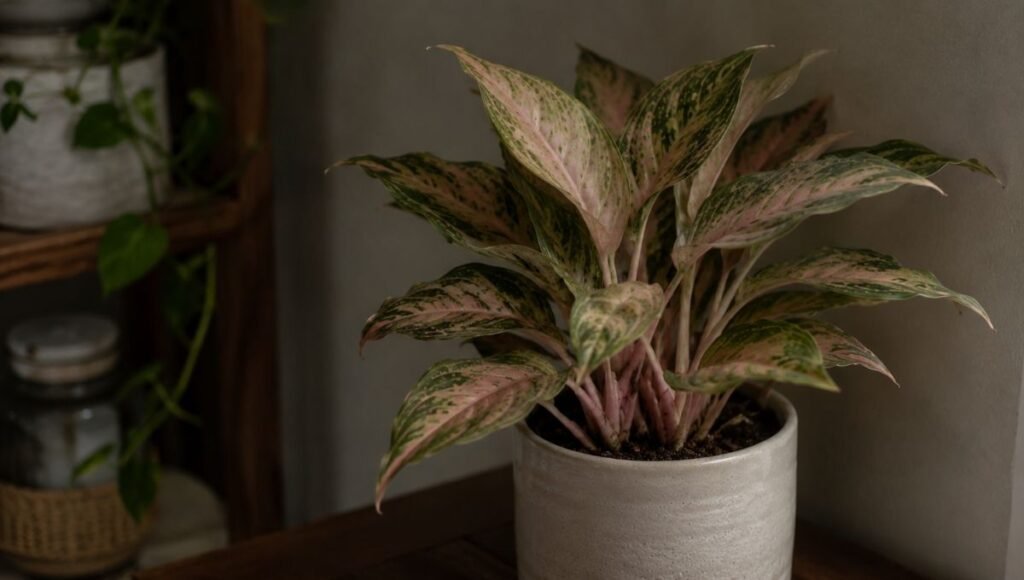
One of the most common Chinese evergreen questions is some version of: “My plant used to be pink/red and now it’s mostly green. What happened?”
The answer is almost always light. As discussed in the variety section, the colorful pigments in pink and red varieties require more light to express than the green chlorophyll. In lower light conditions, the plant produces more chlorophyll to maximize whatever light is available — which means the green overwhelms the pink or red coloring.
This is reversible. Move the plant to a brighter spot (bright indirect light, near a south or east-facing window) and over the following growing season, new leaves will emerge with more color. Existing leaves won’t change, but the new growth will reflect the improved conditions.
The opposite problem — a plant that was bought for its green foliage developing unexpected color — happens when a green variety gets more light than expected and begins expressing pigments that were always genetically present but suppressed.
Common Chinese Evergreen Problems
Yellow Leaves
Most commonly overwatering. Check soil moisture — if it’s consistently wet, reduce watering frequency and ensure the pot drains freely. Also check whether the pot is in a cold draft; cold damage causes a similar yellow blotching pattern.
Occasional yellowing of the very oldest, lowest leaves is natural aging — normal and not a problem. It’s only concerning when yellowing progresses rapidly upward or affects multiple leaves simultaneously.
Brown Leaf Tips
Usually low humidity in very dry indoor conditions, or tap water chemicals accumulating over time. Ensure the plant isn’t near a heating or cooling vent. Consider switching to filtered water or letting tap water sit overnight before using. Flush the soil every few months by watering heavily to remove accumulated mineral salts.
Trim existing brown tips with clean scissors, cutting at a slight angle. Address the cause to prevent new browning.
Drooping or Wilting
If soil is dry: underwatering. Water thoroughly and the plant typically recovers within hours.
If soil is wet: root rot. The roots have been damaged by consistently wet conditions and can no longer deliver water to the leaves. Unpot, check roots, trim any brown mushy sections, let air-dry for an hour, and repot in fresh dry soil.
Loss of Leaf Color (Greening Out)
Insufficient light for the variety. Move to a brighter spot with bright indirect light. New growth will show improved color within 4–6 weeks; existing leaves won’t change.
Propagating a Chinese Evergreen
Chinese evergreen propagates easily through stem cuttings or division.
Stem cuttings in water: cut a healthy stem with several leaves and a visible node, just below the node. Place the cut end in a jar of room-temperature water in bright indirect light. Roots develop in 4–6 weeks. Once roots are 1–2 inches long, pot up in fresh potting mix.
Division: when repotting, the plant often has multiple crowns (growing points) that can be carefully separated. Each section needs its own root system — gently pull or cut apart, ensuring roots are attached to each division. Pot separately in fresh soil.
Division produces a more established new plant faster than cuttings. If your Chinese evergreen has become large and multi-stemmed, repotting is an opportunity to create multiple new plants for free.
⚠️ Chinese Evergreen and Pet Safety
Chinese evergreen contains insoluble calcium oxalate crystals throughout its leaves and stems. If ingested, these cause immediate oral irritation — burning sensation in the mouth, excessive drooling, vomiting, and difficulty swallowing — in both pets and children.
The ASPCA lists Aglaonema as toxic to cats and dogs. Keep Chinese evergreen out of reach of pets that chew on plants and away from young children. If ingestion occurs, contact your veterinarian or the ASPCA Animal Poison Control Center (888-426-4435).
If You Only Have 5 Minutes Right Now
Look at your Chinese evergreen and check two things: is the soil dry to 1–2 inches depth (if so, water now), and is it getting the right light for its variety (colorful varieties in dim light → move to a brighter spot). Those two adjustments handle the vast majority of Chinese evergreen problems.
FAQ
What is the best Chinese evergreen variety for low light? Deep green and silver varieties — ‘Silver Bay’, ‘Silver Queen’, and Aglaonema commutatum — tolerate low light better than almost any other houseplant. Pink and red varieties need medium to bright indirect light to maintain their color and should not be placed in genuinely dim conditions.
How often should I water a Chinese evergreen? When the top 1–2 inches of soil feel dry — typically every 7–10 days in spring and summer, every 10–14 days in autumn and winter. Chinese evergreen is more tolerant of inconsistent watering than most tropical plants, but consistent overwatering causes root rot.
Why is my Chinese evergreen turning green? Insufficient light for the variety. Pink and red varieties need medium to bright indirect light to maintain their coloring. In low light, the plant produces more chlorophyll (green) at the expense of the colorful pigments. Move to a brighter spot and new growth will be more vibrant.
Are Chinese evergreens safe for cats and dogs? No — Chinese evergreen is toxic to cats and dogs. The plant contains calcium oxalate crystals that cause oral irritation, drooling, and vomiting if ingested. Keep out of reach of pets. Contact your vet if ingestion occurs.
Can Chinese evergreen survive in very low light? Better than almost any other houseplant — the green and silver varieties genuinely tolerate the kind of dim conditions that would finish most other plants. They grow slowly in truly low light and colors are less vibrant, but they survive and remain healthy.
How do I make my Chinese evergreen grow faster? Move to medium or bright indirect light (the biggest growth accelerator), feed monthly with a balanced liquid fertilizer during spring and summer, and ensure the pot isn’t too large — a snug pot encourages more active growth. Also check that it’s spring or summer; most Chinese evergreens grow very slowly in winter regardless of care.
The Plant for Every Corner
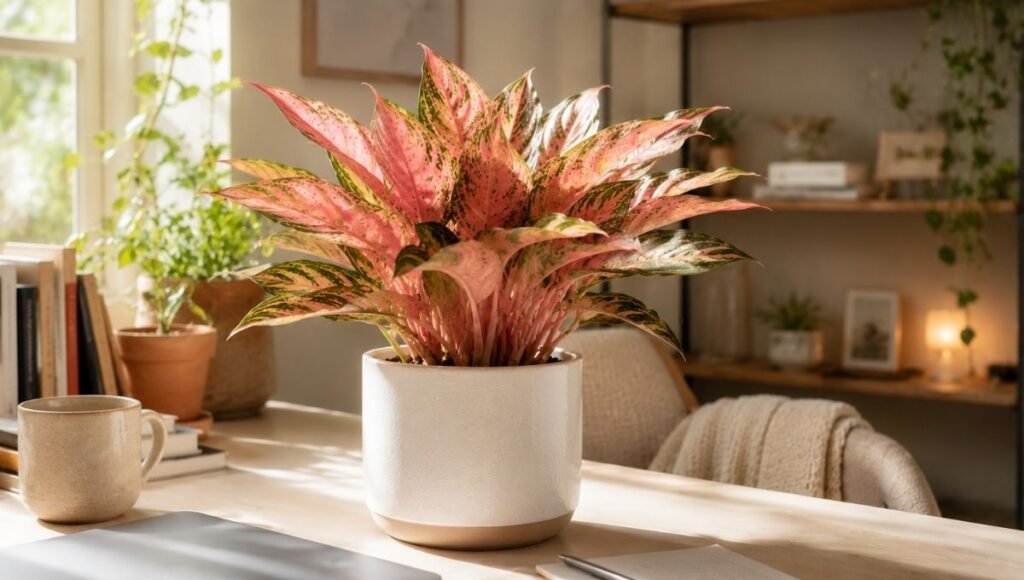
There’s a Chinese evergreen for the north-facing bathroom that gets barely any light. There’s one for the bright living room window where you want something with vibrant pink foliage. There’s one for the office desk under fluorescent lighting. There’s one for the person who waters regularly and one for the person who forgets.
This adaptability is what makes Chinese evergreen genuinely special — not as a consolation prize for people who can’t grow anything else, but as a thoughtful, versatile choice that earns its place in any collection. A 2022 review in Environmental Research found that having indoor plants in any light condition consistently improves mood and reduces stress — and the Chinese evergreen is one of the few plants that makes that possible in almost every indoor environment.
Start with the variety that matches your light. Keep the soil appropriately dry. Everything else will sort itself out.
Keep Growing
- 🌿 [Low Maintenance Indoor Plants: 12 Hard-to-Kill Picks] — the Chinese evergreen’s neighbors in the easy-care category
- 🌑 [Snake Plant Care: The Complete Guide] — another exceptional low-light performer
- 💛 [Plant Leaves Turning Yellow? 7 Real Causes and Fixes] — diagnose any struggling plant fast
- 🌱 [Indoor Plant Care: The Complete Beginner’s Guide] — the principles behind every plant you’ll ever own
References: Wolverton, B.C., Johnson, A., & Bounds, K. (1989). Interior Landscape Plants for Indoor Air Pollution Abatement. NASA/ALCA Final Report. Largo-Wight, E., et al. (2022). When green enters a room: A scoping review of epidemiological studies on indoor plants and mental health. Environmental Research, 214. ASPCA Animal Poison Control Center. Toxic and Non-Toxic Plant List — Chinese Evergreen (Aglaonema spp.). Proven Winners leafjoy (2024). The Ultimate Guide to Growing Chinese Evergreen. Missouri Botanical Garden Plant Finder (2024). Aglaonema — Chinese Evergreen.