
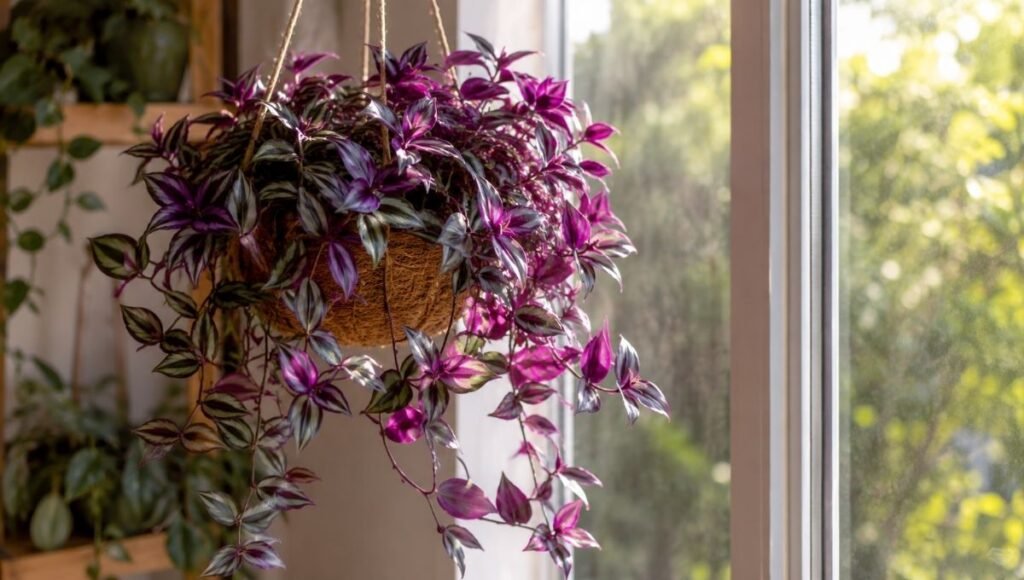
Someone on the Tradescantia subreddit posted a photo with the caption: “Help with plant care — it looked so vibrant when I bought it and now it’s just… sad.”
The photo showed exactly what you’ve probably seen if you’ve owned one of these plants: a trailing vine that started out with those gorgeous purple and silver striped leaves, and has gradually become long, sparse, and mostly green. The nodes spaced too far apart. The color drained out. The whole plant looking more like a faded memory of itself than the plant in the shop.
The replies in that thread told the same story they always do: insufficient light, combined with never being pruned. Two things. That’s the entire explanation for most wandering jew plant care failures. Not wrong soil, not overwatering, not some mysterious disease. Light and pruning.
This guide is specifically for people who are watching their Tradescantia slowly go leggy and dull, and want practical answers — not a generic care checklist.
Key Takeaways
- The wandering jew plant (Tradescantia zebrina, also increasingly called “Wandering Dude” or “Inch Plant”) is one of the fastest-growing and easiest-to-propagate trailing houseplants available
- Fading color = insufficient light. The purple and silver tones require bright indirect light to express; in dim conditions, leaves revert to plain green
- Leggy growth = insufficient light + no pruning. Regular pinching transforms a sparse, trailing plant into a full, lush one within weeks
- The plant is mildly toxic to cats and dogs via skin contact with the sap — the ASPCA lists it as an irritant; keep out of reach of pets
- Tradescantia roots in water within 7–14 days, making it one of the easiest houseplants to propagate — and the correct response to a leggy plant is almost always to cut it back aggressively and root the cuttings
First: About the Name
A quick note because this comes up constantly and it matters. “Wandering jew” is the traditional common name, and it’s the term most people still search for — which is why this article uses it in the title. But many growers, nurseries, and botanical institutions have moved away from it due to its anti-Semitic origins, preferring “Wandering Dude,” “Inch Plant,” or simply “Tradescantia.”
All three names refer to the same group of plants, primarily Tradescantia zebrina (purple and silver stripes), Tradescantia pallida (deep solid purple), and Tradescantia fluminensis (green with white). The care advice in this guide applies to all of them.
Why the Color Fades (The Real Answer)
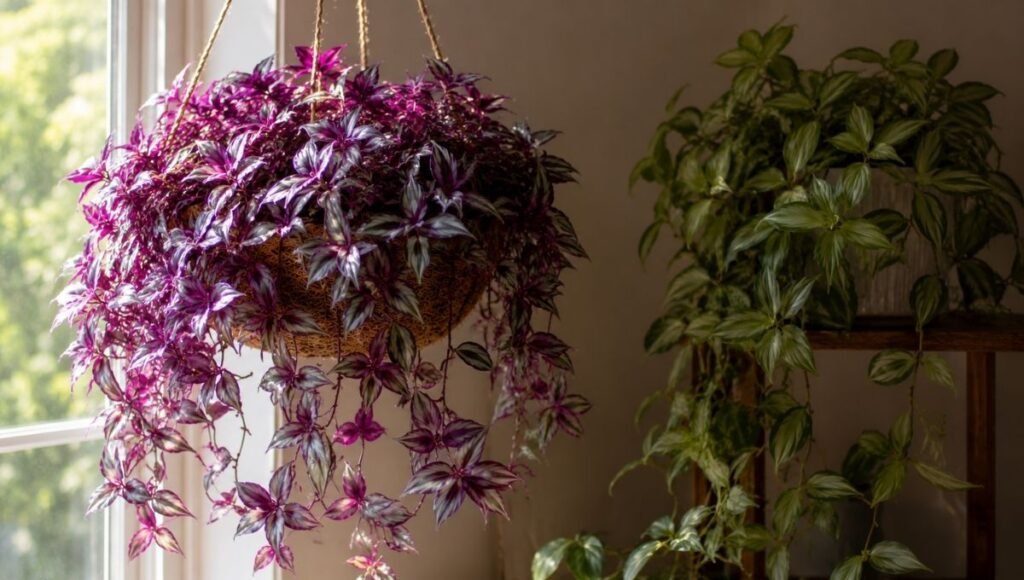
The vibrant purple, silver, and green striping of Tradescantia zebrina is produced by pigments that require light to develop. In bright indirect light, the plant produces those rich tones. In lower light, it produces more chlorophyll (green) at the expense of the other pigments — and gradually, the stripes fade toward plain green.
This is not damage. It’s the plant adapting to its available light. The coloring isn’t gone — it’s suppressed. Move the plant to better light and new growth will come in with the full stripe expression again.
The light level that maintains color: bright indirect light, ideally 4–6 hours of it. An east or west-facing window is usually ideal — bright morning or afternoon light without the intensity of direct midday sun, which scorches the delicate leaves. A south-facing window works with a sheer curtain to filter the harshest rays.
A useful observation trick: hold a leaf up to the light from a window. In good light, the silver sections literally shimmer — almost metallic. That shimmer is your signal that the plant is in an appropriate light condition.
What happens in too much direct sun: leaves bleach, the variegation flattens to a washed-out uniform tone, and edges develop brown scorching. Bright and indirect is the phrase that matters — not “sunlight.”
Wandering Jew Plant Care: The Pruning Conversation Nobody Has
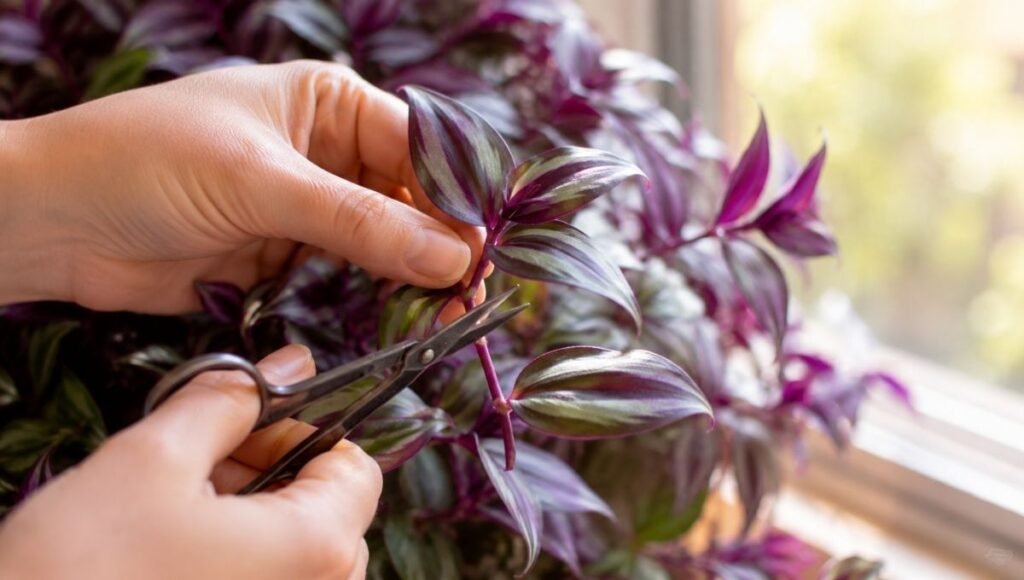
Here is the thing most care guides mention in one sentence and move on from: you have to actually prune this plant. Not occasionally, not when it gets out of hand — regularly, deliberately, as part of the routine.
Tradescantia has a trailing growth habit. Left alone, it extends its vines outward and downward, spacing the leaves farther and farther apart along the stem. The result is exactly what that Reddit photo showed: long sparse stems with leaves only at the tips, and bare, woody nodes in the middle section.
The fix is aggressive pinching. Cut the stem just above a leaf node — the visible bump where a leaf attaches to the stem. The plant responds by producing two new growth points from that node. Do this regularly across the whole plant, and it transforms from a few sparse vines into a genuinely full, lush cascade.
How to do it in practice:
Every 3–4 weeks during the growing season, go through the plant and pinch or cut back any stem that has gotten leggy. Cut to a node that’s still close to the base. Then — and this is the step most people skip — take those cut pieces and stick them back into the pot. Tradescantia roots so readily that you can simply push 4-inch cuttings into the existing soil, water once, and they’ll establish within two weeks. This fills in the sparse areas of the pot and makes the whole plant look dramatically fuller within a month.
If your plant is severely leggy right now — long bare stems, color mostly gone — the correct response is a hard reset. Cut the whole plant back by two-thirds, root the cuttings, and start fresh. It sounds brutal, but the plant genuinely recovers better from this than from gradual neglect.
How to Water a Tradescantia
Tradescantia likes consistent moisture — not wet, not dry, but reliably damp. The top inch of soil should be dry before you water, but don’t let it dry out completely. The “let it drought” approach that works for succulents doesn’t suit this plant.
The practical rule: press your finger into the soil. Top inch dry? Water thoroughly. Still moist? Wait another couple of days.
Frequency: every 7–10 days in spring and summer; every 10–14 days in autumn and winter. More often in a sunny window, less often in a shadier position.
One specific watering note: Tradescantia has fuzzy stems on some varieties, and water sitting on leaves can cause brown mushy spots. Water at soil level rather than over the plant, particularly in low-humidity or low-airflow conditions. If you notice brown, soggy patches appearing on otherwise healthy-looking leaves, overhead watering is usually the culprit.
Signs of overwatering: yellowing leaves that feel soft, soggy soil, stems that look darker and softer at the base, a slightly musty smell from the pot.
Signs of underwatering: the plant drops older leaves aggressively — Tradescantia will shed its oldest leaves when water-stressed. If you’re losing leaves faster than the plant is growing new ones, check soil moisture and increase watering frequency.
Soil and Pots
Standard all-purpose potting mix works well. Add 15–20% perlite if the mix feels dense — Tradescantia wants consistent moisture but not waterlogged conditions, and perlite helps maintain that balance.
Drainage holes are essential. The plant’s roots are susceptible to rot if sitting in standing water.
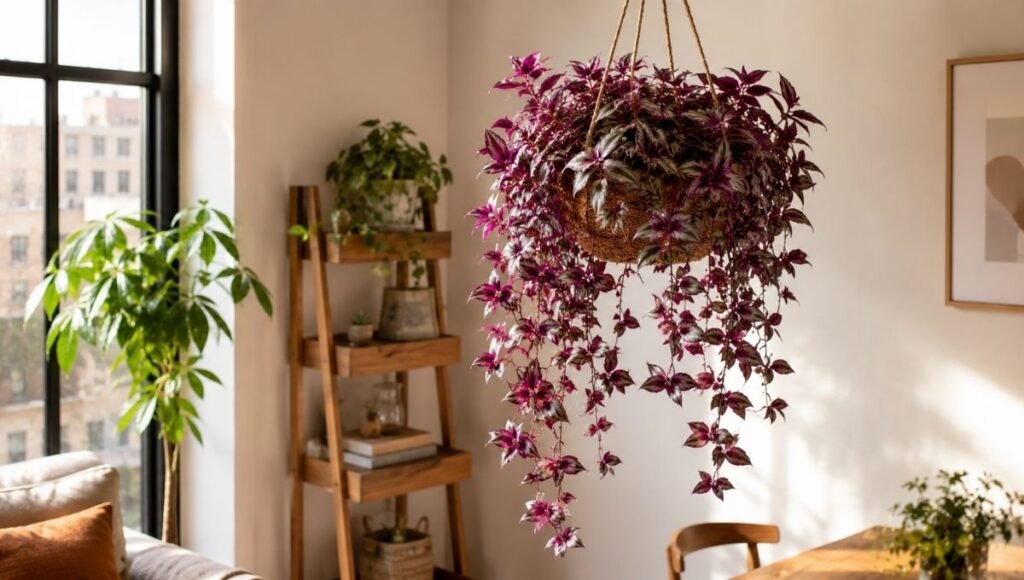
Pot choice: Tradescantia looks genuinely spectacular in a hanging basket, where the trailing vines can cascade downward freely. This is also a practical solution for homes with pets — a hanging basket makes the plant much harder for cats and dogs to reach. A standard pot on a high shelf works similarly.
Repotting: every 1–2 years, or when the plant looks root-bound (drying out very quickly after watering, roots circling the pot bottom). Go up one size.
How to Propagate Tradescantia (The Easiest Plant to Multiply)
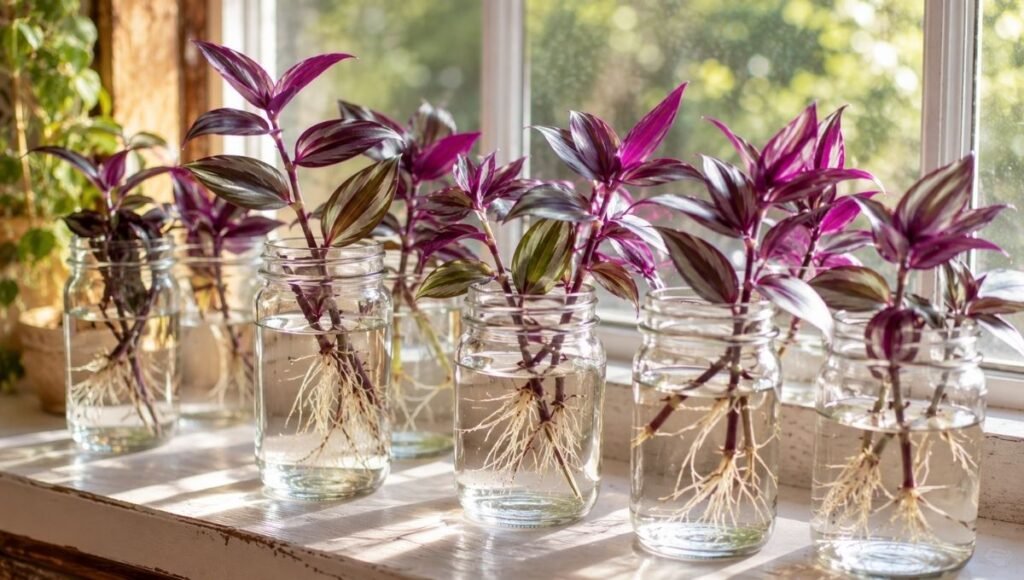
If there’s one thing Tradescantia is famous for among houseplant owners, it’s how absurdly easy it is to propagate. The stems root so readily it almost feels like the plant is trying to help you.
In water:
- Cut a healthy stem 4–6 inches long, just below a leaf node.
- Remove the leaves from the bottom 2 inches of the stem.
- Place in a glass of room-temperature water with the node submerged.
- Set in bright indirect light.
- Change the water every 3–4 days.
- Roots appear within 7–14 days — faster than almost any other common houseplant.
- Once roots are 1–2 inches long, pot up in standard potting mix.
Directly in soil: Push the cutting into moist potting mix and keep evenly moist for 2 weeks. No special setup needed — the plant roots so readily that even this casual approach works.
The pro move: when you prune the leggy sections of your existing plant, root all the cuttings simultaneously. Within a month you’ll have a fuller mother plant plus several established new plants. These make excellent gifts, or you can use them to fill in sparse spots in the original pot.
Temperature and Humidity
Tradescantia prefers 60–80°F (15–27°C) — standard indoor room temperature. It dislikes cold drafts and temperatures below 55°F, which cause leaf drop and browning.
Average household humidity is generally fine. Very dry air in winter (with heating running) can cause brown leaf tips. If this is a persistent issue, a pebble tray or humidifier nearby helps, though Tradescantia is significantly less humidity-sensitive than plants like calathea or prayer plants.
Feeding
A balanced liquid fertilizer applied monthly during spring and summer keeps growth vigorous and color vibrant. Skip feeding in autumn and winter. Don’t over-fertilize — too much nitrogen produces lush but leggy growth and can reduce color intensity.
Common Problems and Real Fixes
“My plant is going green and losing its purple/silver color.”
Light. Move it to a brighter spot — east or west-facing window, within 3 feet of the glass. New leaves will come in with full coloring within a few weeks of improved light. Existing leaves won’t change, but the new growth will reflect the better conditions.
“It’s getting leggy no matter what I do.”
Two things happening simultaneously: not enough light AND not enough pruning. You need both. Better light slows the legginess; regular pinching reverses it. Cut back aggressively, root the cuttings back into the pot, and maintain a monthly pruning habit going forward.
“Leaves are falling off constantly.”
Usually underwatering — Tradescantia drops old leaves when water-stressed. Check soil moisture and increase watering frequency. Also consider whether the plant has been in a cold draft, which causes similar leaf drop.
“Brown mushy spots on leaves.”
Water sitting on fuzzy leaves in still, humid conditions. Switch to watering at soil level rather than from above. Improve air circulation around the plant.
“Yellow leaves.”
Usually overwatering. Let the soil dry to 1 inch depth before watering. Check that the pot drains freely.
⚠️ Wandering Jew and Pet Safety
The ASPCA lists Tradescantia species as causing skin irritation (dermatitis) in cats and dogs through contact with the plant’s sap. The sap contains compounds that cause an itchy, irritating reaction on skin and mucous membranes. Ingestion can cause digestive upset.
The toxicity is considered mild rather than severe — it’s not in the same category as truly toxic plants like lilies or oleander — but it does cause real discomfort, and placement matters.
If you have cats or dogs that chew on plants, Tradescantia is not a safe choice for low placement. A hanging basket suspended from the ceiling, or a high shelf that pets can’t access, is the practical solution for plant lovers who also have pets.
If your pet ingests Tradescantia and shows symptoms, contact your veterinarian.
A note on human handling: the sap can also cause mild skin irritation in sensitive individuals. Wear gloves when taking cuttings, and wash your hands after handling the plant.
If You Only Have 10 Minutes Right Now
Look at your plant. Find three leggy stems and cut them back to a node close to the base of the plant. Stick the cuttings into the soil of the same pot. Water once. Move the pot to your brightest indirect light window.
That’s it. Those three actions — cutting back, replanting cuttings, improving light — will produce visible change within two weeks. The plant is that responsive.
FAQ
Why is my wandering jew losing its purple and silver color? Insufficient light. The purple and silver pigments require bright indirect light to develop. Move the plant to within 3 feet of an east or west-facing window. New growth will come in with full coloring; existing green leaves won’t change color, but the overall plant will look more vibrant within a month.
How do I make my wandering jew plant bushier? Regular pinching and pruning — cut stem tips just above a leaf node every 3–4 weeks. Then root those cuttings back into the same pot. More light also slows the leggy growth that creates sparse stems. Both together transform a trailing sparse plant into a full, lush one.
How often should I water a wandering jew? Every 7–10 days in spring and summer; every 10–14 days in autumn and winter. Check the top inch of soil — if it’s dry, water now. Tradescantia likes consistent moisture but not wet, sitting-in-water conditions.
Is wandering jew safe for cats and dogs? Mildly toxic — the sap causes skin irritation and digestive upset in cats and dogs. It’s not fatally toxic, but it causes real discomfort. Keep the plant out of reach using a hanging basket or high shelf. Contact your vet if your pet ingests any part of the plant.
How do you propagate a wandering jew? Cut a 4–6 inch stem just below a leaf node, remove lower leaves, and place in water or moist soil. Roots develop in 7–14 days in water — one of the fastest-rooting houseplants available. Once roots are 1–2 inches long, pot up in standard potting mix.
Why is my wandering jew dropping leaves? Usually underwatering — the plant sheds older leaves when water-stressed. Check soil moisture and increase watering frequency. Cold drafts cause similar leaf drop; check the plant’s location.
The Plant That Rewards Attention
There’s something particularly satisfying about a well-maintained Tradescantia. When the light is right and the pruning is consistent, those leaves shimmer. The silver catches the morning light. The purple undersides glow. It trails from a hanging basket in a way that looks almost extravagant for a plant that asks so little.
The people who struggle with it are almost always the people who bought it, put it somewhere dim, and left it alone. The people who love it are the ones who pinch it regularly, move it toward the window, and stick the cuttings back in. That small, consistent engagement — the five minutes a month of actual attention — is what transforms a fading, leggy plant into one that looks like it came from a professional plant stylist.
Research published in the Journal of Physiological Anthropology found that routine plant care tasks reduce physiological stress — measurably lowering heart rate and cortisol. The act of pinching your Tradescantia, noticing the new growth, moving it to better light — these small interactions add up to something genuinely restorative.
Give it light. Prune it. Root the cuttings. It will reward you more than you expect.
Keep Growing
- 🌿 [How to Care for Pothos] — another fast-growing trailing plant, even more forgiving
- 🌑 [Spider Plant Care: Complete Guide] — pet-safe trailing plant that propagates itself
- 💛 [Plant Leaves Turning Yellow? 7 Real Causes and Fixes] — diagnose any struggling plant
- 🌱 [Indoor Plant Care: The Complete Beginner’s Guide] — the principles behind every plant you’ll ever own
References: ASPCA Animal Poison Control Center. Toxic and Non-Toxic Plant List — Tradescantia (Wandering Jew). Lee, M.S., Lee, J., Park, B.J., & Miyazaki, Y. (2015). Interaction with indoor plants may reduce psychological and physiological stress by suppressing autonomic nervous system activity in young adults. Journal of Physiological Anthropology, 34(1), 21. University of Illinois Extension (2023). Caring for Houseplants — Tradescantia. Missouri Botanical Garden Plant Finder (2024). Tradescantia zebrina. Old Farmer’s Almanac (2025). Wandering Jew Plant Care Guide.