
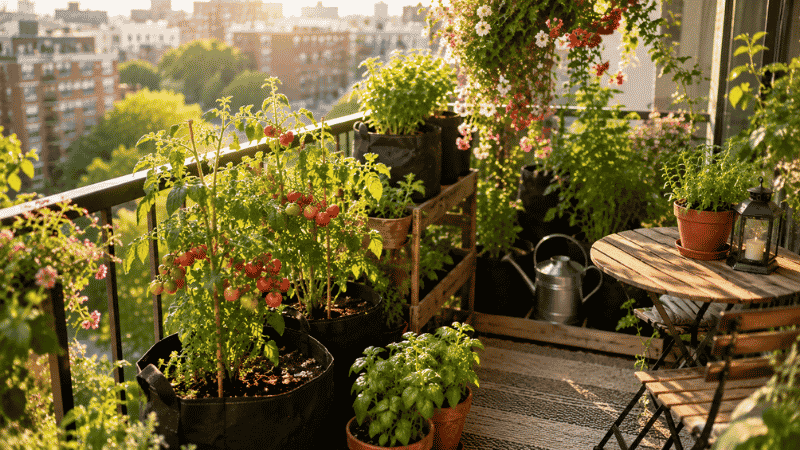
You stand on your balcony and look at the concrete floor, the empty railing, the bare walls. Maybe there’s a plastic chair pushed into the corner. Maybe it’s where you store things you don’t use anymore. It doesn’t look like a garden — it doesn’t even look like somewhere you’d want to spend time.
But here’s what that space actually is: a sun-drenched, rain-watered, naturally ventilated growing environment that’s entirely yours to use. Most apartment balconies receive more direct sunlight than any windowsill in the home. They have access to outdoor air, natural temperature variation, and — if you’re on a lower floor — visiting insects that help pollinate your flowers and vegetables.
A balcony garden doesn’t require a green thumb, a big budget, or a lot of space. It requires understanding your specific outdoor space — its light, its wind, its weight limits — and matching your plants and containers to those conditions. This guide shows you exactly how to do that, from the first observation walk to the first harvest.
Key Takeaways
- Observing your balcony’s sun, wind, and shade patterns before buying any plants is the most valuable preparation step — it takes one day and prevents months of frustration
- Most balconies can support a thriving garden with lightweight containers: fabric grow bags weigh a fraction of ceramic pots and perform equally well for most plants
- South and west-facing balconies can grow almost anything; north-facing balconies are better suited to leafy greens, herbs, and shade-tolerant ornamentals
- A 2022 review in Environmental Research found that access to outdoor green space — including balcony gardens — is consistently associated with reduced stress and improved psychological wellbeing
- Start with 3–5 containers maximum; a well-maintained small balcony garden produces more joy and more food than an overly ambitious one that becomes overwhelming
Step One: Really Look at Your Balcony (Before You Buy Anything)
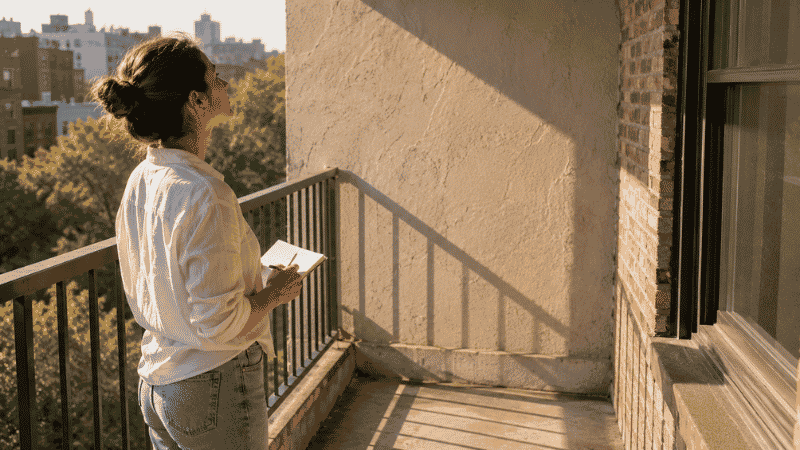
The single most useful thing you can do before starting a balcony garden is spend a full day watching your space. Not planning, not shopping — watching.
Notice where the sun hits at 9am, noon, and 3pm. Note which areas are in shade by afternoon. Check whether your railing blocks low-angle morning light. Look at how wind moves through the space — does it hit directly from one direction, or does it swirl unpredictably? Does it feel significantly stronger than at street level?
This observation tells you everything that matters about what will grow and where.
By balcony orientation:
South-facing: receives the most sun throughout the day in the Northern Hemisphere. The premium growing position — suitable for tomatoes, peppers, herbs, flowers, and most vegetables. If you have a south-facing balcony, you can grow almost anything in appropriate containers.
West-facing: strong afternoon sun, which is warm and intense. Excellent for most plants. Very hot in summer on upper floors — succulents, heat-loving herbs (basil, thyme, oregano), and most vegetables thrive. Shade-sensitive plants may struggle in peak summer afternoon sun.
East-facing: bright morning sun, cooler afternoons. Good for herbs, leafy greens, and many flowers. Less suitable for full-sun vegetables like tomatoes and peppers, which need 6+ hours of direct sun.
North-facing: the most challenging orientation. Receives little or no direct sun. Focus on shade-tolerant plants: ferns, hostas, mint, parsley, lettuce, and ornamental foliage. A north-facing balcony won’t produce meaningful tomato or pepper harvests — but it can be a beautiful, lush green space with the right plant selection.
About wind: higher-floor balconies experience significantly stronger wind than ground level. Wind desiccates soil rapidly (requiring more frequent watering), can snap stems and damage flowers, and knocks over tall, top-heavy containers. Wind-resistant strategies: use heavier or weighted containers, choose low-growing or trailing plants rather than tall specimens, cluster containers together so they shield each other, and consider a privacy screen or windbreak along the most exposed railing.
Know Your Limits Before You Start
Before placing a single pot on your balcony, two practical checks are worth making.
Check your building’s rules. Many apartment buildings and condominiums have specific guidelines about balcony use — restrictions on hanging items from railings, weight limits, aesthetic requirements (some buildings require all planters to be a consistent color or material from the street view). Check with your building management before investing in materials. Discovering your setup violates building rules after the fact is genuinely frustrating.
Consider weight. Soil is heavy — a standard 10-gallon ceramic pot filled with wet soil can weigh 80–100 pounds. Multiply that across six or eight containers and you have a significant load. Most residential balconies are rated to support 40–60 pounds per square foot, but the actual allowance varies enormously and older buildings may have lower limits.
The practical solution: choose lightweight containers. Fabric grow bags weigh almost nothing compared to ceramic or terracotta and perform excellently for most plants. Plastic pots are significantly lighter than ceramic at the same size. Use lightweight potting mix designed for containers (heavier than water when wet, but much lighter than topsoil or garden soil).
If you’re concerned about weight — particularly on an upper-floor balcony or in an older building — consult your building management for the specific load rating before setting up.
Choosing Containers for a Balcony Garden
Container choice on a balcony is partly aesthetic and partly practical — and on a balcony, the practical considerations matter more than they do indoors.
Fabric grow bags: the best all-around choice for a balcony garden. Extremely lightweight, excellent drainage and root aeration, available in every size, and easily stored flat when not in use. Particularly good for tomatoes, peppers, potatoes, and root vegetables. The main limitation is aesthetics — they don’t look as beautiful as terracotta, though dark-colored bags look more refined than the typical beige.
Lightweight plastic pots: good balance of practicality and appearance. Much lighter than ceramic or terracotta at the same volume. Available in every style and color. Retains moisture well, which is useful on windy balconies where containers dry out quickly.
Window boxes and railing planters: hooks directly over balcony railings, using otherwise dead space without taking up floor area. Ideal for herbs, trailing flowers, and compact salad greens. Always check that they’re securely attached before planting — wind can dislodge poorly fitted railing planters.
Self-watering containers: particularly valuable on a balcony, where sun and wind can dry out soil much faster than indoors. The reservoir system maintains consistent moisture between waterings — a significant advantage for busy people or during hot weather.
What to avoid: very heavy materials (large terracotta or ceramic) in quantity, particularly on upper floors. If you love the look of terracotta, use it selectively for a few key statement pieces and supplement with fabric bags for the bulk of your planting.
Drainage: every container must have drainage holes. On a balcony, use saucers or drip trays under each pot — not just to protect the surface, but to be respectful of neighbors below. Standing water in balcony saucers also attracts mosquitoes. Empty saucers after watering rather than leaving water to pool.
What to Grow in a Balcony Garden: Plant Recommendations by Light Level
Full Sun (South or West-Facing, 6+ Hours Direct Sun)
This is the richest growing environment a balcony can offer. With full sun, you can grow the most productive and satisfying plants:
Cherry tomatoes — the single most rewarding balcony crop. Choose compact container varieties (Tiny Tim, Tumbling Tom, Patio) for smaller balconies; standard determinate varieties in 5-gallon+ containers for larger spaces. Stake or support as they grow. The flavor of a homegrown cherry tomato eaten straight from the vine on a sunny balcony is something you won’t forget.
Herbs — basil, thyme, oregano, rosemary, and sage all thrive in full sun. A collection of herb pots in a sunny corner transforms cooking in ways that are difficult to overstate. Start with basil and thyme; expand from there.
Peppers — both sweet and hot peppers do excellently in containers in full sun. They’re tidier than tomatoes and require less maintenance once established.
Strawberries — beautiful in hanging baskets, productive in grow bags, and endlessly satisfying when you harvest the first ripe berry. Choose everbearing or day-neutral varieties for continuous production.
Flowers — marigolds, petunias, zinnias, and nasturtiums add color, attract pollinators, and make the balcony feel genuinely beautiful. Nasturtiums are also edible, making them doubly useful.
Partial Sun (East-Facing, 4–6 Hours Morning Sun)
With 4–6 hours of sun, the range of what you can grow is somewhat narrower but still very productive:
Leafy greens — lettuce, spinach, arugula, and mixed salad greens are ideal for partial sun. They prefer cooler conditions and actually bolt in intense full sun. A window box of mixed greens on an east-facing railing is one of the most practical balcony gardening setups available.
Herbs — parsley, chives, cilantro, and mint all do well in partial sun. Mint in particular thrives with morning sun and afternoon shade.
Radishes — the fastest edible you can grow (25–30 days from seed). Perfect for filling containers between other plantings.
Flowers — impatiens, begonias, and fuchsias all flower beautifully in partial shade and bring color without requiring intense sun.
Low Light (North-Facing or Heavily Shaded)
Limited but workable with the right plants:
Ferns — lush, beautiful, and perfectly suited to shade. Boston ferns in particular look stunning in hanging baskets on a shaded balcony.
Hostas — bold foliage plants that genuinely prefer shade. Varieties with large, dramatic leaves create an impressive effect in containers.
Mint and parsley — the most shade-tolerant of the culinary herbs. Both manage on 2–3 hours of indirect light.
Lettuce — the most shade-tolerant edible. In genuinely low-light conditions, expect slower growth, but lettuce can produce meaningful harvests with as little as 3 hours of light.
Making the Most of Your Vertical Space
The floor area of a balcony is fixed. The vertical space above it — walls, railings, overhead structures — is largely unused in most balcony gardens, and it’s where significant additional growing capacity hides.
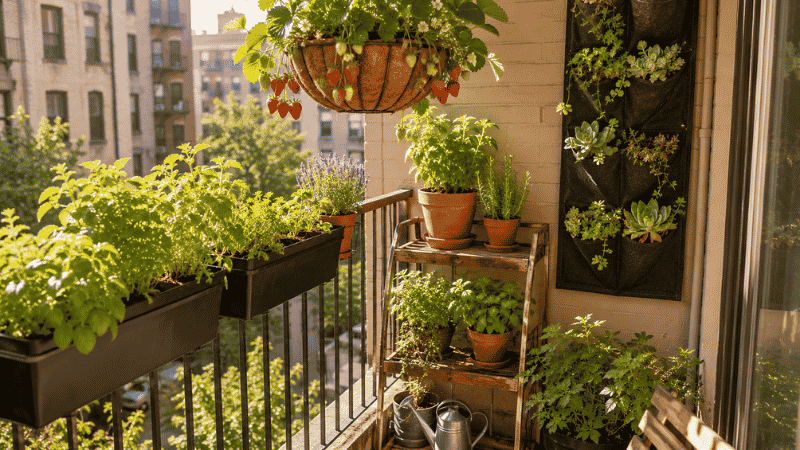
Railing planters: hook-mounted boxes that attach to balcony railings extend your planting area without using floor space. Excellent for herbs, trailing flowers, and compact salad greens.
Wall-mounted planters and pocket systems: flat against a wall, these systems hold multiple plants in a small footprint. Particularly effective for herbs and succulents.
Hanging baskets: overhead hooks (check that your ceiling or overhang can support them) allow trailing plants — strawberries, petunias, fuchsias, spider plants — to cascade beautifully downward.
Shelving and plant stands: a simple metal or bamboo shelving unit against a wall allows you to grow multiple plants at different heights without taking up much floor space. Arrange plants by light need: sun-lovers on the top shelf where they’re closer to the sky; shade-tolerant plants lower where the shelf itself may create some shade.
Trellises: for climbing plants (beans, small cucumbers, sweet peas, passion flower), a simple trellis attached to a wall or railing allows vertical growing that produces impressively in a small footprint.
Watering a Balcony Garden
Balcony containers dry out faster than indoor pots for three reasons: more direct sun, wind evaporation, and typically smaller container volumes. In peak summer, small containers on a sunny balcony may need daily watering.
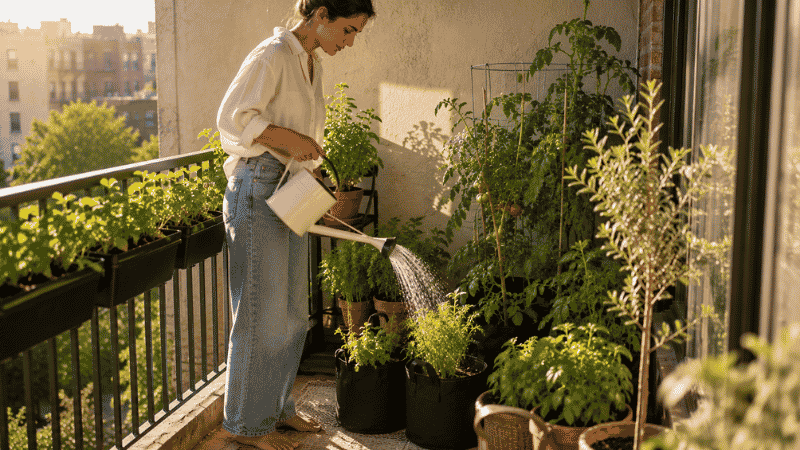
The rule: check the soil before every watering. Press your finger an inch into the soil — if it’s dry, water thoroughly; if it’s moist, wait. On a hot, windy day, this check may tell you to water even if you watered yesterday. On a cool, cloudy day, you may find the soil still moist from two days ago.
Watering tips for balcony gardens:
- Water in the morning when possible — this gives foliage time to dry before evening and sets plants up for the day’s heat
- Water thoroughly, until it drains from the drainage holes — this ensures moisture reaches the full root system
- Use saucers but empty them; standing water attracts pests and can cause root rot
- Consider self-watering containers or a simple drip irrigation kit for times when you’re traveling or during extended hot weather
Balcony Garden Design: Making It Beautiful
A balcony garden isn’t just a growing space — it’s an extension of your living environment. With some thought about arrangement and aesthetics, even a small balcony becomes somewhere you genuinely want to spend time.
Think in layers. Tall plants (tomatoes, tall herbs, a small olive or citrus tree in a large pot) at the back or perimeter; medium plants in the middle; trailing or low plants at the front and edges. Layering creates depth and visual interest.
Use consistent container materials or colors. All terracotta, all white ceramic, or a consistent dark fabric bag look creates cohesion even with a variety of plants. Mixed random containers look cluttered.
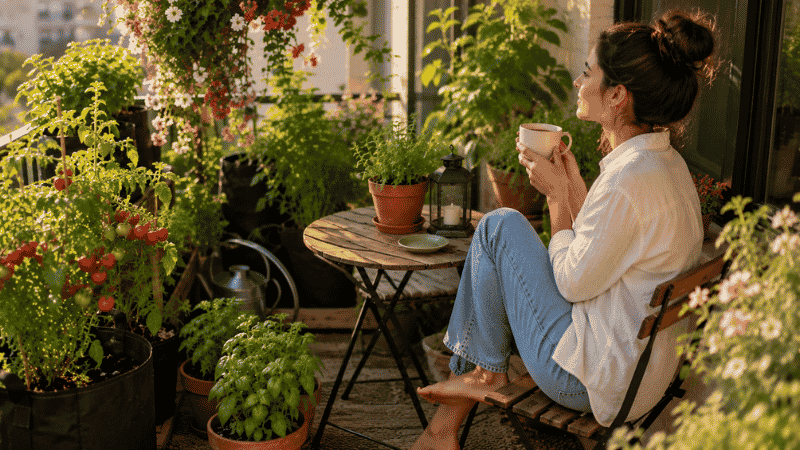
Add one non-plant element. A small bistro table and two chairs, a rug, or even a string of lights transforms a balcony from a growing space into a place to actually sit, eat, and relax surrounded by greenery.
Group plants together. Clusters of containers look more designed and intentional than pots scattered randomly across the space. Grouping also helps plants protect each other from wind and creates a microclimate with slightly higher humidity — beneficial for many plants.
Common Balcony Gardening Challenges
Soil drying out too fast: normal on sunny, windy balconies. Switch to self-watering containers, add a layer of mulch on the soil surface (which reduces evaporation significantly), choose larger containers (more soil volume = slower drying), and increase watering frequency in peak summer.
Wind damage: choose low-growing or trailing varieties, secure tall plants to stakes or trellises, use heavier containers or weighted bases for tall plants, and consider a railing windbreak screen.
Plants not producing fruit despite growing well: usually insufficient sun. Move containers to a sunnier position. Fruiting plants (tomatoes, peppers, strawberries) need 6+ hours of direct sun for meaningful production.
Pests: balcony gardens, being elevated, are somewhat protected from ground pests. The most common issues are aphids and spider mites — check under leaves regularly and treat with a diluted insecticidal soap spray if found.
If You Only Have 10 Minutes to Start
Pick up one bag of all-purpose potting mix, one fabric grow bag (5-gallon or larger), and one cherry tomato or herb seedling from a garden center. Fill the bag, plant the seedling, put it in the sunniest spot on your balcony, water thoroughly.
That’s your balcony garden. It exists. It will grow. Add to it as you want to.
FAQ
What can I grow on a north-facing balcony? Leafy greens (lettuce, spinach, arugula), mint, parsley, ferns, hostas, and shade-tolerant ornamentals. Avoid fruiting vegetables (tomatoes, peppers) and Mediterranean herbs (basil, thyme, rosemary) — they need more sun than a north-facing balcony provides.
How much weight can a balcony hold? This varies by building and balcony construction — typically 40–60 pounds per square foot for residential balconies, but can be lower for older buildings. Check with your building management for the specific load rating. Use lightweight containers (fabric grow bags, plastic) to stay well within limits.
Do I need to ask my landlord before starting a balcony garden? If you rent, yes — particularly before attaching anything to walls or railings. Most landlords are fine with potted plants on the floor; hanging or wall-mounted installations are more likely to require permission. Check your lease and ask before installing anything permanent.
What is the easiest vegetable to grow on a balcony? Cherry tomatoes (in full sun), lettuce and salad greens (in partial shade), and radishes (in almost any light) are the most reliable and satisfying balcony vegetables for beginners. Radishes are the fastest — from seed to harvest in 25–30 days.
How do I stop my balcony pots from drying out so fast? Use larger containers (more soil volume dries more slowly), switch to self-watering pots, add a layer of mulch on the soil surface, choose plastic or fabric containers over terracotta (which dries faster), and water in the morning rather than evening.
Can I grow fruit trees on a balcony? Dwarf and patio varieties of citrus, fig, olive, and even apple trees grow successfully in large containers (15-gallon+) on balconies with good sun. They require more attention — regular feeding, consistent watering, winter protection in cold climates — but are deeply rewarding when they produce.
The Balcony You Didn’t Know You Had
The empty concrete rectangle outside your apartment is not just storage space. It’s not just somewhere to put the chair you don’t know what to do with. With a few containers, some potting mix, and the right plants for your light conditions, it becomes somewhere you water in the morning with coffee in hand, somewhere you snip herbs for dinner, somewhere you sit in the evening surrounded by green.
Research consistently shows that access to plants and natural elements — even in small amounts, even from an apartment balcony — meaningfully reduces cortisol levels, improves mood, and creates a sense of connection to natural cycles that most urban environments strip away. Your balcony garden is not a luxury. It’s a small, daily act of making your home more alive.
Start with one pot. Then another. Go from there.
Keep Growing
- 🪴 [Container Gardening: The Complete Beginner’s Guide] — everything you need to know about growing in pots
- 🍅 [Growing Tomatoes in Pots] — the most rewarding balcony crop, fully explained
- 🌿 [Indoor Herb Garden: Complete Beginner’s Guide] — bring the herb garden inside too
- 🥬 [Easiest Vegetables to Grow for Beginners] — what to plant on your balcony first
- 🍓 [How to Grow Strawberries in Pots] — beautiful, productive, and perfect for balcony railings
References: Largo-Wight, E., et al. (2022). When green enters a room: A scoping review of epidemiological studies on indoor plants and mental health. Environmental Research, 214. Soga, M., Gaston, K.J., & Yamaura, Y. (2017). Gardening is beneficial for health: A meta-analysis. Preventive Medicine Reports, 5, 92–99. Old Farmer’s Almanac (2025). 10 Tips for Starting a Balcony Garden. University of Illinois Extension (2023). Container Vegetable Gardening. Garden Design Magazine (2024). How to Create the Perfect Balcony Garden.