
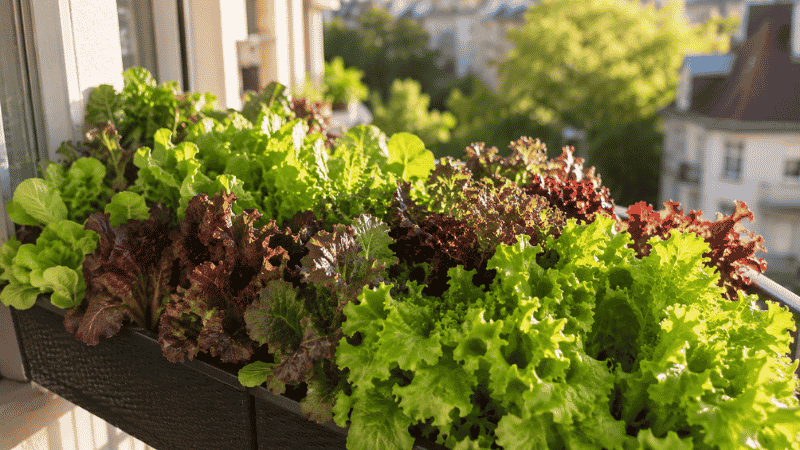
It started because of a bag of salad. You opened it, and it smelled like nothing — that faint plastic-and-refrigeration smell that technically counts as “fresh.” You’d paid $4.99 for it. You’d use half before it went slimy. And somewhere between tossing the soggy remainder and opening a new tab, you thought: surely I could just grow this myself.
You can. Lettuce might be the most beginner-forgiving food crop you can possibly start with. It grows in a 6-inch pot. It doesn’t need full sun. It produces leaves you can eat in 30 days. And the flavor difference — the actual, real difference between a leaf you grew at home and one that rode a refrigerated truck — is something you’ll notice immediately and never fully get over.
This is the honest guide to how to grow lettuce in containers, on a balcony, on a windowsill, or indoors under a lamp. No yard. No complicated setup. Just a pot, some seeds, and the right information — which is what you’re about to have.
Key Takeaways
- Loose-leaf lettuce can be harvested in 30–45 days from seed — faster than almost any other food crop
- A single 6-inch pot can sustain one cut-and-come-again plant for multiple weeks of harvests
- Lettuce prefers temperatures between 45–75°F (7–24°C) — it’s a spring and fall crop; summer heat causes bolting and bitterness
- The cut-and-come-again method (harvesting outer leaves while leaving the center intact) extends each plant’s productive life by weeks
- According to the National Gardening Association, lettuce is consistently among the top five vegetables grown by home gardeners in containers — for good reason
Why Lettuce Is the Perfect First Food Crop
Here’s an opinion: most beginner gardening guides start people with tomatoes, which is like teaching someone to drive in a manual car on a motorway. Tomatoes need months of patience, real sun, consistent watering, staking, and pest management. They’re rewarding, but they’re not beginner-proof.
Lettuce is beginner-proof. It germinates within a week. It grows fast enough that you can watch it happen. It’s shallow-rooted, so it works in any container with minimal soil depth. It tolerates partial shade, which means it’s not demanding about your window direction. And when you cut a handful of leaves for a salad on a Tuesday evening and they were growing in your pot on your balcony that morning — that feeling is exactly what makes people fall in love with growing things.
Start here. Add tomatoes next year.
Understanding Lettuce Types: Which One Is Right for You?
Not all lettuce behaves the same way, and choosing the right type for your space and goals makes a real difference.
Loose-leaf lettuce is the best choice for beginners, full stop. It matures in 30–45 days, grows happily in 6-inch pots, and works beautifully with the cut-and-come-again harvesting method. Varieties like Black Seeded Simpson, Salad Bowl, Red Sails, and Oak Leaf are reliable, widely available, and produce continuously for weeks. This is what I’d always start with.
Butterhead lettuce (also called Boston or Bibb) forms soft, loose heads with tender, almost buttery leaves. Slightly slower — 65–80 days to a full head — but worth it for the texture. Buttercrunch is the standout variety: heat-tolerant (less likely to bolt up to 80°F), compact enough for containers, and genuinely delicious. An All-America Selections winner, which is gardening’s version of a James Beard Award.
Romaine forms taller, crunchier heads. Takes longer (70–80 days to full maturity) but also works well as a cut-and-come-again type. Little Gem is a compact romaine variety bred practically for containers — worth seeking out.
Head lettuce (the round, tight heads from the grocery store) takes 80–85 days and needs more space than the others. Satisfying when it works, but not what I’d recommend starting with in a container.
The honest recommendation: buy a packet of mixed loose-leaf seeds (often labeled “mesclun mix” or “salad mix”). You get variety in flavor and color, you can harvest baby leaves in 3–4 weeks, and a single packet costs less than one bag of grocery store salad.
What You Actually Need to Grow Lettuce (It’s Less Than You Think)
This is the part most guides overcomplicate. Here’s the actual list:
- A container — any container at least 6 inches deep with drainage holes. A window box. A planter tray. An old colander. A wide ceramic pot. Deeper is better (8–10 inches retains moisture longer), but 6 inches grows great loose-leaf lettuce.
- Potting mix — standard all-purpose potting mix. Not garden soil (too heavy, compacts, blocks drainage). Not seed-starting mix alone (not enough nutrients for growing plants). Just normal potting mix.
- Seeds or seedlings — seeds are significantly cheaper and work beautifully with lettuce. Seedlings from a garden center are faster and fine if you want immediate results.
- A watering can or a pitcher — that’s it for tools.
- A spot with 4–6 hours of light — more on this below.
Total cost to start: roughly $10–$15. That’s it. You will grow more salad than that $4.99 bag cost within the first month.
Where to Put Your Lettuce: Light, Sun, and the Shade Secret
Lettuce needs light — but here’s the part most guides don’t lead with: lettuce actually benefits from afternoon shade. It’s one of the few food crops where a partially shaded spot (east-facing balcony, north-facing window with some ambient light) isn’t just acceptable — it’s sometimes ideal.
Why? Lettuce is a cool-season crop. When temperatures rise above 75–80°F, it bolts — sends up a flower stalk, turns bitter, and stops producing usable leaves. Afternoon shade in summer keeps the soil and leaves cooler, extends the productive season, and keeps the flavor mild.
Best placement options:
Outdoors — south or east-facing balcony: excellent. 4–6 hours of direct morning sun, shaded in the afternoon. Produces quickly and stays sweet.
Outdoors — north-facing balcony: workable for loose-leaf varieties with 3–4 hours of indirect light, though growth is slower.
Indoors — south or east window: good, particularly in spring and fall when sun angle is lower. Move away from very hot glass in summer.
Indoors — under a grow light: completely viable. Position a full-spectrum LED grow light 4–6 inches above the leaves, run it 14–16 hours per day, keep indoor temperature between 60–70°F. Indoor lettuce grown under lights is genuinely productive year-round.
The thing I want you to take from this: don’t dismiss the slightly shadier spot. Your north-facing kitchen windowsill can grow lettuce. Your covered balcony that gets morning light can grow lettuce. Adjust expectations slightly for slower growth in lower light, but don’t rule it out.
How to Plant Lettuce Seeds (The Easy Way)
Lettuce seeds are small and slightly finicky about one thing: they need light to germinate. This makes them unusual — most seeds want to be buried; lettuce seeds want to barely be covered.
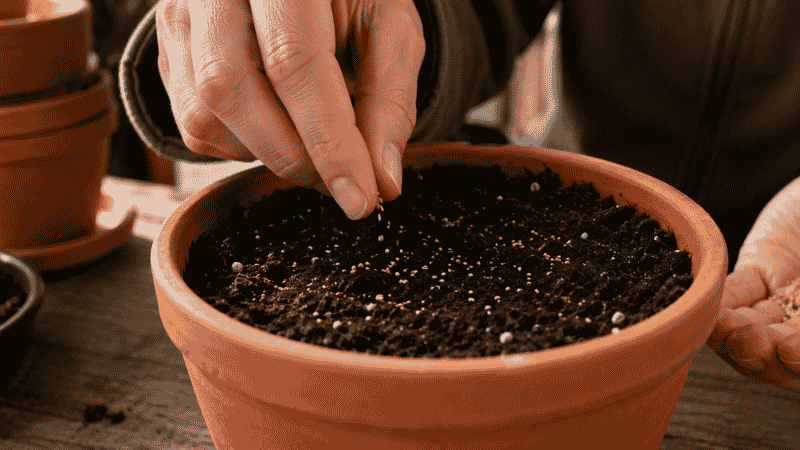
Sowing seeds directly into a container:
- Fill your container with potting mix, leaving about an inch of space at the top.
- Moisten the soil thoroughly — it should feel like a damp sponge.
- Scatter seeds across the surface. For cut-and-come-again growing, scatter fairly densely (seeds touching is fine). For individual plants, thin to 4–6 inches apart after germination.
- Cover with the thinnest possible layer of potting mix — barely visible, no more than ⅛ inch. Or just press seeds gently into the surface without covering at all.
- Mist gently with water to settle them. Don’t pour — it washes seeds away.
- Cover the container loosely with plastic wrap or a damp paper towel to retain moisture during germination.
- Place somewhere warm (60–70°F). Seeds germinate in 7–10 days.
- Once you see tiny sprouts, remove the cover and move to your growing location.
Starting from seedlings: if you buy lettuce seedlings from a garden center, plant them at the same depth they were growing in their nursery container, spacing 4–6 inches apart. Water gently and let them settle for a few days before harvesting.
Watering Lettuce in Containers: The Most Important Habit
Lettuce has shallow roots and doesn’t handle drought well. It needs consistently moist soil — not wet, not dry, but reliably damp throughout. In a container, this means more frequent checking than you might expect.
The rule: feel the soil surface. If it feels dry to the touch, water. Lettuce doesn’t benefit from the “let it dry out between waterings” approach that succulents and snake plants need. Its roots want moisture consistently available.
In warm weather, a small container of lettuce may need watering every day. A larger window box every 1–2 days. In cooler spring and fall weather, every 2–3 days. Check daily and adjust.
How to water: water gently at soil level, not over the leaves. Wet lettuce leaves sitting in still, humid conditions develop fungal rot faster than you’d expect. A gentle morning watering that lets foliage dry during the day is ideal.
The drainage reminder: always ensure your container drains freely. Sitting water causes root rot in container lettuce within days. Empty any saucers after watering.
The Cut-and-Come-Again Method: How to Make One Planting Last for Weeks
This is the technique that separates people who grow one round of lettuce from people who have salad every week all season. It’s simple, and it changes the whole experience.
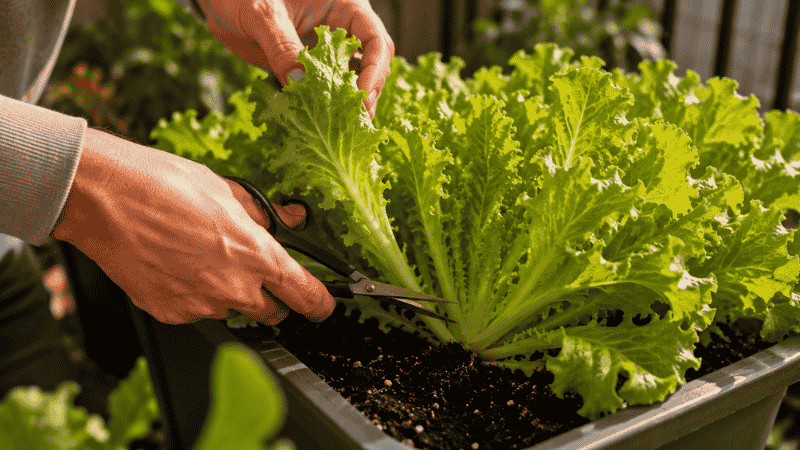
The method: when harvesting, take only the outer, larger leaves — the ones growing around the outside edge of the plant. Leave the center growth point (the crown) completely intact. Cut leaves at least 1 inch above the base — never cut into or below the crown.
The plant responds by producing new leaves from the center outward. You harvest again in 1–2 weeks. And again. And again. One planting of loose-leaf lettuce harvested this way can produce 4–6 rounds of leaves over 6–8 weeks before the plant tires or bolts.
The alternative method for dense sowings: cut across the whole container about 1 inch above the soil surface with scissors. The plants regrow from the base. This works well for baby leaf harvests and dense salad mix sowings.
Never cut below the crown. That’s the one actual rule. Everything else has flexibility; that doesn’t.
The Bolting Problem: Why Your Lettuce Got Bitter (And How to Prevent It)
Bolting is when lettuce stops producing leaves and starts producing a flower stalk — its reproductive response to stress, usually heat or very long days. When it bolts, the leaves turn bitter almost immediately. The center rises, leaves get narrow and tough, and the flavor goes sharp and unpleasant.
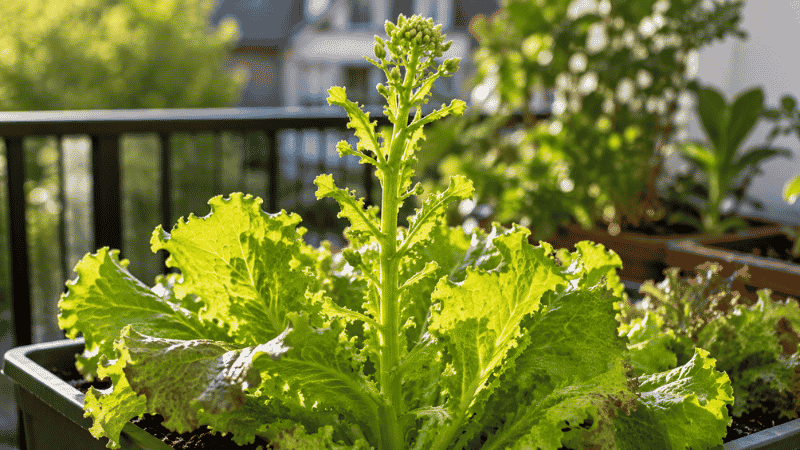
Signs it’s starting: center leaves growing upward rather than outward; a taller, more elongated plant center; leaves tasting slightly more bitter than usual. Those are your early warning signs.
Prevention:
- Keep lettuce cool. In summer, move containers to afternoon shade or indoors during heatwaves.
- Water consistently — drought stress is one of the triggers for early bolting.
- Choose bolt-resistant varieties if growing in warm climates: Jericho (romaine), Buttercrunch (butterhead), and Black Seeded Simpson (loose-leaf) are known for heat tolerance.
- Harvest regularly. Plants that are actively being harvested bolt more slowly than untouched ones.
- Time your plantings. Lettuce is a spring and fall crop. A sowing in March and another in September suits most climates far better than a July sowing in full summer heat.
If it’s already bolted: harvest whatever leaves you can immediately (outer leaves are often still mild while the center is bitter), then remove the plant and start a new sowing. Lettuce grows fast enough that a new planting started now will produce in 4–5 weeks.
Succession Sowing: The Secret to Lettuce All Season
The single most useful technique for continuous lettuce, and the one most beginner guides skip over:
Every 3–4 weeks, sow a new small pot of seeds. While your first pot is in full production, your second is germinating. By the time the first starts to bolt, the second is producing its first harvest. The third is just sprouting.
This sounds more organized than it is in practice. A packet of seeds takes 30 seconds to scatter. If you set a phone reminder every three weeks during spring and fall, you’ll have continuous lettuce with almost no effort. It’s genuinely one of the most satisfying things in container growing.
Common Lettuce Problems and Quick Fixes
Lettuce going bitter: almost always heat and bolting. Move to shade, water more frequently, harvest before temperatures peak. Plant bolt-resistant varieties next time.
Leaves yellowing: usually inconsistent watering or nitrogen deficiency. Check moisture levels and consider a diluted liquid fertilizer every 2–3 weeks.
Slugs and snails: the most common pest on outdoor lettuce. Hand-pick at night, place copper tape around the pot rim, or use iron phosphate pellets (safe for edibles and pets).
Leggy seedlings reaching toward light: insufficient light. Move closer to the window or add a grow light. Existing leggy growth can be thinned; new growth in better light will be more compact.
Lettuce not growing back after harvest: you may have cut too low, into or below the crown, which prevents regrowth. Harvest higher next time. Or the plant may have bolted — in that case, start a fresh sowing.
If You Only Have 10 Minutes Right Now
Get a container (any container with drainage holes, at least 6 inches deep), fill it with potting mix, scatter a pinch of loose-leaf lettuce seeds on the surface, press them gently in with your fingertips, water gently, cover with plastic wrap, and put it somewhere around 65°F.
That’s it. In 7–10 days you’ll have seedlings. In 4 weeks you’ll have your first harvest. Total active time: 10 minutes.
FAQ
How long does it take to grow lettuce from seed? Loose-leaf varieties can be harvested at the baby leaf stage in 25–30 days from seed. Full-sized loose-leaf plants take 40–45 days. Butterhead takes 65–80 days; romaine 70–80 days. Most people growing in containers start harvesting outer leaves around 3–4 weeks from sowing.
Can I grow lettuce indoors? Yes — lettuce grows reliably indoors under a full-spectrum grow light positioned 4–6 inches above the leaves and left on for 14–16 hours per day. Near a bright south or east-facing window works in spring and fall. Keep indoor temperatures between 60–70°F for best results.
Why is my lettuce bitter? Almost always caused by bolting — the plant flowering in response to heat, long days, or water stress. Prevention: keep lettuce cool, water consistently, grow in partial shade during warm months, and choose bolt-resistant varieties. Outer leaves often remain milder even when the center has started to bolt — harvest those immediately.
How often should I water container lettuce? Check daily. Water whenever the soil surface feels dry. In warm weather, small containers may need daily watering. In cool spring or fall weather, every 2–3 days. Lettuce needs consistently moist soil — unlike succulents, it doesn’t tolerate drying out between waterings.
Can lettuce grow in partial shade? Yes — and in summer heat, partial shade (particularly afternoon shade) actually improves lettuce by keeping it cooler and delaying bolting. East-facing balconies and windows with morning sun and afternoon shade are often ideal. Truly dark conditions (no direct sun at all) produce very slow growth.
How do I know when to harvest lettuce? For cut-and-come-again harvesting, start when outer leaves are 4–6 inches long — this is the baby leaf stage. For full plants, harvest before the center starts to elongate upward (the first sign of bolting). Morning harvesting produces the crispest leaves, as plants are most hydrated after the night.
Can I regrow lettuce from a grocery store lettuce stump? To some extent — placing the base of a lettuce head in a shallow dish of water near a sunny window will produce new leaves from the center. Change the water daily. Once new growth appears, transfer to soil. The result is modest compared to starting from seed, but it’s a satisfying experiment.
The Actual Point
You know what makes that homegrown salad taste different? It’s not that the plants are better, or that the soil is magic, or that your balcony has some quality that a farm doesn’t.
It’s that you watched it grow. You watered it on Tuesday. You worried about it a little on Thursday when the weather was hot. And when you finally cut those leaves on Friday evening and put them in a bowl, you felt something that grocery store salad will never give you — the particular satisfaction of having made something yourself.
Research from the University of Exeter found that people who grow their own food report significantly higher levels of wellbeing and connection to the natural world, even from very small-scale growing. Your lettuce pot isn’t just producing salad. It’s producing something harder to measure and arguably more valuable.
Start with one pot. See what happens.
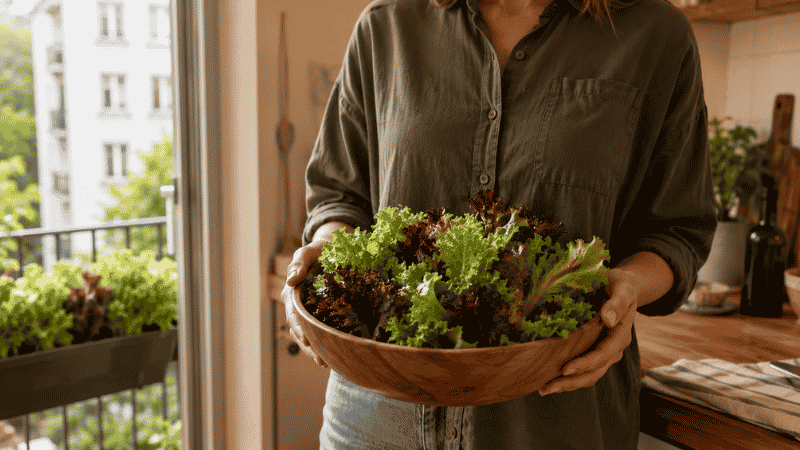
Keep Growing
- 🥬 [Easiest Vegetables to Grow for Beginners] — what to plant alongside your lettuce this season
- 🪴 [Container Gardening: The Complete Beginner’s Guide] — the full framework for growing food in pots
- 🌿 [How to Grow Herbs Indoors] — pair your lettuce container with a windowsill herb garden
- 🍅 [Growing Tomatoes in Pots] — ready for a bigger challenge?
References: National Gardening Association (2023). Garden to Table: Food Gardening in America. University of Exeter — Miles Richardson et al. (2022). Connection to nature and wellbeing through everyday activities. People and Nature, 4(2), 339–353. Gardener’s Path (2025). How to Grow Lettuce in Containers. Old Farmer’s Almanac (2026). Lettuce Growing Guide. University of Illinois Extension (2023). Lettuce — Safe Handling and Growing Practices.