
Take a second to remember the last time you walked through the woods right after a heavy spring downpour. There is a specific, intoxicating scent that rises from the ground—a mix of musk, sweetness, and deep, dark history. That smell isn’t just “earth”; it’s actually a chemical called geosmin, produced by billions of tiny organisms waking up beneath your feet.
As a gardener, that scent is your North Star. When your garden smells like that, you aren’t just growing plants; you’re stewarding a masterpiece. But if your ground smells like nothing at all—or worse, like a stagnant, sour swamp—we need to talk. To most people, it’s all just “dirt.” But to those of us with grit under our fingernails, soil is a living, breathing community. Understanding that distinction is the single biggest “ah-ha” moment you will ever have in your backyard.
1. Dirt vs. Soil: A Human Explanation
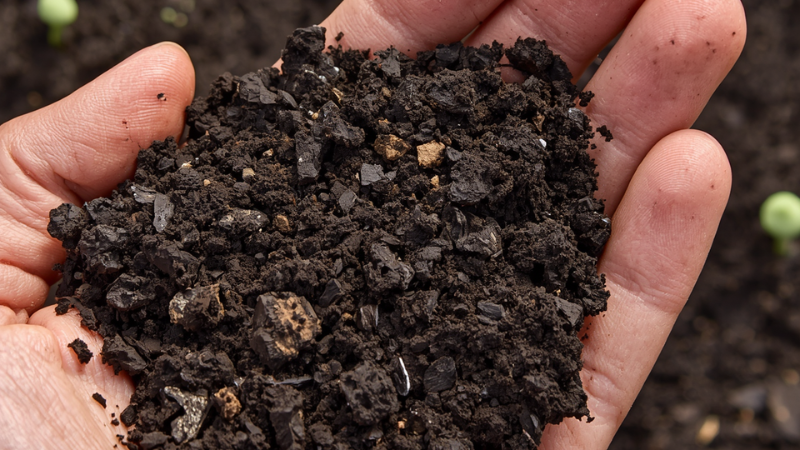
I tell my neighbors all the time: dirt is what you wash off your jeans or sweep off the porch. Dirt is “dead.” It’s the gritty remains of rocks with no life, no air, and no biological “engine” to drive growth. It’s what happens when soil is mistreated, dried out, or poisoned until the magic is gone.
Soil, on the other hand, is a vibrant underground city. It’s a place where fungi, bacteria, and earthworms are the citizens, and their “job” is to cook up meals for your plants. When you finally stop trying to “feed” the plant with blue liquids and start feeding the soil instead, the garden begins to thrive on its own.
2. The Soil Texture Comparison Table
Understanding what’s under your feet starts with knowing your “type.” Most gardens fall into one of these three categories:
| Soil Type | Drainage Speed | Nutrient Retention | The “Feel” Test |
| Sandy Soil | Very Fast | Poor (Leaches out) | Gritty, like a sandbox. Won’t hold a shape. |
| Clay Soil | Very Slow | High (But locked away) | Sticky, like gray Play-Doh. Forms a hard ribbon. |
| Loamy Soil | Perfect | Excellent | Crumbly like a dark chocolate brownie. The gold standard. |
3. The Four Ingredients of a Living Soil
Think of soil like a sourdough starter. If you leave out the water or the air, the whole thing dies. Real, productive soil is a balance of four simple things:
- Minerals: The “bones” of the soil—the sand, silt, and clay that come from rocks ground down over eons.
- Water: This is the delivery truck. It dissolves nutrients so roots can actually “drink” them.
- Air: Roots need to breathe! Good soil should feel spongy, with about 25% of its volume being just… air.
- Organic Matter: The “Magic Ingredient.” This is the decaying leaves, old roots, and compost that turn a pile of dust into a powerhouse of fertility.
Unsure how to get started with organic matter? Check out our Beginner’s Guide to Composting to turn your kitchen scraps into black gold.
4. What Most Gardening Guides Don’t Tell You
Most “Intro to Soil” guides stop at the basics. But if you want a garden that actually survives a heatwave or a week of rain, you need to know these truths:
- Soil has a “memory”: If you spray heavy chemicals or over-till, the soil biology can take years to recover. You aren’t just fixing the dirt for this season; you’re healing an ecosystem.
- The “Rhizosphere” is where the deal happens: Plants actually “leak” sugar from their roots to pay bacteria to bring them nutrients. If your soil is sterile (dead dirt), your plants are essentially starving in a desert.
- Color can be a lie: Just because soil is black doesn’t mean it’s good. Some “black gold” sold in bags is just chemically dyed wood chips. Trust your nose and the texture over the color.
5. The Tactile Guide: The “Squeeze Test”
You don’t need a lab coat to diagnose your ground. You just need to get your hands dirty. Grab a handful of damp (but not soaking) soil and squeeze it into a ball.
- The “Sand Castle”: If it falls apart the second you open your hand, your soil is basically a beach.
- The “Ribbon”: If it forms a tight, shiny ball that you can stretch out like gray Play-Doh, you’ve got heavy clay. It suffocates roots in a cold “pudding-mud.”
- The “Perfect Crumbly Brownie”: If it holds its shape for a second but crumbles beautifully when you poke it, you’ve hit the jackpot.
6. Optional Tools for Better Results
You don’t need a shed full of gadgets, but these are the tools we actually use at DirtZip:
A Simple Soil Test Kit: Before you start dumping lime or sulfur based on a guess, spend ten bucks on a test.
A Long-Probe Soil Thermometer: My secret weapon for spring. It tells you exactly when the soil is warm enough for seeds to wake up.
A Quality Broadfork: If your soil is compacted, a broadfork lets you lift and crack the ground to let air in without flipping the soil layers upside down.
7. Real-Life Example: The Suburban Backyard Transformation
A few years ago, I helped my friend Mike after he moved into a new-build subdivision. His backyard was “dead” dirt—compacted by heavy bulldozers. When he tried to dig a hole, his shovel literally bounced off the ground like he was hitting a sidewalk.
Instead of rototilling, we went “slow and steady.” We laid down plain brown cardboard to smother the weeds and piled on six inches of wood chips and a little aged manure.
By the following year, we pulled back the mulch to find dark, crumbly soil teeming with fat earthworms. The worms had done the heavy lifting for us. Today, his tomatoes are absolute monsters.
8. FAQ: Common Soil Questions
Can I just use soil from my yard in a pot? Please don’t. Garden soil is too heavy for containers. Once you water it, it packs down like a brick. For pots, you want a “soilless” potting mix.
Why is my soil turning white on top? If you see a crusty white film, it’s usually a buildup of salts from tap water or too much synthetic fertilizer. Give it a good, deep soak with rainwater.
How do I know if my soil is “dead”? Dig a hole about a foot deep. If you don’t find a single earthworm or a tiny beetle, your soil is “hungry.” It’s time to start with the compost.
Is potting soil actually soil? Strictly speaking, no. Most potting mixes are “soilless,” made of peat moss, perlite, and bark to ensure drainage and airflow in small spaces.
Building healthy soil isn’t a weekend project—it’s a relationship. Every time you tuck in a layer of mulch or leave a fallen leaf to rot, you’re making a deposit into a biological bank account.
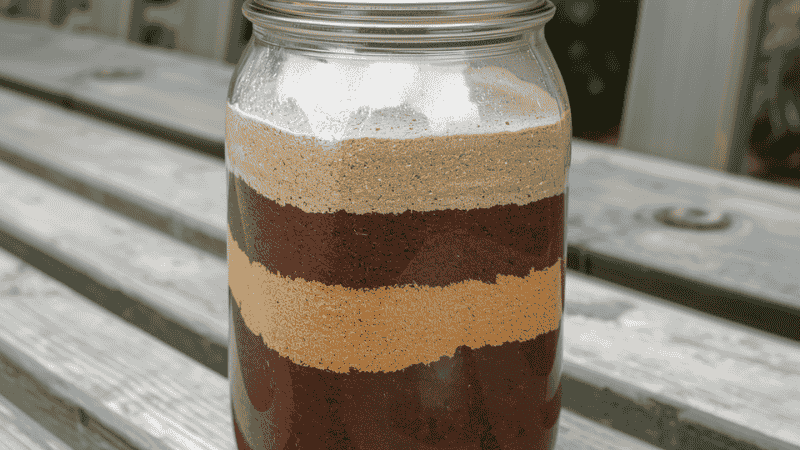
Would you like me to walk you through how to do a “Mason Jar Test”? It’s a fun way to see exactly how much sand, silt, and clay you’re working with in your own yard.