
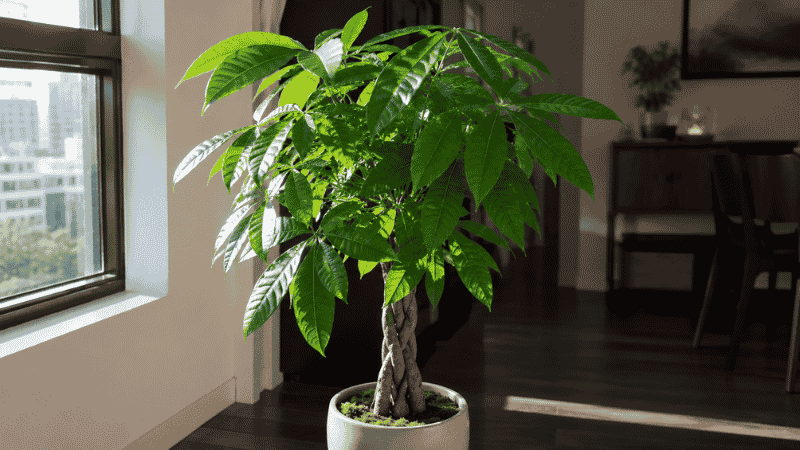
I’ll be honest with you. My first money tree lasted four months before it started dramatically shedding leaves all over the shelf, like it was staging a protest. I watered it more, thinking it was thirsty. It got worse. I Googled. I found eleven conflicting articles. I panicked. I watered it again.
It died.
The second one is still alive, three years later, sitting by my east-facing window looking very pleased with itself. And the difference wasn’t luck — it was understanding a few things about this plant that nobody had explained clearly the first time around.
Money tree care has a reputation for being simple, and in many ways it is. The Pachira aquatica was named 1-800-Flowers’ 2026 Plant of the Year for exactly that reason: “easygoing but still gorgeous,” with good-luck symbolism baked into every braided trunk. But there are a few specific things this plant needs that, if you get wrong, send you spiraling into the same yellow-leaf panic I experienced. This guide covers all of it.
Key Takeaways
- Yellow leaves almost always mean overwatering — the most common money tree mistake, by a wide margin
- Money trees need bright indirect light to thrive; leaves falling off (not just yellowing) often signals insufficient light
- Water thoroughly when the top 2 inches of soil feel dry, then let it dry out again — the soak-and-dry cycle is everything
- Money trees are 1-800-Flowers’ 2026 Plant of the Year — their resilience and good-luck symbolism have made them one of the most gifted and bought houseplants globally
- Money trees are toxic to cats and dogs — keep out of reach of pets that chew on leaves
What a Money Tree Actually Is (And Why People Can’t Stop Buying It)
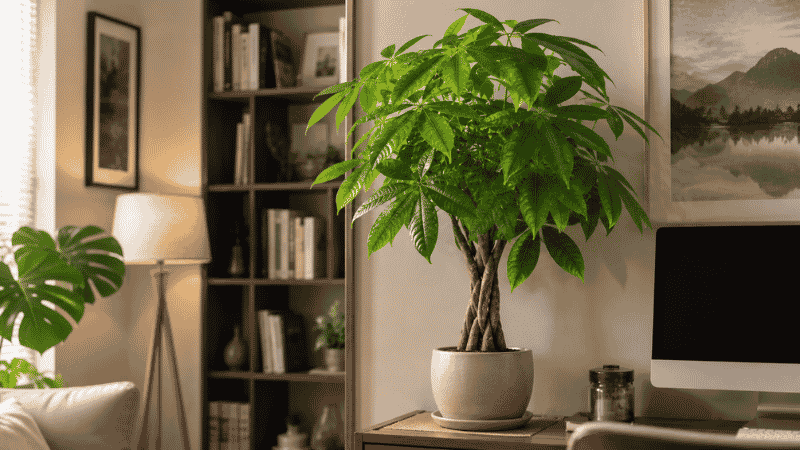
The money tree (Pachira aquatica) is native to tropical wetlands in Central and South America, where it grows along riverbanks and swampy areas — reaching up to 60 feet in the wild. Indoors, it tops out at 3–8 feet depending on pot size and light. The braided trunk you see in shops? That’s a human invention — growers braid several young stems together while they’re still flexible. It doesn’t harm the plant at all; it’s purely aesthetic, and it’s become the plant’s most recognizable feature.
The feng shui connection is real to many people — the five-fingered palmate leaves are said to represent the five elements, and the plant is frequently gifted for new homes, new jobs, and new beginnings as a symbol of prosperity. Whether you believe in that or not, there’s something undeniably grounding about having a living tree in your home that you’ve kept alive through seasons.
The care reputation is genuinely deserved. This plant will meet you more than halfway. It just needs you to understand a few specific things, starting with the thing that kills most money trees before their first birthday.
Money Tree Care: The One Thing Most People Get Wrong
Before anything else — before light, humidity, or fertilizer — there’s the watering issue. And it’s not about watering too little. It’s almost always too much.
Money trees come from tropical wetlands, which makes it tempting to think they want consistently moist soil. They don’t — at least not indoors in a pot. In their natural habitat they have enormous root systems, rich soil biology, and natural drainage through the earth. In a 10-inch nursery pot with standard potting mix, the same amount of water sits against the roots far longer. Overwatered roots suffocate. Root rot sets in silently. By the time you see yellow leaves, the damage is already established underground.
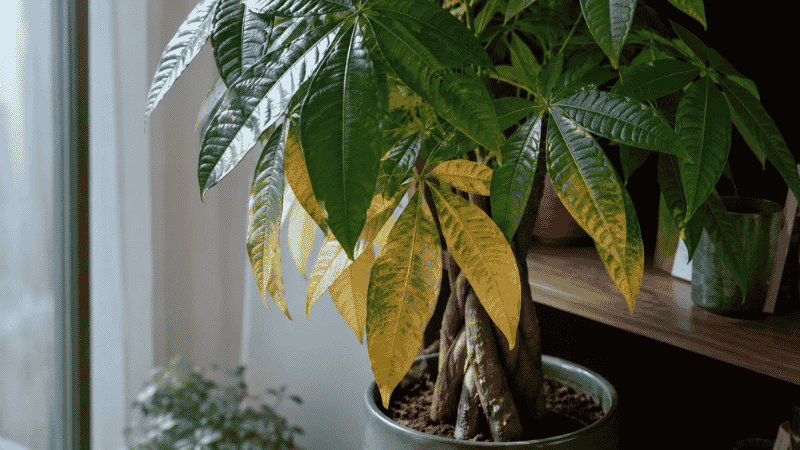
Here’s what that process looks like from the outside: a few leaves yellow — you water more, thinking it’s thirst — more leaves yellow — the stems start feeling soft — the soil smells slightly off. At that point, you’re dealing with root rot, and rescue requires unpotting, trimming, and repotting in fresh dry soil. Completely doable, but stressful and avoidable.
The correct approach: wait until the top 2 inches of soil feel completely dry before watering. Then water thoroughly — until it drains from the bottom of the pot. Empty the saucer. Don’t water again until that top 2 inches is dry once more. That soak-and-dry rhythm is what the plant wants.
Money Tree Care: Light Requirements
Bright indirect light is the sweet spot. Think close to a window — within a few feet — but not pressed against the glass where it would receive harsh direct sun. South and east-facing windows work very well. West-facing windows are fine but watch for intense afternoon sun in summer, which can scorch the leaves.
What happens with too little light: this is the cause of leaf drop that isn’t connected to watering. When the plant doesn’t get enough light, it sacrifices leaves — dropping them to reduce the water and energy demand it can’t sustain. If your money tree is losing leaves (rather than just yellowing them), inadequate light is the most likely cause.
What happens with too much direct sun: bleached, pale patches on leaves, often on the side facing the window. The leaves feel papery in the affected areas. Move the plant slightly away from the glass or filter with a sheer curtain.
One thing money trees do well that many tropical plants don’t: they adapt to moderate light changes gradually. They won’t drop every leaf the moment you move them like a fiddle leaf fig would. But consistent bright indirect light is what produces the most vigorous growth and keeps the leaves that deep, glossy green that makes the plant so visually striking.
How to Water a Money Tree Without Killing It
Let’s go further into watering because this is where most people need the most specific guidance.
The finger test: press your finger about 2 inches into the soil. Still moist? Wait. Dry? Water now.
How to water: water slowly and thoroughly until water runs freely from the drainage holes. This ensures moisture reaches the full root zone, not just the top layer. Then stop — and don’t water again until the finger test tells you to.
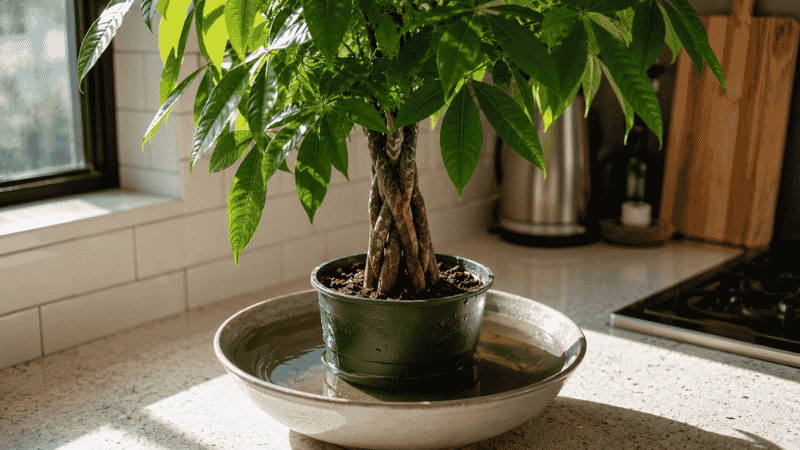
Bottom watering (optional but excellent for money trees): if you suspect your plant has been chronically underwatered and the soil has become somewhat hydrophobic — meaning water runs down the sides without being absorbed — try bottom watering. Place the pot in a few inches of water in your sink or a large bowl. Let it sit for 20–30 minutes, absorbing moisture from below. Then remove, let it drain fully, and return to its spot. As Justin Hancock, horticulturist for Costa Farms, explains: when potting mix dries out too much, it can stop absorbing water from above effectively — bottom watering bypasses this problem entirely.
Seasonal adjustment: in winter, money trees grow slowly and need significantly less water — many owners go from watering every 1–2 weeks in summer to every 3–4 weeks in winter. The finger test remains your guide, but expect longer gaps between waterings as temperatures drop and light decreases.
What overwatering looks like: drooping leaves that feel soft, yellow foliage starting from lower leaves, dark mushy patches near the base if you unpot and check. A slight musty smell from the soil is often the first real warning.
What underwatering looks like: dry, crispy, browning leaf edges, leaves curling inward, soil pulling away from the sides of the pot. Easily fixed with a thorough watering or bottom watering session.
The two look similar from a distance, which is why so many people make the problem worse by adding more water when the real issue is root damage from too much water. Always feel the soil before deciding.
Humidity: More Important Than People Realize
Money trees are tropical wetland plants. They evolved in high-humidity environments. Indoors — especially in winter with heating running — most homes run at 30–40% humidity. Money trees prefer 40–60%.
The symptoms of low humidity look a lot like underwatering: brown, crispy leaf edges and tips, particularly in winter. If you’re watering correctly but still getting brown tips, humidity is usually the culprit.
Practical ways to increase humidity:
- Pebble tray: fill a shallow tray with pebbles, add water to just below the top of the pebbles, and set your money tree pot on top. As the water evaporates, it increases local humidity.
- Group with other plants: plants release moisture through their leaves. A cluster of tropical plants creates a more humid microclimate than isolated specimens.
- Small humidifier: the most effective solution, particularly in winter. A basic ultrasonic humidifier running nearby does more than any other single intervention.
- Bathroom placement: if you have a bathroom with adequate indirect light, money trees thrive in the natural humidity from showers.
What doesn’t work particularly well: misting. It’s satisfying in the moment, but the moisture evaporates within minutes and doesn’t meaningfully raise ambient humidity. Do it if you enjoy it, but don’t rely on it as your primary humidity solution.
Temperature: Stability Over Perfection
Money trees prefer temperatures between 60–75°F (15–24°C) — standard room temperature in most homes. They dislike cold drafts, heat vents, and air conditioning blowing directly on them. All three cause leaf drop and brown edges.
The placement advice is specific: avoid windowsills where cold glass touches leaves in winter, avoid spots near radiators or baseboard heating, and avoid positioning the plant directly in the path of air conditioning vents in summer. A corner with good ambient light and stable temperature — away from external walls and climate control units — is ideal.
Below 50°F (10°C), money trees begin to struggle. Don’t keep them near uninsulated windows in a cold climate winter.
Soil and Potting: What the Roots Actually Need
A well-draining potting mix is non-negotiable. Dense, moisture-retentive mixes that work for some tropical plants create exactly the waterlogged conditions that cause root rot in money trees.
Standard all-purpose potting mix improved with perlite — about 20–30% perlite by volume — provides good drainage while retaining enough moisture to keep roots comfortable. Alternatively, some growers use a cactus mix blended 50/50 with standard potting mix.
Always use a pot with drainage holes. A money tree in a decorative pot without drainage will develop root rot. Use the decorative pot as a sleeve — keep the plant in a nursery pot inside it, removing to water over a sink.
Repotting: money trees like being somewhat root-bound and don’t need frequent repotting. Plan every 2–3 years, or when roots are visibly growing out of drainage holes. Spring is ideal. Go up one pot size only — too large a pot holds excess wet soil.
The Braided Trunk: Questions Everyone Has
The braid is purely cosmetic and doesn’t affect the plant’s health in any way. Growers braid young, flexible stems together and secure them while they set. Over time the braid becomes rigid and permanent.
Can you braid your own? Technically yes, but only if you have multiple very young, flexible stems and significant patience. It’s not something most home growers attempt or need to.
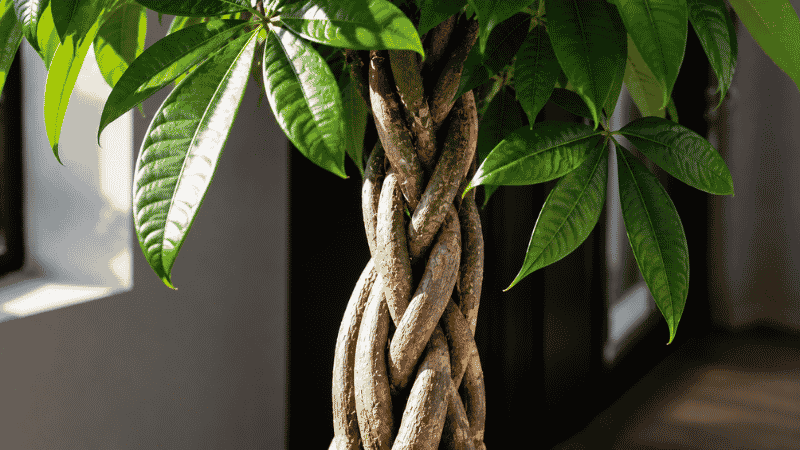
New shoots sometimes emerge from the base of the plant. If they’re still soft and green, you can gently tuck them into the existing braid. If they feel woody or resist bending, leave them — forcing them will snap them.
Does the braid ever separate? With age, the fused stems can sometimes begin to separate slightly at the top. This is cosmetic and doesn’t harm the plant.
Common Money Tree Problems: What Real People Worry About
“My money tree leaves are turning yellow.”
Nine times out of ten: overwatering. Check the soil — if it’s moist and has been moist, stop watering and let it dry thoroughly. If the yellowing is widespread and the soil smells musty, unpot and check the roots. Healthy roots are white or tan and firm. Rotted roots are brown, black, and mushy — trim them away, let the plant dry for a few hours, and repot in fresh dry soil.
Less commonly: insufficient light can cause gradual lower-leaf yellowing. Natural aging of the oldest leaves (occasional yellowing of the lowest, oldest leaves) is also normal.
“My money tree leaves are falling off.”
Leaf drop — actual leaves detaching and falling, rather than yellowing — is most commonly a light issue. Not enough light causes the plant to sacrifice leaves to reduce its energy demands. Move to a brighter position.
Leaf drop can also happen after a significant move (stress response, usually temporary) or from cold draft exposure.
“My money tree leaves have brown tips.”
Usually low humidity or — less commonly — fluoride in tap water accumulating in the soil. Increase humidity using a pebble tray or humidifier. Consider switching to filtered water. Flush the soil thoroughly every few months to wash out accumulated mineral salts.
“My money tree is drooping even though I watered it.”
This is the overwatering signal most people miss. When roots have been damaged by root rot, the plant droops even though soil is wet — because the roots can no longer absorb water effectively. Stop watering. Unpot and inspect.
“My money tree isn’t growing.”
Check light first — insufficient light is the most common growth inhibitor. Check that you’re feeding it during growing season (spring and summer) with a balanced liquid fertilizer once a month. And verify it’s not severely rootbound — extremely pot-bound plants slow growth significantly.
Feeding Your Money Tree
A balanced liquid fertilizer, applied monthly during spring and summer, supports healthy growth. Use the recommended strength — money trees are moderate feeders and don’t need to be babied with half-strength formulas. Stop feeding in autumn and winter; the plant’s growth slows and accumulated fertilizer salts contribute to the brown tips owners frequently notice in colder months.
⚠️ Money Trees and Pets
Money trees are toxic to cats and dogs. Ingestion causes vomiting, diarrhea, and nausea. Keep out of reach of pets that chew on leaves. The ASPCA lists Pachira aquatica as toxic to both cats and dogs.
If your pet ingests money tree leaves, contact your veterinarian or the ASPCA Animal Poison Control Center at 888-426-4435.
If You Only Have 5 Minutes Right Now
Check the soil. Stick your finger 2 inches in. If it’s moist, walk away — don’t water today. If it’s dry, water thoroughly until it drains from the bottom, empty the saucer, and walk away again. Then check whether the plant is getting genuine bright indirect light from a nearby window.
Those two checks, done consistently, solve 80% of all money tree problems.
FAQ: Real Questions People Actually Search
Why are my money tree leaves turning yellow? Almost always overwatering. The roots are sitting in wet soil longer than they can handle, which prevents oxygen absorption and causes root rot. Let the soil dry to 2 inches depth before watering, ensure the pot drains freely, and empty saucers after watering. If yellowing is rapid and the soil smells musty, unpot and check roots for rot.
How often should I water a money tree? When the top 2 inches of soil feel completely dry — typically every 1–2 weeks in spring and summer, every 3–4 weeks in autumn and winter. Never water on a fixed schedule without checking the soil first. The soak-and-dry cycle is what the plant thrives on.
Why is my money tree dropping leaves? Leaf drop (leaves detaching and falling) is usually a light issue — insufficient light causes the plant to sacrifice leaves. Move to a brighter position near a window. Less commonly: stress from a recent move (temporary, resolves in 2–4 weeks) or cold drafts.
Is a money tree safe for cats and dogs? No — money trees are toxic to cats and dogs if ingested, causing vomiting and nausea. Keep out of reach. Contact your vet if ingestion occurs.
Why does my money tree have brown tips? Usually low humidity, particularly in winter when heating systems dry indoor air. Increase humidity with a pebble tray, plant grouping, or humidifier. Also possible: tap water mineral accumulation — try filtered water and flush the soil periodically.
A Note on the Lucky Plant Thing
I’m not particularly superstitious. But I’ll say this: there’s something genuinely nice about having a plant in your home that people gave you, or that you chose, in a moment of wanting something to go well. A new job. A new apartment. A new chapter.
A 2022 review published in Environmental Research found that having indoor plants — particularly in home and work environments — is consistently associated with reduced stress, improved mood, and greater reported life satisfaction. Whether your money tree brings financial luck is between you and the universe. But the act of tending something alive, of learning its rhythms, of watching it grow — that part is real and measurable.
Keep the tree. Learn what it needs. Enjoy the process.
Keep Growing
- 🌿 [Low Maintenance Indoor Plants: 12 Hard-to-Kill Picks] — more plants for your collection
- 💛 [Plant Leaves Turning Yellow? 7 Real Causes and Fixes] — the full diagnostic guide
- 🌑 [Snake Plant Care: The Complete Guide] — another low-maintenance statement plant
- 🔄 [How to Repot a Plant: Step-by-Step for Beginners] — when your money tree outgrows its pot
References: Largo-Wight, E., et al. (2022). When green enters a room: A scoping review of epidemiological studies on indoor plants and mental health. Environmental Research, 214. ASPCA Animal Poison Control Center. Toxic and Non-Toxic Plant List — Money Tree (Pachira aquatica). Costa Farms — Justin Hancock, Horticulturist (2024). Money Tree Care. New York Botanical Garden Mertz Library Reference (2023). How do I care for my money tree houseplant? 1-800-Flowers (2026). 2026 Plant of the Year: Pachira aquatica.