
Here’s the reassuring truth: snake plants are still one of the easiest houseplants in existence. But “hard to kill” doesn’t mean “requires zero understanding.” Almost every snake plant problem comes down to one thing — overwatering — and once you understand that, snake plant care becomes genuinely simple.
This guide covers everything from the basics (light, water, soil) to the problems most beginners encounter (yellow leaves, root rot, drooping) and even how to propagate new plants from the one you already have. Whether your snake plant is thriving, struggling, or somewhere in between, you’ll know exactly what to do.
Key Takeaways
- Overwatering is responsible for the vast majority of snake plant problems — water only when the top 2–3 inches of soil are completely dry
- Snake plants are one of the few houseplants that perform CAM photosynthesis, releasing oxygen at night as well as during the day — which is why they’re recommended as bedroom plants
- NASA’s 1989 Clean Air Study identified snake plants as effective at removing indoor toxins including formaldehyde and benzene, though the effect in a ventilated home is modest
- Most snake plant problems (yellow leaves, drooping, soft spots) are diagnosable and fixable — the plant is more resilient than it looks
- Snake plants can live for 10–25 years with basic care, making them one of the most enduring houseplants you can own
Why Snake Plants Are Worth Getting to Know
Before we get into the how-to, it’s worth spending a moment on the why — because snake plants offer more than most people realize.
Botanically known as Dracaena trifasciata (formerly Sansevieria), snake plants originate from the dry, rocky regions of West Africa. This heritage explains everything about how they grow: they’ve evolved to survive drought, indirect light, and poor soil. In your home, those survival skills translate directly into forgiveness — they tolerate missed waterings, imperfect light, and beginner mistakes in a way that very few plants do.
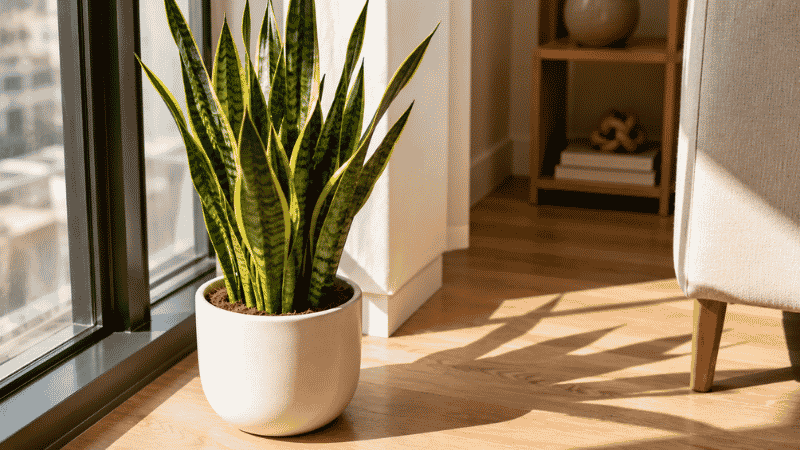
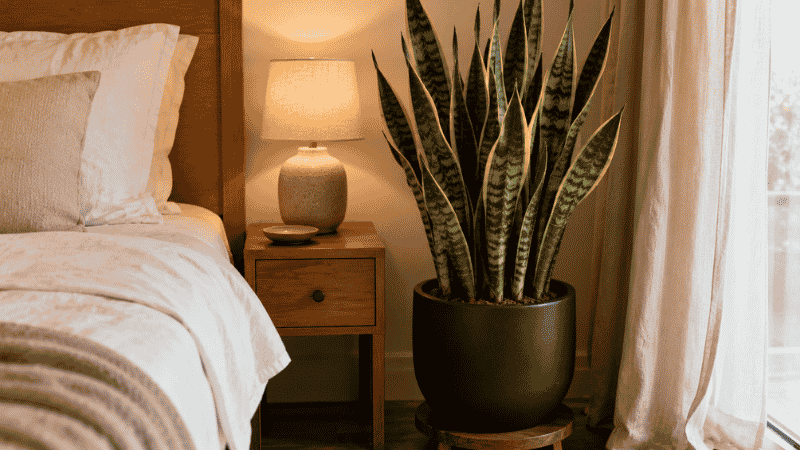
They’re also genuinely beautiful. The upright, architectural leaves — striped in silver, green, and gold — bring structure and calm to any space. A tall snake plant in a simple ceramic pot is one of the most effortlessly stylish things you can add to a room.
And there’s the air quality benefit, which is real (if a little overstated in popular media). NASA’s landmark 1989 Clean Air Study found that snake plants remove indoor air pollutants including benzene and formaldehyde. More practically: unlike most plants, snake plants use CAM photosynthesis, which means they continue releasing oxygen at night rather than switching to carbon dioxide production. That’s the legitimate science behind the “put a snake plant in your bedroom” recommendation.
Snake Plant Care: Light Requirements
Snake plants are famously tolerant of low light — but there’s an important nuance that most guides skip.
They tolerate low light. They thrive in medium to bright indirect light. There’s a meaningful difference between keeping a snake plant alive in a dark corner and watching one genuinely flourish near a well-lit window.
The practical guide by window direction:
- South or west-facing windows — ideal; your snake plant will grow steadily and maintain its full color. Avoid placing it in direct harsh afternoon sun, which can scorch leaves.
- East-facing windows — excellent; bright morning light with cooler afternoons suits snake plants perfectly.
- North-facing windows — workable; the plant will survive but growth will slow considerably, and variegated varieties (those with yellow or silver edges) may begin to lose their color contrast and revert toward plain green.
- Interior rooms with no window — technically possible short-term, but the plant will gradually decline. If this is your only option, move it near a window for a few days each week, or add a small grow light.
One useful habit: rotate your snake plant a quarter turn every month or two. Plants grow toward light, and one-sided placement leads to uneven growth over time.
How Often to Water a Snake Plant (The Most Important Thing You’ll Read)
If there is one rule of snake plant care that matters more than all others, it’s this: water far less often than you think you should.
Snake plants store water in their thick, fleshy leaves — the same way succulents and cacti do. This means they can go weeks without water without showing any distress. What they cannot survive is sitting in consistently wet soil, which deprives roots of oxygen and causes root rot — the single most common cause of snake plant death.
The correct watering approach:
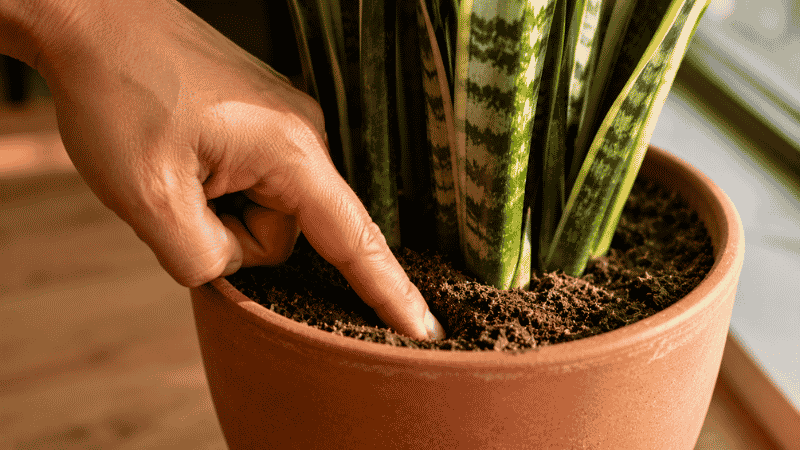
Press your finger 2–3 inches into the soil. If it feels moist at all, wait. If it feels completely dry all the way down, water thoroughly — until water drains from the bottom of the pot — then don’t water again until the soil is dry once more.
Rough frequency by season:
- Spring and summer (active growing): every 2–3 weeks
- Autumn: every 3–4 weeks
- Winter (dormancy): once a month or even less — this is when overwatering does the most damage, because the plant is barely using water at all
The pot matters enormously: Always use a pot with drainage holes. A snake plant in a pot without drainage is almost guaranteed to develop root rot eventually, regardless of how careful you are with watering. If you love a decorative pot without holes, use it as a sleeve — keep your plant in a nursery pot inside it, and remove it to water over a sink.
Soil and Potting: What Your Snake Plant Actually Needs
Snake plants need well-draining soil above all else. Standard all-purpose potting mix holds too much moisture for them — particularly in the cooler, darker months when the plant barely needs water.
The best soil options:
- A cactus and succulent mix (ideal — designed for drainage)
- Standard potting mix combined with perlite in a 50/50 ratio (very good)
- Standard potting mix alone (workable, but monitor carefully for overwatering)
Never use garden soil in a pot. It compacts, blocks drainage, and often introduces pests.
On pot size: Snake plants actually prefer to be slightly pot-bound — roots filling the pot is not a problem for them the way it is for faster-growing plants. Only repot when roots are visibly escaping from the drainage holes. When you do repot, go up just one size (1–2 inches larger in diameter). An oversized pot holds far more soil than the roots can use, which means excess wet soil sitting around the root zone — a direct path to rot.
Repotting is best done in spring when the plant is entering its growing season.
Temperature and Humidity: What to Avoid
Snake plants prefer temperatures between 60–80°F (15–27°C) — essentially the same conditions most people keep their homes. They’re not fussy about normal household temperatures.
What they don’t tolerate:
Cold drafts: Keep snake plants away from drafty windows and doors in winter. Temperatures below 50°F (10°C) stress the plant and can cause soft, damaged-looking patches on the leaves.
Air conditioning or heating vents: Direct airflow from vents creates extreme temperature fluctuations and very dry air. A snake plant placed directly in front of a vent will show brown, crispy leaf tips fairly quickly.
Excessive humidity: Snake plants prefer dry conditions — they’re from arid West Africa. Bathrooms are generally not ideal placements, despite often being recommended. The combination of humidity and typically lower light in bathrooms can weaken the plant over time.
Bedrooms and living rooms — warm, moderately lit, with normal household humidity — are genuinely the best environments for a snake plant.
Feeding Your Snake Plant
Snake plants are light feeders. They don’t need fertilizer to survive, and over-fertilizing causes more problems than it solves — particularly salt buildup in the soil, which burns roots and causes brown leaf tips.
A simple feeding approach that works: during spring and summer only, apply a balanced liquid houseplant fertilizer once a month at half the recommended strength. Stop feeding entirely in autumn and don’t resume until spring.
That’s all. No complicated feeding schedule, no specialty products required.
Common Snake Plant Problems (And How to Fix Them)
Why Are My Snake Plant Leaves Turning Yellow?
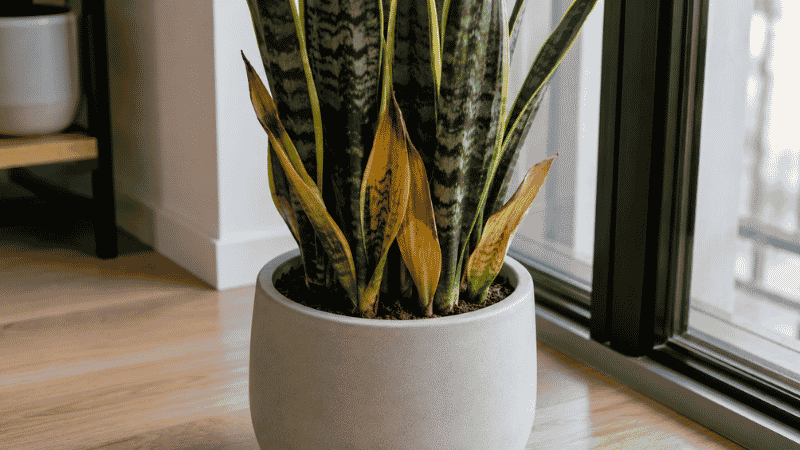
Yellow leaves on a snake plant are almost always caused by overwatering or root rot. When roots sit in wet soil, they lose access to oxygen, begin to die, and can no longer transport nutrients to the leaves — which turn yellow from the base up.
What to do: Stop watering immediately. Allow the soil to dry out completely. If the yellowing is progressing or the soil smells musty, slide the plant out of its pot and inspect the roots. Healthy roots are white or light tan and firm. Rotten roots are brown or black and feel mushy.
If you find root rot: trim away all mushy roots with clean scissors, let the root system air-dry for an hour, and repot into fresh dry soil. Do not water for at least a week after repotting.
In rare cases, yellow leaves can indicate too much direct sunlight (leaves look bleached or faded rather than fully yellow) or the plant being severely underwatered (leaves also feel dry and shriveled). Check the soil to determine which applies.
Why Is My Snake Plant Drooping?
Drooping or falling-over leaves are almost always caused by overwatering or root rot — the root system has become too weak to support the plant’s structure. Less commonly, physical damage (a knocked-over pot, a pet that chewed a leaf) can cause a single leaf to flop.
Check soil moisture first. If the soil is wet and has been wet for a while, follow the root rot treatment above. If roots look healthy but the pot seems very large relative to the plant, consider downsizing to a smaller pot — excess soil holds moisture the roots can’t use.
Why Are the Leaf Tips Brown?
Brown, crispy tips on snake plant leaves are usually caused by one of three things:
- Low humidity or dry air (most common in winter with heating running) — try moving the plant away from direct heat sources
- Fluoride sensitivity — snake plants can be mildly sensitive to fluoride in tap water; switching to filtered or rainwater helps
- Overfertilizing — salt buildup from too much fertilizer burns root tips and shows up as brown leaf tips
Brown tips don’t reverse — the affected part of the leaf won’t turn green again. Trim the brown section with clean scissors, cutting at an angle to maintain the leaf’s natural pointed shape. Address the underlying cause to prevent further browning.
Why Does My Snake Plant Have Soft, Mushy Spots?
Soft, mushy patches on leaves — especially at the base — are the most serious warning sign. This is advanced root rot making itself visible above soil level.
Remove the plant from its pot immediately. Inspect the roots. If the root rot is advanced (extensive black, mushy root system), the plant may be difficult to save, but it’s worth trying: trim all affected roots and any mushy leaf bases, let the healthy portion air-dry for several hours, and repot in completely dry fresh soil. Hold off on watering for 10–14 days.
How to Propagate a Snake Plant (Free New Plants)
One of the genuinely delightful things about snake plants is how easily they can be propagated. One plant can become many — and it costs nothing.
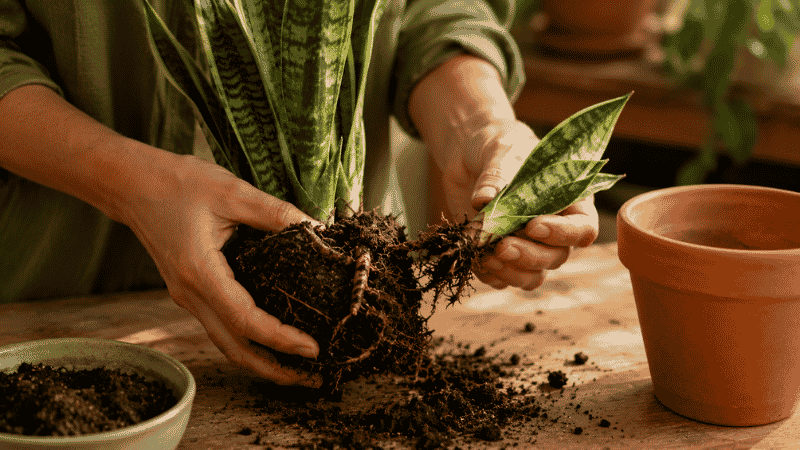
Method 1: Division (easiest and fastest) When repotting, you’ll often find that your snake plant has produced “pups” — small new plants growing from the base, connected to the parent by underground rhizomes. Simply separate these from the main plant (you may need clean scissors or a knife to cut through the rhizome), pot each pup separately in fresh soil, and treat it as a new plant. Pups establish quickly because they already have their own root systems.
Method 2: Leaf cuttings in water Cut a healthy leaf near the base and place the bottom 1–2 inches in a jar of clean water, in a spot with bright indirect light. Change the water weekly. Roots appear in 4–8 weeks, and tiny new plantlets form from the base over the following 2–4 months. Once plantlets are established, move to soil.
One important caveat: If you propagate from a leaf cutting of a variegated snake plant (one with yellow-edged leaves like Laurentii), the resulting plants will be solid green — the yellow variegation is a mutation that doesn’t transfer through leaf cuttings. To preserve variegation, use the division method instead.
A Note on Pet and Child Safety
Snake plants are mildly toxic if ingested — they contain saponins, which can cause nausea, vomiting, and diarrhea in both people and animals. The toxicity level is considered low (no documented fatalities), but it’s sensible to keep snake plants out of reach of curious pets and young children who might chew on the leaves.
If you have cats or dogs that habitually chew plants, consider placing your snake plant on a high shelf or in a room your pets don’t access freely.
If You Only Have 5 Minutes Right Now
Check your snake plant’s soil. Stick your finger 2–3 inches in. Is it wet? Put the watering can away and don’t water for another week. Is it completely dry? Water thoroughly until it drains. That single check, done consistently, will solve 80% of all snake plant problems before they develop.
FAQ
How often should I water a snake plant? Generally every 2–4 weeks in spring and summer, every 4–6 weeks in autumn, and once a month or less in winter. But frequency matters less than the soil test: water only when the top 2–3 inches of soil feel completely dry.
Can a snake plant survive in a room with no windows? Short-term, yes — snake plants are among the most low-light tolerant of all houseplants. Long-term, a room with absolutely no natural light will cause gradual decline. If this is your only option, supplement with a small LED grow light for 12–14 hours per day.
Are snake plants safe for cats and dogs? No — snake plants are mildly toxic to cats and dogs if ingested. Symptoms include drooling, vomiting, and diarrhea. The toxicity level is low, but it’s best to keep them out of reach of pets that chew on plants. Verify current toxicity information at aspca.org.
Why are my snake plant leaves falling over? Almost always root rot from overwatering. The root system weakens and can no longer support the leaves structurally. Check soil moisture and root health — if roots are mushy and brown, follow the root rot rescue steps above.
Do snake plants really clean the air? Partially. NASA’s 1989 Clean Air Study found snake plants remove benzene, formaldehyde, and other indoor pollutants in sealed conditions. In a typical ventilated home, the effect is more modest. What is genuinely true: snake plants use CAM photosynthesis and release oxygen at night, making them one of the better bedroom plants for air quality.
How big do snake plants get? Depending on variety, snake plants can grow from 6 inches to over 4 feet tall. Most common varieties in homes reach 2–4 feet. Growth is slow — a snake plant gains only a few inches per year under typical indoor conditions.
Can I put my snake plant outside in summer? Yes, in warm weather. Place it in a spot with bright but indirect light — full outdoor sun is often too intense and can scorch the leaves. Bring it back inside before temperatures drop below 50°F (10°C).
The Thing Nobody Mentions
A healthy snake plant is a quiet companion. It doesn’t demand attention, doesn’t drop leaves when you’re busy, doesn’t wilt dramatically when you forget about it for two weeks. It just stays there, growing slowly, looking good, filtering the air while you sleep.
There’s something genuinely comforting about a plant that asks so little and gives so much back. Once you understand its one real preference — dry over wet — snake plant care becomes one of the most peaceful routines in any home.
Keep Growing
- 🌿 [Low Maintenance Indoor Plants: 12 Hard-to-Kill Picks] — more plants that thrive with minimal care
- 🔄 [How to Repot a Plant: Step-by-Step for Beginners] — when your snake plant outgrows its pot
- 🌱 [Best Plants for Beginners: 15 Picks That Are Actually Hard to Kill] — find your next plant
References: Wolverton, B.C., Johnson, A., & Bounds, K. (1989). Interior Landscape Plants for Indoor Air Pollution Abatement. NASA/ALCA Final Report. University of North Dakota Scholarly Commons (2018). Benefits of Indoor Houseplant for Toxic Air Removal — Space Studies Symposium. Soga, M., Gaston, K.J., & Yamaura, Y. (2017). Gardening is beneficial for health: A meta-analysis. Preventive Medicine Reports, 5, 92–99. ASPCA Animal Poison Control Center. Toxic and Non-Toxic Plant List.