
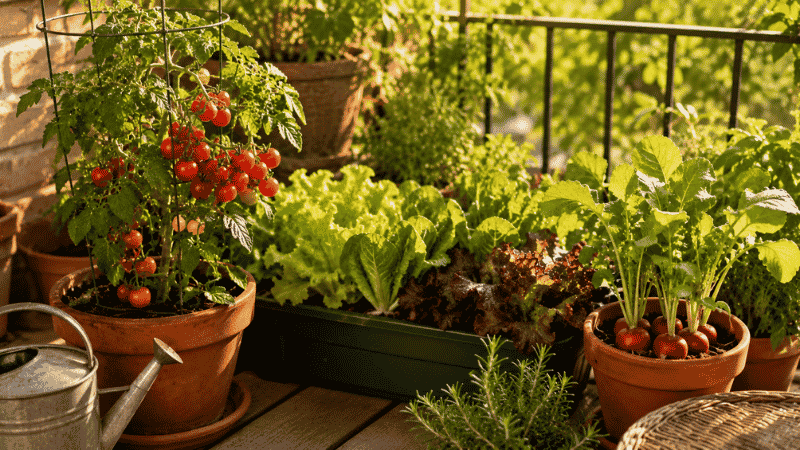
You’ve been standing in the vegetable section of the garden center for fifteen minutes, staring at rows of seedlings with names you half-recognize, trying to figure out where to even begin. Tomatoes seem like the obvious choice — everyone grows tomatoes — but you’ve also heard they’re finicky. Someone once mentioned zucchini was easy, but zucchini is enormous and you have a balcony the size of a dining table.
Here’s the thing about growing your own vegetables: the difference between a successful first season and a frustrating one almost always comes down to choosing the right crops to start with. Not the most interesting ones. Not the ones in the most beautiful seed catalog photography. The ones that actually want to grow in your specific conditions — your available space, your light levels, your watering habits.
This guide cuts through the noise. Whether you have a full garden bed, a small patio, or just a balcony in an apartment, these are the easiest vegetables to grow that will give beginners genuine results without demanding expertise or perfect conditions. We’ve organized them by what they need and what they give back — so you can match them to your real life, not the idealized version of it.
Key Takeaways
- Radishes are the fastest vegetable a beginner can grow — from seed to harvest in as little as 25 days, making them the perfect confidence-builder
- Lettuce and leafy greens can be harvested using the “cut and come again” method, producing multiple harvests from a single planting over several months
- Most of the vegetables on this list grow successfully in containers on a balcony or patio — no garden bed required
- According to the National Gardening Association, over 35% of American households now grow food at home or in community gardens — and the most successful beginners consistently start small with forgiving crops
- The best first vegetable garden is not the most ambitious one — it’s the one that teaches you something and makes you want to try again next season
What Makes a Vegetable “Easy” to Grow?
Before the list, it’s worth being clear about what easy actually means — because every vegetable guide calls its crops “easy,” and clearly they can’t all be right.
A genuinely easy vegetable for beginners does at least three of these four things: it germinates reliably from seed (or transplants without fuss), it tolerates beginner mistakes in watering and spacing, it produces a harvest within a reasonable timeframe so you feel rewarded rather than defeated, and it grows well in containers if you don’t have a ground garden.
What easy does not mean: zero effort, perfect in all conditions, or suitable for every climate. Every vegetable has requirements. The difference is that easy vegetables have wider tolerances — they forgive inconsistency, recover from small mistakes, and don’t punish every imperfect decision.
The Fastest Win: Radishes (25–30 Days to Harvest)
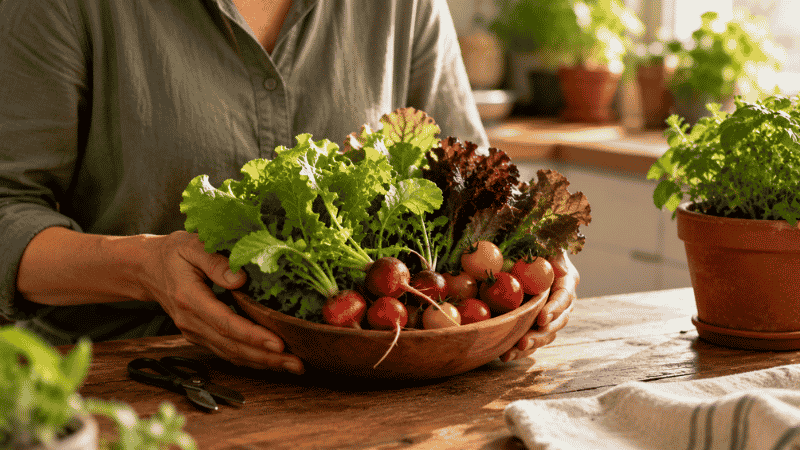
If you’ve never grown a vegetable before and want to experience the genuine satisfaction of planting a seed and eating something from it, grow radishes first. Not because they’re the most useful or the most delicious, but because they are the most reliable confidence-builder in the vegetable world.
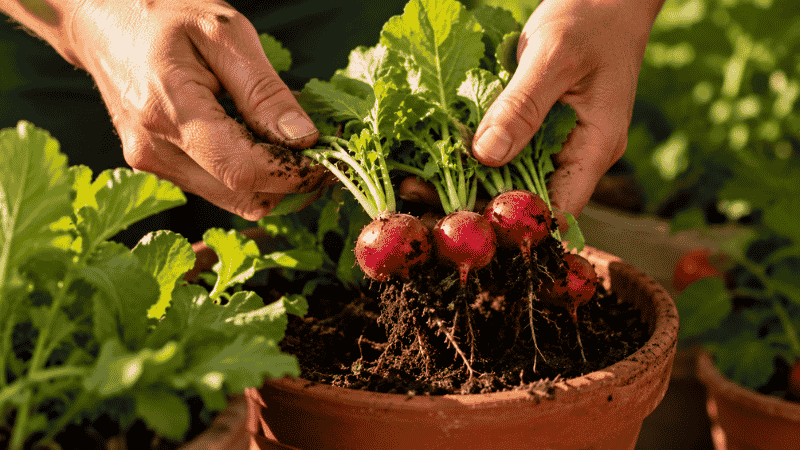
Radishes mature in 25–30 days from seed — faster than almost any other food plant. While your neighbor’s tomatoes are still flowering, you’ll be pulling your first radishes. They grow in shallow containers (as little as 6 inches deep), tolerate a range of light conditions, and need nothing beyond consistent moisture and basic soil.
How to grow them: Sow seeds directly into a container or bed, half an inch deep and about an inch apart. Once they sprout, thin to 2–3 inches apart — crowded radishes develop all top and no root, which is the most common beginner mistake. Keep the soil consistently moist. Harvest as soon as the roots are about the size of a marble, before they become woody and sharp.
The greens are edible too — spicy and peppery, excellent in salads. Nothing goes to waste.
Varieties to start with: Cherry Belle (classic round, crisp, matures in 22 days), French Breakfast (mild, oblong, beautiful), Easter Egg Mix (colorful assortment of round radishes — particularly fun if you’re growing with children).
The Continuous Harvest: Lettuce and Mixed Greens (30–45 Days)
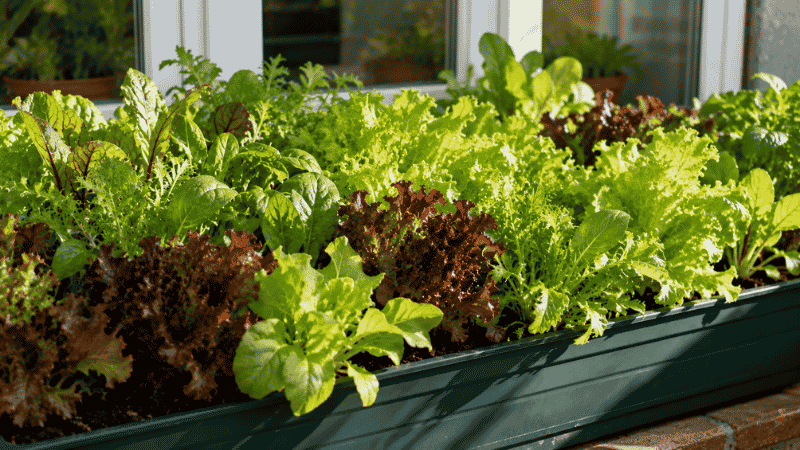
Lettuce might be the most rewarding vegetable a beginner in a small space can grow. It has shallow roots (a 6-inch pot is sufficient), prefers cooler conditions that make it ideal for spring and fall growing, and can be harvested continuously using a technique called “cut and come again” — snip outer leaves while leaving the center intact, and the plant keeps producing for weeks.
A single balcony planter box of mixed salad greens can supply fresh salads for months. This is not an exaggeration — loose-leaf varieties keep producing after each harvest rather than being pulled up all at once.
The light question: Lettuce is one of the few vegetables that genuinely tolerates lower light. While it prefers 4–6 hours of sun, it manages reasonably well with less — making it suitable for east-facing balconies or spots that don’t get full afternoon sun.
How to grow it: Sprinkle seeds directly onto moistened potting mix, press them gently into the surface (lettuce seeds need light to germinate — don’t bury them), and keep the soil moist until they sprout. Thin seedlings to 4–6 inches apart. Begin harvesting outer leaves once plants reach 4–5 inches tall.
Varieties to start with: Black Seeded Simpson (fast, reliable, heat-tolerant), Buttercrunch (soft sweet leaves, slower to bolt in warmth), Cosmo (better bolt resistance for warmer climates), or any “mesclun mix” for a variety of textures and flavors in one planting.
Important: Lettuce bolts (goes to seed and turns bitter) when temperatures consistently exceed 80°F. In warm climates, treat it as a spring and fall crop rather than a summer one.
The Prolific Producer: Zucchini and Summer Squash (50–65 Days)
Zucchini has a reputation for overproducing — there are jokes about leaving bags of zucchini on neighbors’ doorsteps because you can’t eat it all. This reputation is deserved, and for a beginner, it’s actually a feature, not a problem.
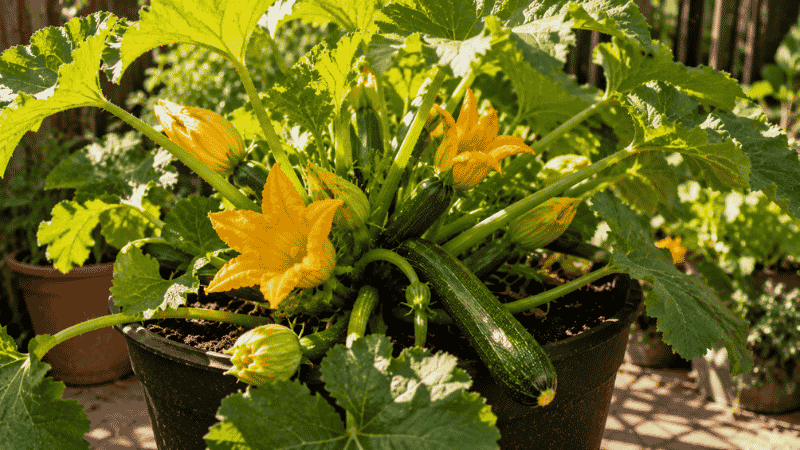
A single healthy zucchini plant in a large enough container can produce more than you’ll know what to do with all summer. It grows quickly, communicates its needs clearly (wilting means thirst; otherwise it’s fine), and produces satisfying harvests that reward patience.
The container reality: Standard zucchini plants are large. For balcony growing, seek out compact container varieties specifically — ‘Patio Star,’ ‘Bush Baby,’ or ‘Eight Ball’ (a round variety) are bred for smaller spaces and perform well in 12–18 inch containers. Standard varieties in ground beds or large raised beds need about 3 square feet each but produce abundantly.
How to grow it: Zucchini needs full sun — at least 6 hours of direct sunlight daily. Start seeds directly in their final container or in the ground after your last frost date. Plant two seeds per spot and remove the weaker seedling once both germinate. Water consistently and deeply; zucchini wilts dramatically when thirsty but recovers quickly once watered.
Harvest when small: Pick zucchini when they’re 6–8 inches long. Left on the plant, they become marrows — enormous, seedy, and much less flavorful. Regular harvesting also keeps the plant producing more fruit.
The Beginner’s Bean: Bush Beans (50–60 Days)
Green beans divide into two types: bush beans (compact, self-supporting, and excellent for beginners) and pole beans (vining, high-yielding, require stakes or a trellis). For a first garden, bush beans are the right choice — they don’t require support, produce their crop over a concentrated window, and are genuinely hard to fail with.
Seeds germinate within 7–10 days and plants grow vigorously from there. One sowing of a 12-inch container or a small bed patch will produce a worthwhile harvest.
How to grow them: Sow seeds directly — 1–2 inches deep, 3–4 inches apart — after your last frost date when soil is warm. Beans don’t like to be transplanted; always sow directly where they’ll grow. Water consistently but avoid wetting the leaves, which encourages fungal problems. Harvest pods when they’re firm and snap cleanly — before the seeds inside start to bulge noticeably.
A bonus: Like all legumes, beans fix nitrogen from the air into the soil, which improves soil health for whatever you plant afterward. This makes them a particularly good choice for rotating through containers or raised beds.
Varieties to start with: Blue Lake Bush (reliable, heavy producing, widely available), Provider (faster maturing and more disease-resistant), Mascotte (a compact variety bred for containers).
The Gateway to Big Flavor: Cherry Tomatoes (60–80 Days)
Cherry tomatoes require more attention than anything else on this list — they need genuine direct sun, consistent watering once fruiting begins, and some form of support as they grow. In return, they produce far more abundantly than most beginners expect, and the taste of a homegrown cherry tomato in August is something that gets people hooked on vegetable gardening permanently.
The key for beginners and balcony growers: choose compact, determinate varieties bred for containers. Full-size indeterminate tomatoes can reach 6 feet tall and require significant management. Compact varieties stay at 1–3 feet and produce just as abundantly in a 5-gallon pot.
How to grow them: Full sun — 6–8 hours minimum, non-negotiable. Plant seedlings (starting from transplants is much easier than seed for tomatoes) in a 5-gallon or larger container with quality potting mix. Add a small stake at planting time. Water whenever the top inch of soil feels dry — daily in summer heat. Begin liquid feeding every 1–2 weeks once flowers appear.
Varieties for containers: Tiny Tim (18-inch plant, perfect for small pots), Tumbling Tom (trailing habit, beautiful in hanging baskets), Patio (bred specifically for containers, reliable), Sun Gold (technically indeterminate but highly manageable, extraordinary sweetness).
Cool-Season Stars: Spinach, Kale, and Swiss Chard (30–60 Days)
These three leafy greens belong in the same category — cool-season crops that grow vigorously in spring and fall, tolerate light frost, and can be harvested using the same cut-and-come-again method as lettuce.
Spinach matures fastest (30–40 days) and has the shallowest root requirements (6-inch pot is sufficient). It bolts in summer heat, so treat it as a spring and fall crop. Baby spinach leaves harvested young are some of the most tender and sweet vegetables you can grow.
Kale is slower (50–70 days to full size) but extraordinarily cold-tolerant — it actually tastes sweeter after a frost. A single kale plant in a 12-inch container can produce leaves for months. Lacinato (dinosaur) kale and Red Russian kale are the most beginner-friendly varieties.
Swiss chard is possibly the most forgiving of the three — it handles both heat and cold better than spinach or kale, grows in 6–8 inch containers, and produces colorful stems that make it genuinely attractive as well as edible. Bright Lights (a multi-colored variety) is both productive and beautiful.
The Surprise Easy Crop: Peas (60–70 Days)
Peas seem like they’d be complicated — they’re climbing plants that need support and specific timing. In practice, they’re one of the most satisfying crops a beginner can grow, particularly in early spring when little else is ready to plant.
Sugar snap peas and snow peas (both eaten pod-and-all, without shelling) are particularly beginner-friendly. They grow quickly in cool conditions, produce abundantly, and taste extraordinary eaten fresh off the vine — nothing like the frozen or canned version.
How to grow them: Sow seeds directly in early spring, 4–6 weeks before your last frost date. Peas actually prefer cool soil and can be planted while there’s still a chill in the air. Provide a simple trellis, lattice, or even a few bamboo stakes and string — they’ll find their own way up. Harvest when pods are plump but before seeds inside develop fully (for snap peas) or while pods are still flat (for snow peas).
Container growing: Use a container at least 8 inches deep and 12 inches wide, with a small trellis. Peas are one of the better balcony crops because they’re relatively compact, produce prolifically, and are done by early summer — leaving the container free for warm-season crops.
Quick-Reference Guide: Easiest Vegetables to Grow
| Vegetable | Days to Harvest | Min. Container Depth | Sun Needed | Difficulty |
|---|---|---|---|---|
| Radishes | 25–30 days | 6 inches | Moderate | ⭐ Easiest |
| Lettuce / Greens | 30–45 days | 6 inches | Low–Moderate | ⭐ Easiest |
| Spinach | 30–40 days | 6 inches | Moderate | ⭐ Easiest |
| Swiss Chard | 50–60 days | 8 inches | Moderate | ⭐⭐ Easy |
| Bush Beans | 50–60 days | 12 inches | Full sun | ⭐⭐ Easy |
| Kale | 50–70 days | 12 inches | Moderate | ⭐⭐ Easy |
| Peas | 60–70 days | 8 inches | Moderate | ⭐⭐ Easy |
| Zucchini | 50–65 days | 12–18 inches | Full sun | ⭐⭐ Easy |
| Cherry Tomatoes | 60–80 days | 5 gallons | Full sun | ⭐⭐⭐ Moderate |
If You Only Have 10 Minutes and One Pot
Buy a packet of mixed salad green seeds and a bag of potting mix. Fill any pot or container that’s at least 6 inches deep and has drainage holes. Scatter seeds across the surface, press them gently in, water carefully. Put it in the brightest spot available. Check daily and water when the top inch is dry.
In 30 days you’ll be eating salad you grew yourself. That’s it.
Common Beginner Mistakes and How to Avoid Them
Planting too much at once. The most universal beginner mistake. Overwhelm leads to neglect, which leads to failed gardens. Start with two or three crops maximum. Do them well. Add more next season.
Starting with crops that aren’t actually beginner-friendly. Corn needs large amounts of space and cross-pollination. Cauliflower is temperature-sensitive and finicky. Asparagus takes three years before first harvest. These are year-three crops, not year-one crops.
Using garden soil in containers. Garden soil compacts in pots, blocking drainage and suffocating roots. Always use potting mix for container growing.
Not thinning seedlings. Crowded seedlings compete for resources and produce disappointing results. Thinning feels wasteful but is essential — the plants you remove allow the ones that remain to actually thrive.
Harvesting too late. Vegetables left on the plant past their ideal harvest window signal the plant to slow down and stop producing. Pick regularly. This is the habit that keeps production going.
FAQ
What is the single easiest vegetable to grow for a complete beginner? Radishes. They germinate within days, mature in 25–30 days, grow in any 6-inch container, and require almost nothing beyond moisture and basic light. Grow one round of radishes and you’ll have immediate, tangible proof that you can do this.
What are the easiest vegetables to grow in pots on a balcony? Lettuce, radishes, spinach, herbs (basil, mint, chives), and cherry tomatoes are the most successful balcony crops. Compact zucchini varieties and bush beans also work well in larger containers. Avoid crops that need large amounts of space (corn, melon, full-size squash) or very long growing seasons.
What is the easiest vegetable to grow from seed? Radishes, lettuce, and beans all germinate reliably and quickly from direct-sown seed without special equipment. Cherry tomatoes are easier started from seedlings (transplants) than from seed, since they have a long germination-to-harvest timeline.
What vegetables grow fastest? Radishes (25–30 days), lettuce and baby greens (30–40 days), and spinach (30–40 days to baby leaf stage) are the fastest. Most other vegetables need 50–80+ days from planting to harvest.
Can I grow vegetables without any direct sunlight? Most vegetables need at least some direct sun. Leafy greens like lettuce, spinach, kale, and chard are the most shade-tolerant, managing on 3–4 hours of direct sun (plus bright indirect light). Fruiting vegetables — tomatoes, zucchini, beans, peppers — need 6–8 hours of direct sun and will struggle without it.
How do I know when vegetables are ready to harvest? Each vegetable has specific signals. Radishes are ready when the top of the root is visible at soil level and about marble-sized. Lettuce and greens can be harvested anytime once leaves reach a usable size. Zucchini tastes best at 6–8 inches. Cherry tomatoes are ready when they detach easily with a gentle twist and feel slightly soft to the touch. Beans should snap cleanly when bent. When in doubt, harvest slightly early rather than too late.
Do I need special soil for growing vegetables in containers? Yes — always use potting mix, not garden soil or topsoil. Garden soil compacts in containers, preventing drainage and suffocating roots. A quality all-purpose potting mix provides the right balance of drainage, aeration, and nutrition for container vegetables.
The Most Important Thing
The best vegetable garden you can grow this year is not the most ambitious one. It’s the one that teaches you something about your space, your schedule, and how plants respond to care. Every season you grow something, you know more than you did before. Every small harvest makes the next one more likely.
Start with two things from this list. Grow them well. Notice what works and what doesn’t. That knowledge — accumulated season by season — is how every experienced gardener got there.
Keep Growing
- 🍅 [Growing Tomatoes in Pots: The Beginner’s Guide to a Real Balcony Harvest] — ready to take on cherry tomatoes?
- 🌿 [How to Grow Herbs Indoors] — pair your vegetables with a windowsill herb garden
- 🪴 [Gardening for Beginners: Grow Your First Garden] — the complete guide to getting started
References: National Gardening Association (2023). Garden to Table: A 5-Year Look at Food Gardening in America. The Old Farmer’s Almanac (2026). 10 Easiest Vegetables to Grow From Seed. University of Wisconsin Extension — Vijai Pandian (2020). Vegetable Varieties for Containers. University of Illinois Extension (2021). Starting a Vegetable Garden. Seed Sheets (2026). Easiest Vegetables to Grow for Beginners.