
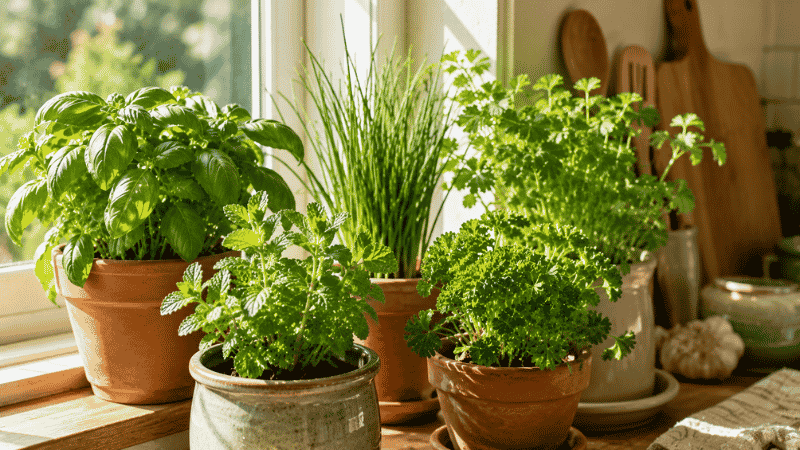
You bought a pot of grocery store basil last week. It looked so full and green in the shop. You brought it home, set it on the counter, watered it once or twice — and within ten days, it had collapsed into a limp, yellowing mess that smelled faintly of regret.
This happens to almost everyone who starts an indoor herb garden, and it’s not your fault. Those grocery store herb pots are actually multiple plants crammed together in nutrient-depleted soil, grown fast under industrial lights, and designed to be used up within a week — not kept alive. They’re not meant to thrive in your home. They’re the fast-fashion version of plants.
Real herbs — properly planted, in the right light, with soil they can actually live in — are a completely different experience. They grow quietly and steadily. They smell incredible every time you brush against them. They let you snip a sprig of fresh rosemary for a Sunday roast or a handful of mint for your morning tea, then keep right on growing. And learning how to grow herbs indoors is genuinely one of the most accessible, rewarding things a beginning gardener can do.
This guide tells you exactly how to make it work — what to grow, where to put it, and the small habits that make the difference between thriving herbs and the sad wilting cycle most people have experienced at least once.
Key Takeaways
- The grocery store herb pot failure is universal — it’s not you, it’s how those plants are grown and packaged
- Most culinary herbs need 4–6 hours of direct sunlight daily; south and east-facing windows work best; north-facing windows don’t provide enough light for any herb to thrive
- Overwatering is the leading cause of indoor herb failure — most herbs prefer soil to dry out slightly between waterings
- A 2022 scoping review published in Environmental Research found that having indoor plants is consistently associated with reduced stress, lower anxiety, and improved emotional wellbeing
- The five most beginner-friendly herbs for indoor growing are basil, mint, chives, parsley, and thyme — start with two or three before expanding
Why Growing Herbs Indoors Is the Perfect Gateway to Gardening
Herbs are the ideal starting point for anyone who wants to try growing something but isn’t sure where to begin. They’re edible, which means every harvest feels genuinely useful. They’re small, which means they fit in apartments and on windowsills. They grow relatively quickly, which means you see results within weeks. And they’re forgiving enough that small mistakes don’t immediately end in death.
There’s also something that research consistently confirms about the act of tending plants — even small ones, even inside. A 2022 scoping review published in Environmental Research found that physical and visual access to indoor plants was associated with reduced emotional stress, improved general health, and better subjective wellbeing. A 2025 study found that tending indoor plants specifically reduces rumination — that loop of anxious thoughts that’s hard to break — by anchoring attention to the present moment. Snipping basil. Checking if the chives need water. It works.
Harvard T.H. Chan School of Public Health notes that the sensory aspects of herb growing — the smell of fresh basil, the texture of rosemary — are particularly effective at inducing calm. That’s not incidental to the experience. It’s the point.
The First Step: Understanding Your Light Before You Buy Anything
This is the step almost everyone skips, and it’s the reason most indoor herb gardens fail.
Light is the one thing you cannot compensate for with good soil, good pots, or careful watering. If your herbs aren’t getting enough of it, nothing else you do will make them thrive. The good news is that figuring out your light situation takes about five minutes and one walk around your home.
South-facing windows receive the most direct sun throughout the day — ideal for basil, rosemary, thyme, and oregano, which need 6+ hours of direct sunlight.
East-facing windows get bright morning sun and softer afternoon light — excellent for parsley, chives, mint, and cilantro, which manage well on 4–6 hours.
West-facing windows get afternoon sun — workable for most herbs, though the intense afternoon heat can stress basil in summer; position it slightly back from the glass.
North-facing windows do not provide enough light for any culinary herb to thrive. If this is your only window, a small LED grow light positioned 6–12 inches above your plants for 12–14 hours per day is the solution — and a modest one costs less than $20.
One practical test: hold your hand about a foot above a white piece of paper near your window around noon. If you see a clear, sharp shadow, the light is adequate for most herbs. If the shadow is barely visible or absent, you’ll need supplemental lighting.
The Best Herbs to Grow Indoors: Start With These Five
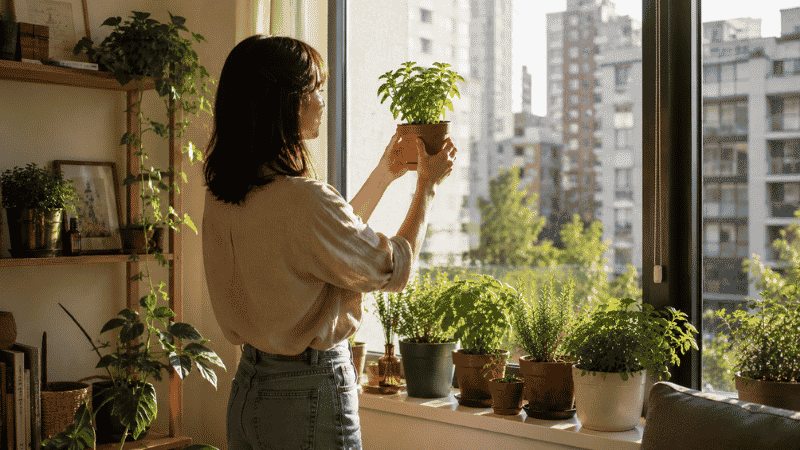
Not every herb is equally suited to indoor life. Mediterranean herbs that love dry, bright conditions — rosemary, lavender, sage — are harder indoors because most homes don’t provide the intense light and low humidity they prefer. Start with these five, which genuinely thrive on a windowsill with moderate care.
Basil — The Rewarding One
Light: 6+ hours direct sun (south window) | Water: Keep soil consistently moist | Best for: Cooking, pesto, Italian food
Basil is both the most rewarding and the most unforgiving herb to grow indoors. When it’s happy — warm, sunny, consistently watered — it grows vigorously and smells extraordinary. When it’s cold (below 50°F), underlit, or sitting in waterlogged soil, it collapses quickly.
The secret to keeping basil productive: pinch off any flower buds the moment they appear. Once basil flowers, it stops producing flavorful leaves and begins directing energy into seed production. Catch the buds early and the plant will keep producing fresh leaves for months.
Common mistake: Placing it near a cold window in winter. Basil is a tropical plant — the glass can drop temperatures significantly overnight even in a warm room. Move it back from the window on cold nights or keep it on a warm kitchen shelf under a grow light.
Mint — The Enthusiastic One
Light: 4–6 hours (east or west window) | Water: Keep soil moist | Best for: Tea, cocktails, desserts, anything that needs a fresh lift
Mint is nearly impossible to kill, grows enthusiastically in moderate light, and smells wonderful every time you touch it. It’s the confidence-builder that gets beginners hooked on growing.
The one rule: mint needs its own pot. In a mixed planter, it will spread aggressively and crowd out everything else. Give it its own container — even a simple 6-inch pot — and it will reward you with leaves for years.
Spearmint, peppermint, and chocolate mint all grow equally well and have distinct flavors worth exploring. All three are safe for most pets (though cats may react — they’re drawn to it, but it’s not harmful in normal amounts).
Common mistake: Letting it dry out completely. Unlike Mediterranean herbs, mint prefers consistently moist soil. If it wilts, water it — it almost always recovers.
Chives — The Reliable One
Light: 4–6 hours | Water: Allow top inch to dry between waterings | Best for: Eggs, potatoes, soups, salads
Chives are the most low-maintenance herb on this list. They grow slowly and steadily, tolerate a range of light conditions, and bounce back from both over and underwatering better than most herbs. Their purple flowers, which appear in spring and summer, are edible and beautiful.
Harvest by snipping the leaves close to the base — the plant will regrow from the cut point. A single pot of chives, harvested regularly and given a bright windowsill, can produce for years without any special care.
Parsley — The Patient One
Light: 4–6 hours | Water: Allow top inch to dry between waterings | Best for: Everything — it’s the most versatile herb in the kitchen
Parsley is slow to establish — it can take 3–4 weeks from planting to show significant new growth, which causes many beginners to assume something is wrong. Nothing is wrong. It’s just taking its time.
Flat-leaf (Italian) parsley has better flavor for cooking; curly parsley is prettier but milder. Both grow well indoors. Harvest outer stems first, leaving the inner growth to continue developing.
Thyme — The Mediterranean One
Light: 6+ hours | Water: Allow to dry thoroughly between waterings | Best for: Roasts, soups, Mediterranean cooking
Thyme is one of the herbs that genuinely thrives indoors when given enough sun, because it’s naturally drought-tolerant and doesn’t require the high humidity that some tropical herbs prefer. It actually prefers to dry out between waterings — one of the easier watering rhythms to manage.
Once established, a thyme plant in a south-facing window needs minimal attention. Harvest sprigs regularly — this encourages bushier growth — and avoid overwatering, which is the only reliable way to kill it.
How to Set Up Your Indoor Herb Garden: The Practical Details
Choosing Pots
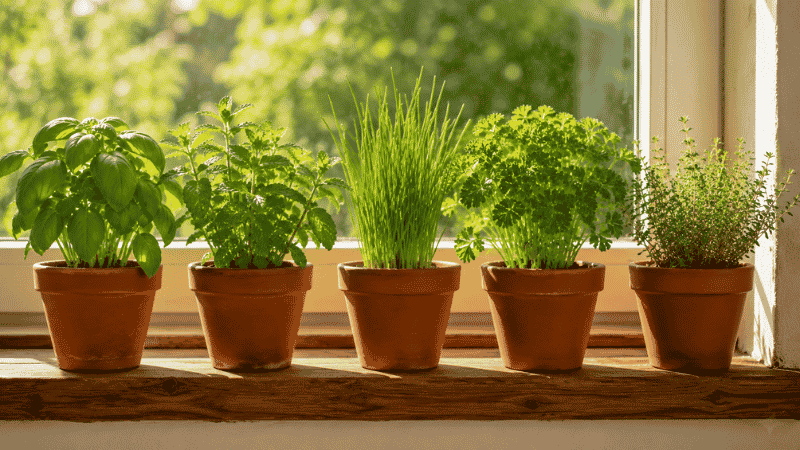
Individual 4–6 inch pots work well for most single herbs. Terra cotta is excellent — it breathes, regulates moisture, and is nearly indestructible. The main downside is that it dries out faster, which means more frequent watering checks in summer.
A long window box planter (12 inches or wider) is ideal for growing multiple herbs together in one container. This works well for herbs with similar watering needs — for example, thyme, oregano, and rosemary (all prefer drier conditions) can share a pot, while basil and parsley (both like more moisture) can share another.
Always use pots with drainage holes. This is the single most important equipment decision. Without drainage, excess water pools at the bottom, roots sit in it, and root rot follows. If you love a decorative pot without holes, use it as a sleeve — put your herb in a basic plastic nursery pot inside the decorative one, and remove it to water.
Soil
Standard all-purpose potting mix works for most herbs. For Mediterranean herbs (thyme, rosemary, oregano), mix in a little perlite or use a 50/50 blend of potting mix and cactus mix to improve drainage — these herbs evolved in dry, rocky conditions and actually suffer in rich, moisture-retentive soil.
Never use garden soil in pots. It compacts with every watering, prevents drainage, and often brings in pests.
Starting From Seedlings vs. Seeds
For beginners, seedlings from a garden center are the easier and faster path. You skip the germination wait (herbs can take 2–4 weeks to sprout from seed), and you start with an established plant that can be harvested within a few weeks of bringing it home.
If you want to grow from seed — perfectly doable, and significantly cheaper — basil, chives, cilantro, and parsley are the most reliable indoor herbs to start this way. Sow seeds in a small pot of moistened seed-starting mix, cover loosely with plastic wrap until they sprout, then move to your sunniest window.
Watering Indoor Herbs: Less Than You Think
Overwatering is the most common reason indoor herbs fail. It’s an easy mistake — you want the plants to do well, and watering feels like care. But most herbs, especially Mediterranean varieties, are adapted to dry conditions and actively suffer in consistently wet soil.
The rule: Press your finger into the soil to the first knuckle. If it feels moist, wait. If it feels dry, water thoroughly — until it drains from the bottom.
For basil and mint (moisture-lovers): check every 1–2 days in warm weather. For parsley and chives (moderate): check every 2–3 days. For thyme, rosemary, and oregano (drought-tolerant): let the soil dry out almost completely before watering, which might mean every 5–7 days or even less in winter.
One practical tip: water in the morning rather than evening. This gives leaves time to dry before cooler night temperatures, which reduces the risk of fungal problems.
Harvesting: The Habit That Keeps Your Herbs Growing
Most beginners harvest too little, too rarely — and their herbs respond by growing leggy and eventually going to seed or dying back. Regular harvesting is not just using your herbs. It actively makes the plants healthier and more productive.
The general rule: Never harvest more than one-third of the plant at one time. This leaves enough leaf area for the plant to continue photosynthesizing and recovering.
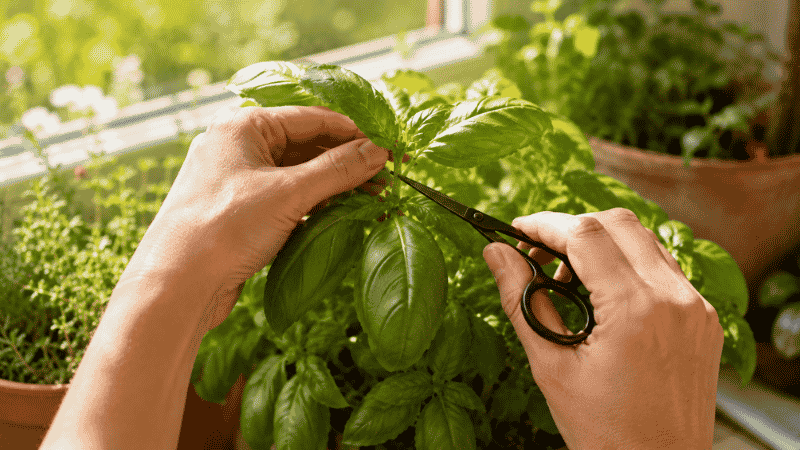
For basil: always harvest from the top, cutting just above a pair of leaves. The plant will branch from that point and become busher.
For mint and chives: cut stems or leaves close to the base. New growth will emerge from the cut points.
For parsley and thyme: harvest from the outer stems, leaving the inner growing points intact.
Herbs that are harvested regularly stay productive far longer than ones that are left to grow unchecked. If your herb is looking overgrown or starting to flower (especially basil), give it a hard harvest — cut back by one-third — and it will often flush with fresh new growth within a week.
When Things Go Wrong: Common Indoor Herb Problems
Yellowing leaves: Usually overwatering or insufficient light. Check soil moisture first. If it’s consistently wet, ease off watering and ensure the pot has drainage. If the soil is fine but leaves are still yellowing, the plant likely needs more light.
Leggy, pale, stretched stems: Classic sign of insufficient light. The plant is reaching toward the nearest light source. Move it closer to the window or add a grow light.
Wilting despite moist soil: Root rot — the most serious herb problem. It happens when roots sit in waterlogged soil for too long. Remove the herb from its pot, trim any mushy brown roots, let the root system air-dry for an hour, and repot in fresh dry soil. Hold off on watering for several days.
Tiny flies hovering around the soil: Fungus gnats — their larvae live in the top layer of moist soil. Let the soil dry out more thoroughly between waterings (this breaks the breeding cycle), and consider placing a sticky yellow trap near the pots to catch the adults.
Herbs that bolt (flower) very quickly: Usually caused by heat, insufficient water, or the plant being rootbound. For basil, pinch off flowers immediately. For cilantro and parsley (which bolt naturally as they mature), succession sow new seeds every 3–4 weeks to maintain a continuous supply.
If You Only Have 10 Minutes
Buy one pot of chives from a garden center. Put it in your east or south-facing window. Water it when the top inch of soil feels dry. Snip from the top every week or two.
That’s it. A single pot of chives in a decent window will produce continuously with almost no effort. It’s the most reliable confidence-builder in indoor herb growing — and once you see it working, you’ll want to add more.
FAQ
What herbs are easiest to grow indoors for beginners? Chives, mint, and parsley are the most forgiving and easiest to maintain indoors. Basil is deeply rewarding but requires more light and attention. Start with chives or mint if this is your first attempt — both are extremely hard to kill in a decent window.
How much light do indoor herbs really need? Most culinary herbs need 4–6 hours of direct sunlight daily, with sun-loving varieties like basil and rosemary needing 6+. South-facing windows are ideal; east-facing windows work for many herbs. North-facing windows don’t provide enough light — use a small grow light as a supplement.
Why do my indoor herbs keep dying? The two most common causes are overwatering (leading to root rot) and insufficient light. Check that your pots have drainage holes, that you’re watering only when the top inch of soil feels dry, and that your herbs are positioned in a window that gets meaningful direct light each day.
Can I grow herbs indoors without a sunny window? Yes, with a grow light. LED grow lights designed for plants are affordable (often under $20–$30), energy-efficient, and position 6–12 inches above your herbs for 12–14 hours daily. Many indoor herb gardeners in north-facing apartments grow thriving herb collections entirely under grow lights.
Can I plant multiple herbs together in one pot? Yes, with some caveats. Group herbs with similar watering needs: Mediterranean herbs (thyme, oregano, rosemary) like drier conditions and can share a pot; basil and parsley prefer more moisture and work well together. Always keep mint in its own pot — it will take over any shared container.
How often should I harvest my indoor herbs? Regularly — ideally weekly, or at least every 10–14 days. Regular harvesting keeps herbs productive and prevents bolting (going to seed). Never take more than one-third of the plant in a single harvest.
Is it cheaper to grow herbs indoors than to buy them? Over time, yes. A $4–$6 herb seedling can produce harvests worth far more than its purchase price over months of growing. The initial cost of pots and potting mix is a one-time investment. Growing your own also eliminates the waste of store-bought fresh herbs that wilt in the fridge before you use them.
The Small Ritual of It
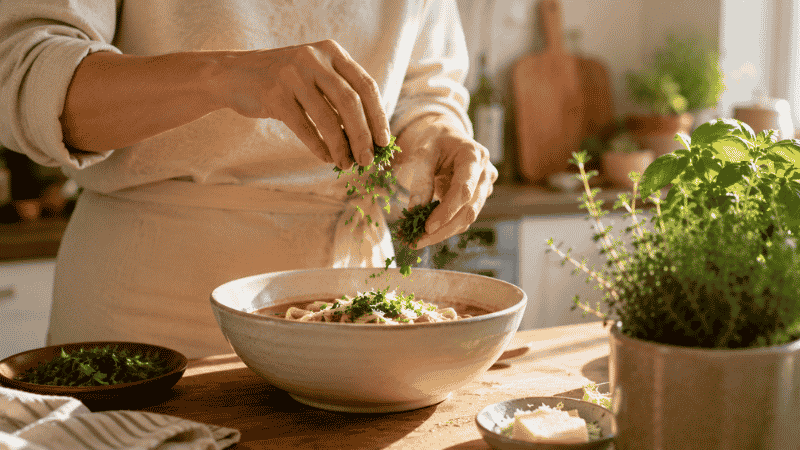
There’s something worth naming about the experience of an indoor herb garden that goes beyond the practical. Every morning when you make tea and snip a few mint leaves. Every Sunday when you tear basil over pasta you cooked yourself. The smell that rises when you brush past the thyme. These moments are small, and they’re real, and they add up.
A 2025 study in the horticultural therapy literature found that tending plants reduces rumination — the mental loop of worry and replay — by anchoring attention to what’s immediately present. Not the inbox. Not the to-do list. Just the plant, the soil, the small green fact of something growing.
That’s what an indoor herb garden gives you, alongside the basil.
Keep Growing
- 🌿 [Best Plants for Beginners: 15 Picks That Are Actually Hard to Kill] — expand beyond herbs into the wider world of indoor plants
- 🍅 [Growing Tomatoes in Pots] — ready for your first edible balcony harvest?
- 🌱 [Gardening for Beginners: Grow Your First Garden] — the full beginner’s guide to getting started
References: Largo-Wight, E., et al. (2022). When green enters a room: A scoping review of epidemiological studies on indoor plants and mental health. Environmental Research, 214. Harvard T.H. Chan School of Public Health (2025). Growing healthier together: The benefits of gardening for body and mind. National Center for Biotechnology Information, NIH (2022). Effect of Green Plants on Individuals’ Mental Stress during the COVID-19 Pandemic. Gardener’s Supply Company (2024). How to Grow Herbs Indoors. Botanical Interests (2025). How to Grow Herbs on Your Kitchen Windowsill.