
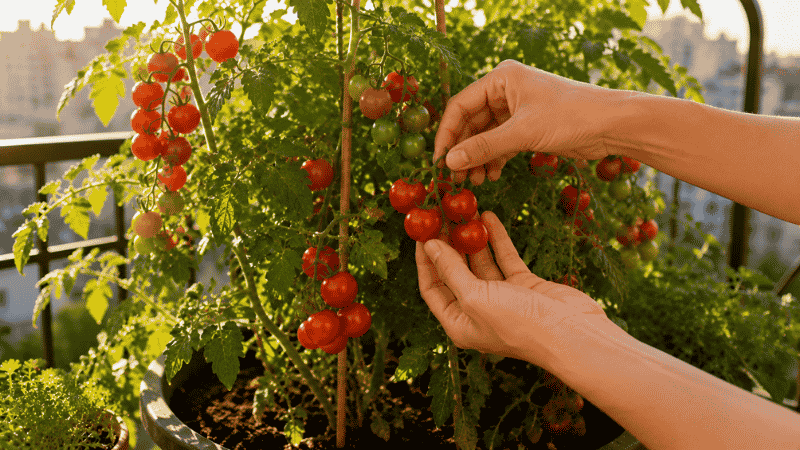
There’s a specific kind of joy that happens the first time you bite into a tomato you grew yourself. It doesn’t matter if it’s a tiny cherry tomato from a pot on your apartment balcony — it tastes completely different from anything you’ve ever bought at a grocery store. Not because it’s scientifically superior. Because you grew it.
Growing tomatoes in pots is one of the most satisfying things a beginner gardener can do — and one of the most misunderstood. Most people who try it and fail make the same few mistakes: the wrong variety, a pot that’s too small, watering that’s too unpredictable. None of these are complicated problems. They’re just things nobody explained clearly before you started.
This guide does exactly that. Whether you have a sunny balcony, a rooftop, a patch of patio, or just a south-facing windowsill, you can grow real tomatoes this season. You don’t need a garden bed. You don’t need a lot of experience. You just need the right setup and a little consistency.
Key Takeaways
- Tomatoes need at least 6–8 hours of direct sunlight per day — this is non-negotiable, and it’s the single most common reason container tomatoes fail
- Choose compact, determinate varieties (like Tiny Tim, Tumbling Tom, or Patio) for balconies and small spaces — they’re bred specifically for container life
- Use a minimum 5-gallon pot (bigger is better) — a small pot is the fastest route to a struggling, unproductive plant
- Inconsistent watering is the #1 cause of blossom end rot and cracked tomatoes in containers — check the soil daily once plants start fruiting
- Container tomatoes need fertilizing every 1–2 weeks once they start flowering — unlike in-ground plants, nutrients wash out with every watering
The First Decision: Choosing the Right Tomato Variety for Pots
This is where most beginners go wrong, and it’s an easy fix once you know what to look for.
Tomato plants come in two fundamental types: determinate and indeterminate. Determinate (also called “bush”) varieties grow to a set height — usually 2–4 feet — and then produce most of their fruit over a concentrated 3–5 week period. Indeterminate varieties keep growing and fruiting indefinitely, reaching 5, 6, sometimes 8 feet tall, requiring heavy staking and constant pruning. For container growing on a balcony, determinate and compact varieties are almost always the right choice.
Best tomato varieties for pots — beginner picks:
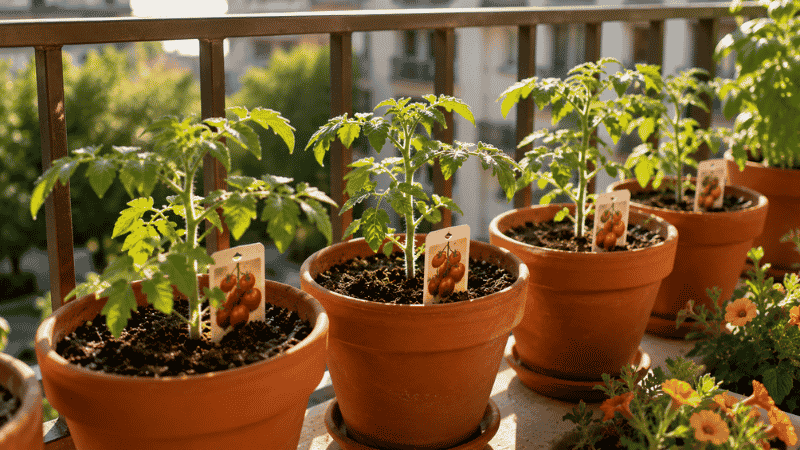
- Tiny Tim — truly tiny plant (18 inches), produces abundant cherry tomatoes, perfect for small pots and windowsills
- Tumbling Tom (red or yellow) — trailing habit, beautiful in hanging baskets or at the edge of a large pot, very productive
- Patio — bred specifically for containers, compact, reliable, and beginner-friendly
- Bush Early Girl — slightly larger, but still manageable in a 5-gallon pot, great flavor
- Sun Gold (cherry) — technically indeterminate but stays manageable with basic pruning; exceptional sweetness, worth the extra attention
If the plant tag or seed packet says “indeterminate” and doesn’t specify it’s suitable for containers, treat it as a project for when you have more experience — or be prepared to provide very large containers (15+ gallons) and a sturdy support structure.
What Size Pot Do You Actually Need?
Tomatoes have aggressive root systems. They want space — more than most people give them.
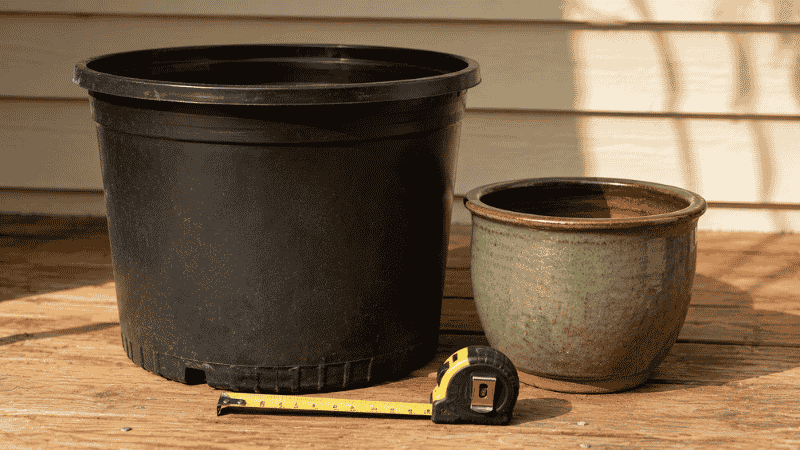
The minimum: 5 gallons (approximately 12 inches wide and 12 inches deep). This works for very compact varieties like Tiny Tim or Tumbling Tom. For most other varieties, it’s the absolute floor, not the ideal.
The ideal: 10–15 gallons for standard determinate varieties. Larger containers hold more moisture (which prevents the watering inconsistency that causes so many tomato problems), give roots more room to expand, and produce significantly larger harvests.
A common beginner mistake is choosing a beautiful ceramic pot that happens to be a 2-gallon container. The plant will grow, struggle, produce a few small tomatoes, and then slowly decline — all because the roots never had enough room to support the above-ground growth.
The container material matters too. Plastic and glazed ceramic retain moisture significantly better than terra cotta, which is porous and dries out fast. In the heat of summer, a terra cotta pot can dry out completely within a day. For tomatoes — which need consistent moisture — plastic nursery pots inside decorative outer pots are often the most practical choice.
Whatever you use, drainage holes are non-negotiable. Tomatoes sitting in waterlogged soil will rot rather than fruit.
Soil: Don’t Cut Corners Here
This is not the place to scoop dirt from your garden. Container tomatoes need potting mix — specifically a high-quality all-purpose potting mix, not garden soil, not topsoil.
Garden soil in a container compacts with every watering, suffocates roots, and drains poorly. Potting mix is designed to stay loose, drain well, and support the root systems of container-grown plants.
For tomatoes specifically, upgrade your basic potting mix before planting:
- Mix in a slow-release granular fertilizer or compost before planting — this gives the plant nutrients in the early weeks before you start liquid feeding
- Add a handful of perlite if the mix feels dense — this improves drainage and aeration
- Some growers add crushed eggshells or bone meal to the bottom of the planting hole, which provides calcium and reduces the risk of blossom end rot (more on that below)
Fill the pot to about 2 inches below the rim. When you plant the tomato seedling, bury it deeply — up to two-thirds of the stem, if possible. Tomatoes grow roots along buried stems, and a deeply planted tomato develops a stronger, more extensive root system than one planted at surface level.
Sunlight: The Non-Negotiable
If there’s one thing you take from this entire guide, let it be this: tomatoes need 6–8 hours of direct sunlight per day, every day. Not filtered light through a sheer curtain. Not a few hours of morning sun followed by shade. Direct sun, for most of the day.
Before you buy a single seed or seedling, spend a day watching your balcony or patio. Note exactly where direct sun falls at 9am, noon, and 3pm. A south-facing balcony in the Northern Hemisphere is ideal. East-facing balconies get morning sun and are workable for smaller varieties. North-facing balconies — where sun is minimal — are genuinely not suitable for tomatoes, no matter how much you want it to work.
Insufficient light is the most common reason container tomatoes produce flowers but no fruit, or grow tall and leggy without ever setting meaningful fruit. If your space doesn’t get enough sun for tomatoes, it’s much better to know that now and choose lettuce or herbs instead — both of which thrive in lower light and will make you far happier.
Watering Tomatoes in Containers: The Most Important Skill
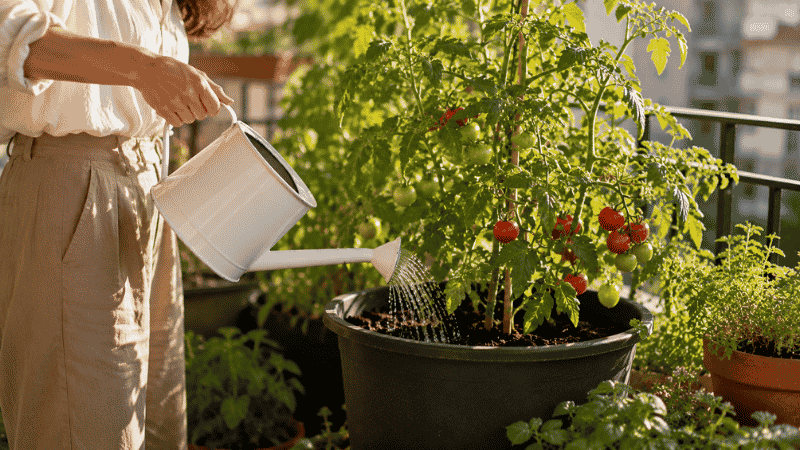
Container tomatoes dry out significantly faster than in-ground tomatoes. In peak summer heat, a 5-gallon pot of tomatoes may need watering every single day. A larger pot every 1–2 days. This is the reality of container growing — and it’s the area where most beginners run into trouble.
The rule is simple: check the top inch of soil daily once your plants start setting fruit, and water whenever it feels dry. Water deeply — until it runs from the drainage holes — rather than giving small frequent sips that only wet the top inch. Deep watering encourages roots to grow downward and strengthens the plant overall.
Why consistency matters so much: Inconsistent watering — dry for three days, then heavily watered, then dry again — is the primary cause of two of the most common container tomato problems:
- Blossom end rot: A dark, leathery patch on the bottom of developing fruit. Not a disease — it’s caused by the plant’s inability to transport calcium into developing fruits during moisture stress. According to the University of Illinois Extension, even when calcium is present in the soil, inconsistent watering prevents the plant from absorbing and moving it effectively.
- Cracked tomatoes: When a period of drought is followed by heavy watering, fruits absorb water faster than the skin can expand, causing cracking. This is almost entirely preventable with consistent moisture management.
Morning watering is ideal — it gives leaves time to dry before evening, which reduces fungal issues.
Feeding Your Container Tomatoes
This is where container growing is fundamentally different from in-ground growing, and where a lot of beginners underestimate what their plants need.
Every time you water a container, nutrients wash through the soil and out the drainage holes. Over the course of a growing season, container tomatoes lose nutrients far faster than in-ground plants. Without regular replenishment, plants that started strong will plateau and stop producing.
A simple feeding schedule for beginners:
- Before planting: Mix a slow-release granular fertilizer or compost into the potting mix
- Weeks 1–4 (establishment): No additional feeding needed — the pre-mixed nutrients are sufficient
- Once the first flowers appear: Begin liquid feeding every 1–2 weeks with a balanced tomato fertilizer or all-purpose liquid fertilizer
- During heavy fruiting: Continue every 1–2 weeks; look for a fertilizer with higher phosphorus and potassium (the second and third numbers on the label) to support fruit development rather than leaf growth
A note on nitrogen: high-nitrogen fertilizers produce impressive leafy growth but can actually suppress fruit production. Once your plant is established and flowering, shift to a fertilizer that’s lower in nitrogen and higher in phosphorus and potassium.
Supporting Your Plants: Stakes, Cages, and Trellises
Even compact determinate varieties benefit from some support. As tomatoes develop heavy clusters of fruit, stems can bend, break, or fall over — especially in wind.
The simplest approach for beginners: a bamboo stake pushed into the pot at planting time, with the main stem loosely tied to it with soft garden twine as the plant grows. This takes five minutes and prevents most stem breakage.
For slightly larger determinate varieties, a tomato cage — the circular wire kind available at any garden center — placed over the pot works well. Push the legs into the soil or let them rest on the pot rim.
Important: Don’t wait until your plant is 3 feet tall to add support. Install stakes or cages at planting time, or within the first two weeks, before roots are established enough that inserting a stake would disturb them.
Common Problems and How to Fix Them
Yellow leaves: Most common in lower leaves and usually indicates normal aging, overwatering, or nutrient deficiency. If it’s the bottom few leaves, it’s likely fine. If it’s progressing up the plant, check watering and consider feeding.
Flowers dropping without setting fruit: Usually caused by temperature extremes (too hot above 90°F or too cold below 55°F at night), insufficient pollination, or inconsistent watering. Gently shake the plant or use a small paintbrush to transfer pollen between flowers if no bees are visiting.
Blossom end rot (dark leathery patch on fruit bottom): Inconsistent watering is the cause in almost every container case. Stabilize your watering routine — consistent moisture is the fix. Affected fruits won’t recover, but new fruits on the same plant will be healthy once watering is consistent.
Cracked or split tomatoes: Water too inconsistently. Mulch the top of the soil to retain moisture between waterings, and aim for daily checks in hot weather.
Aphids or spider mites: Check under leaves regularly. A strong spray of water removes most aphids. For persistent infestations, neem oil or insecticidal soap spray is effective and safe.
If You Only Have 10 Minutes to Set This Up
No time to overthink it? Here’s the minimum viable tomato setup:
Buy one compact cherry tomato seedling (Tiny Tim or Tumbling Tom), a 5-gallon pot with drainage holes, and a bag of all-purpose potting mix. Mix in a slow-release fertilizer granule if available. Plant the seedling deeply. Put it in the sunniest spot you have. Water whenever the top inch of soil feels dry.
That’s it. Not perfect, but entirely workable — and far better than waiting for ideal conditions that may never arrive.
When to Harvest and What to Expect
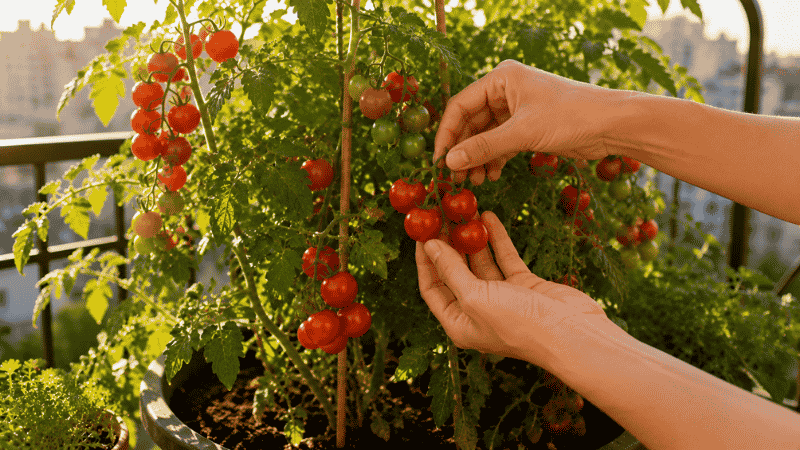
Cherry tomatoes typically begin producing 60–80 days after transplanting. You’ll see green fruits first, then watch them slowly color up. Don’t rush the harvest — tomatoes develop their full flavor in those last few days on the vine.
Signs of ripeness: The tomato has reached its characteristic color (red, yellow, orange, depending on variety), yields slightly to gentle pressure, and separates easily from the vine with a gentle twist.
Pick regularly once ripening begins — frequent harvesting actually encourages the plant to produce more fruit rather than directing energy into ripening just a few. During peak production on a healthy plant, you may be picking every 1–2 days.
Container tomatoes generally produce from midsummer through the first frost in most climates. Some compact varieties produce their entire crop over 3–4 weeks; others fruit continuously until cold sets in. Check the variety information on your seed packet or plant tag for expected harvest timing.
FAQ
What is the best tomato to grow in a pot for a beginner? Cherry tomato varieties bred for containers — Tiny Tim, Tumbling Tom, and Patio — are the most beginner-friendly. They stay compact, produce abundantly in smaller pots, and are more forgiving of minor care mistakes than larger varieties.
How big does a pot need to be to grow tomatoes? 5 gallons (approximately 12 inches wide and deep) is the minimum for compact varieties. For most determinate varieties, 10–15 gallons produces significantly better results. Bigger is almost always better with container tomatoes — a larger pot holds more moisture and gives roots room to develop.
How often should I water tomatoes in pots? Check the top inch of soil daily, especially during summer heat. Water whenever it feels dry, always watering deeply until it drains from the bottom. In peak summer, this may mean daily watering. In cooler weather or early in the season, every 2–3 days may be enough. There’s no fixed schedule — only the soil can tell you.
Why are my tomato flowers falling off without producing fruit? Temperature extremes (above 90°F or below 55°F at night), insufficient pollination, or inconsistent watering are the most common causes. On a balcony without visiting bees, try gently shaking the plant or brushing between flowers with a small paintbrush to help pollination.
Can I grow tomatoes on a north-facing balcony? Not successfully. Tomatoes need 6–8 hours of direct sunlight daily. A north-facing balcony in the Northern Hemisphere receives very little direct sun, which will produce leggy plants that flower but rarely fruit meaningfully. Choose leafy greens, mint, or low-light herbs instead — they’ll reward you far more.
Why do my container tomatoes have dark spots on the bottom of the fruit? This is blossom end rot — caused by inconsistent watering preventing calcium uptake, not a disease. The affected fruits won’t recover, but stabilizing your watering routine (checking soil daily and maintaining consistent moisture) will prevent it in new fruits on the same plant.
When should I start growing tomatoes in pots? Plant tomato seedlings outdoors after your last frost date, when nighttime temperatures consistently stay above 50°F. In most of North America, this is between late April and early June. Check your local last frost date to time your planting accurately.
The Part Nobody Talks About
The first tomato you grow yourself will be small, possibly misshapen, and might arrive in late August when you’ve almost given up. Eat it standing over the pot. Don’t save it for a salad.
That moment — unrepeatable, slightly ridiculous, completely out of proportion to the effort involved — is why people grow tomatoes on balconies. Not efficiency. Not economics. Just that specific joy of having made something edible from soil and sunlight and patience.
Start this season. You won’t regret it.
Keep Growing
- 🌿 [Best Plants for Beginners: 15 Picks That Are Actually Hard to Kill] — find your next container garden project
- 🪴 [Gardening for Beginners: Grow Your First Garden] — the complete beginner’s guide to getting started
- 🔄 [How to Repot a Plant] — when your tomato plant outgrows its pot, here’s exactly what to do
References: University of Illinois Extension (2021). Tomato Gardeners Beware: Blossom End Rot Can Be Prevented. Alabama Cooperative Extension System (2024). Blossom-End Rot in Tomatoes: Causes and Prevention. The Old Farmer’s Almanac (2025). Blossom-End Rot: Preventing Blossom-End Rot on Tomatoes. University of Kentucky Cooperative Extension (2025). Container Gardening Can Turn Small Spaces into Great Gardens. Harvest to Table (2025). How to Grow Tomatoes in Containers.