You bought a succulent once. It died. You bought another one — also died. At that point, you told yourself you simply weren’t a “plant person,” packed away the empty pots, and moved on.
But here you are again, staring at your bare balcony on a Sunday morning, coffee in hand, thinking: what if I tried one more time?
Here’s the truth nobody tells beginners: those plants didn’t die because you have a black thumb. They died because nobody gave you the right information. Most beginner gardening guides are written for people who already know what “amended soil” means, who own a house with a yard, and who have unlimited time on weekends. That’s not you — and it’s not most of us.
This guide is different. Whether you have a balcony, a windowsill, or a tiny patch of yard, we’re going to help you start a home garden that actually survives. No complicated jargon. No expensive equipment. Just the real stuff that works, shared the way a friend with a thriving balcony garden would share it.
Key Takeaways
- You can start a real, productive garden with as little as $20–$30 and two medium-sized pots
- Most beginner plants need only 6 hours of sunlight and consistent (not obsessive) watering
- The #1 beginner mistake isn’t overwatering or underwatering — it’s starting too big, too fast
- Container and balcony gardens can be just as productive as in-ground gardens for herbs, greens, and tomatoes
- Research from the University of Florida found that home gardening reduces stress and improves overall wellbeing — so even if your tomatoes fail, the process is still good for you (Soga et al., 2017, Urban Forestry & Urban Greening)
The Real Reason Most Beginners Fail (It’s Not What You Think)
Before we talk about soil or seeds or sunshine, let’s address the thing nobody wants to say out loud: most beginner gardens fail not because of gardening skill, but because of scale.
People get excited in February, read one enthusiastic article about tomatoes, and by April they’ve planted six tomato varieties, two types of peppers, basil, rosemary, mint, and some squash — all in containers they bought on impulse. By June, they’re drowning. The plants are wilting, the schedule is overwhelming, the garden looks like a disaster, and they feel like failures.
They weren’t failures. They just started too big.
The golden rule for every first-time gardener: start embarrassingly small. Two pots. Three plants maximum. One season of learning. That’s it.
A small, thriving garden you actually enjoy is infinitely better than a big, stressed garden that you end up abandoning. You can always grow next year. You can’t undo the burnout.
What You Actually Need to Start (The Honest List)
Here’s the good news: you probably don’t need most of what gardening influencers are trying to sell you.
The true essentials:
- 2–3 pots or containers (at least 12 inches deep for most vegetables; wider is better)
- Quality potting mix — not garden soil, not dirt from your yard, actual potting mix designed for containers
- A watering can (or even just a pitcher — seriously)
- 2–3 easy plants (we’ll get to this)
- A sunny spot with at least 6 hours of direct light
That’s it. Total starting cost: $25–$40, depending on what’s on sale at your local garden center.
What you can skip (for now):
- Fancy grow lights (unless you’re growing indoors in a very dark apartment)
- A dozen different fertilizers
- Raised beds and lumber (that’s a year-two project)
- Elaborate trellises and supports
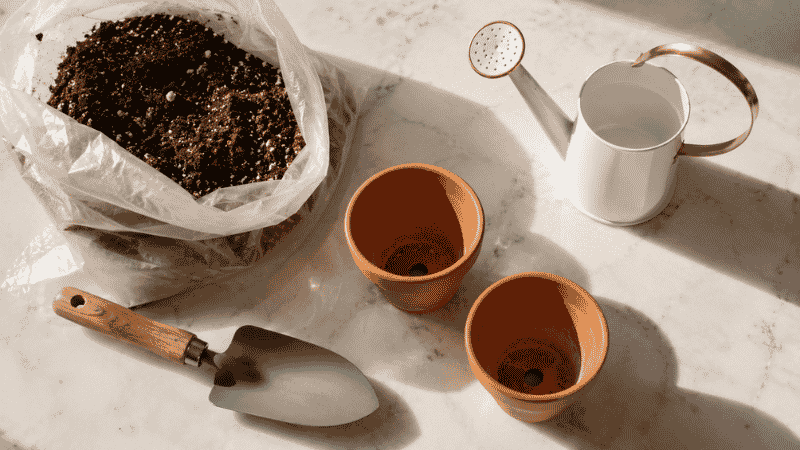
One trowel, a bag of potting mix, and a couple of pots will take you further than all the gadgets in a garden center catalog.
Balcony and Small-Space Gardening: You Don’t Need a Yard
This is the section that most beginner gardening guides completely skip, even though millions of people live in apartments and small homes. So let’s say it clearly: you do not need a yard to grow things.
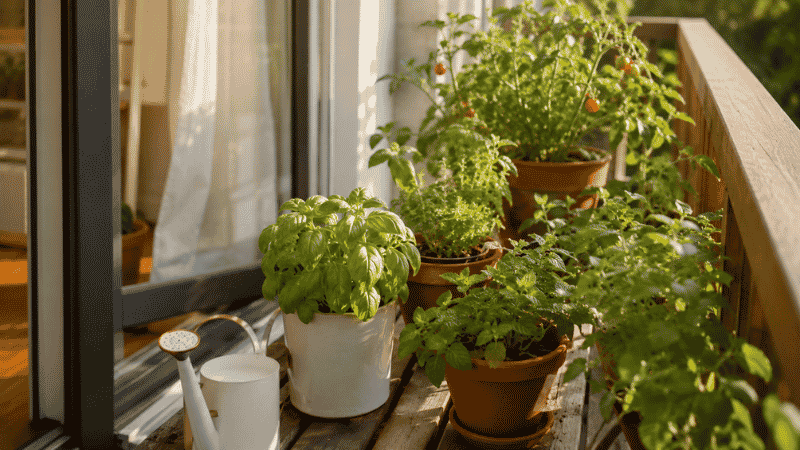
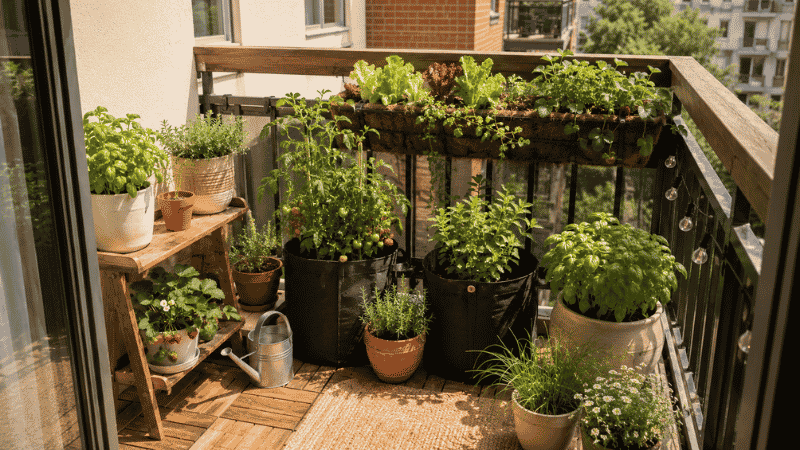
Balconies, patios, windowsills, and even indoor shelves near bright windows can all support a thriving mini garden. Container gardening has come a long way — grow bags, self-watering planters, vertical pocket planters, and window boxes have made it entirely possible to grow herbs, lettuce, strawberries, and even compact tomato varieties in a space smaller than a dining table.
What works best in small spaces:
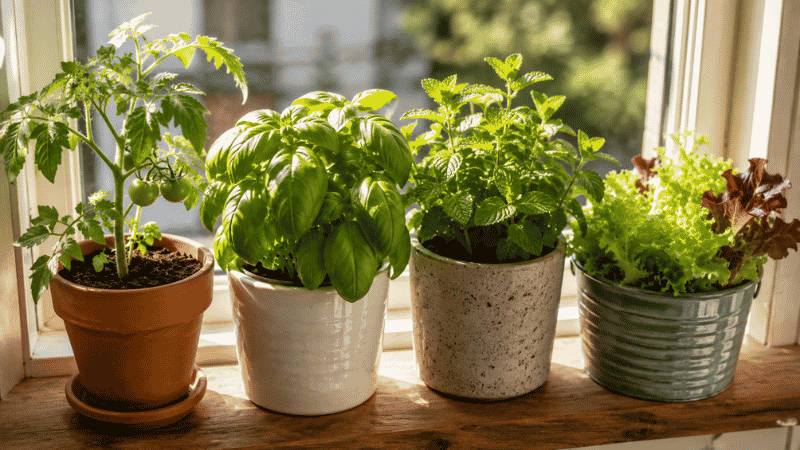
- Herbs (basil, mint, chives, parsley) — can live in 6-inch pots on a windowsill
- Lettuce and leafy greens — shallow roots, fast harvest (30 days!), perfect for balcony containers
- Cherry tomatoes — choose compact varieties like ‘Tiny Tim’ or ‘Tumbling Tom’ specifically bred for pots
- Strawberries — surprisingly container-friendly, look gorgeous in hanging baskets
- Radishes — the ultimate beginner win: plant to harvest in 25 days flat
One important balcony tip: check your sun direction before buying anything. South-facing balconies get the most sun and can grow almost anything. North-facing balconies are shadier — stick to mint, parsley, ferns, and leafy greens that actually prefer lower light.
The Beginner-Proof Plant List: Start With These
Not all plants are created equal for beginners. Some are forgiving, fast-growing, and satisfying. Others are finicky, slow, and heartbreaking. Here’s your starter list — plants that have helped more nervous beginners succeed than anything else.
For Eating (Edible Garden):
Cherry Tomatoes (Easiest to grow, most rewarding) Slow to start, but once they get going, you’ll have more tomatoes than you know what to do with. Use a container at least 12 inches deep. Give them full sun and consistent water. They’ll reward you generously.
Basil The perfect partner to tomatoes — in the garden and on the plate. Basil loves warmth and sunshine. Pinch off any flowers as they appear to keep leaves coming all summer. If you’re growing indoors, put it in your sunniest window.
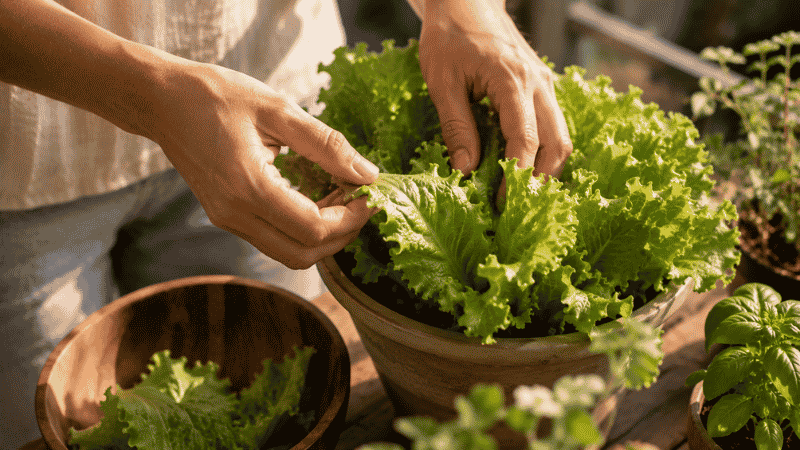
Lettuce and Mixed Greens The beginner’s best friend. Lettuce grows fast, needs minimal space, and you can start harvesting outer leaves within weeks without pulling up the whole plant. Perfect for a balcony planter box.
Mint Almost impossible to kill. In fact, mint is so enthusiastic that it needs its own pot — it will crowd out everything else if given the chance. But in its own container, it’s a joy. Mojitos optional, but encouraged.
Radishes The ultimate confidence builder. Plant seeds directly into a pot, water regularly, and in 25 days you’re harvesting. Nothing shows a new gardener that “this actually works” faster than a radish.
For Your Balcony or Windowsill (Low-Light Friendly):
Pothos or Heartleaf Philodendron These indoor plants are genuinely hard to kill. They tolerate low light, irregular watering, and general neglect. If you want to build confidence before tackling edibles, start here.
Spider Plant Another near-indestructible option for darker corners. It even produces little “babies” on long stems that you can propagate into new plants — free plants are always satisfying.
Peace Lily One of the few flowering plants that thrives in low light. It will dramatically droop when it needs water (giving you a clear, unmissable signal), then perk back up within hours of being watered. Nature’s built-in alarm system.
Sunshine: The One Thing You Can’t Fake
You can improve bad soil. You can supplement nutrients. You can adjust watering schedules. But you cannot manufacture sunlight, and every garden — indoors or out — lives or dies by how much natural light it gets.
The basic rule:
- Most vegetables and herbs need 6–8 hours of direct sunlight per day
- Leafy greens and herbs can manage on 4–5 hours
- True shade lovers (ferns, peace lily, pothos) can survive on 2–3 hours of indirect light
Before you buy a single plant, spend a day watching your space. Notice where the sun hits at 9am, 12pm, and 3pm. That shady corner that looks bright in the morning? It might be in deep shadow by afternoon. An afternoon that spent checking your light is worth more than a whole weekend of planting in the wrong spot.
Soil: The Part Everyone Gets Wrong
This is where most container gardens quietly fail. People fill their pots with cheap topsoil, or worse — they scoop dirt from outside — and wonder why their plants look sad and stunted.
The rule is simple: always use potting mix for containers. Not garden soil. Not topsoil. Potting mix.
Garden soil is too heavy and dense for containers. It compacts, blocks drainage, and suffocates roots. Potting mix is specially formulated to be lightweight, well-draining, and nutrient-rich — everything a container plant needs to thrive.
For beginners, a standard all-purpose potting mix from any garden center or hardware store will work well. If you want to do one small upgrade, mix in a slow-release granular fertilizer when you fill your pots — this feeds your plants gradually for months without you having to think about it.
About fertilizing: once every two weeks during the growing season with a balanced liquid fertilizer (look for something labeled 10-10-10 or “all-purpose”) is enough. More is not better. Over-fertilizing is just as harmful as under-fertilizing.
Watering: The #1 Thing Beginners Overthink
There is more gardening anxiety around watering than almost any other topic. “Am I watering too much? Too little? When should I water? How much?”
Here’s the simple, honest answer: stick your finger an inch into the soil. If it feels dry, water. If it feels moist, wait.
That one test will serve you better than any watering schedule. The reason is that the “right” watering frequency depends entirely on your container size, your plant type, your local climate, and the season — it changes constantly. A finger test never lies.
A few practical guidelines:
- Water until it drains from the bottom holes — this ensures the roots are fully reached, not just the top inch
- Morning watering is ideal; it sets plants up for the day and lets the soil dry slightly before cooler evenings
- In summer heat, small containers may need daily watering; in spring or fall, every 2–3 days is often enough
- Wilting can mean too little or too much water — if your soil is damp but your plant is drooping, ease off; if it’s bone dry, water immediately
The USDA Extension Service recommends container gardens be watered when the top 1–2 inches of soil feel dry to the touch — a guideline that works consistently across plant types and seasons.
When Things Go Wrong (And They Will — That’s Normal)
Every gardener, beginner and experienced alike, has plants that fail. A tomato that gets blossom end rot. Basil that bolts in a heat wave. Mint that mysteriously collapses. This is gardening — it’s unpredictable, and failure is just part of the learning curve.
Here’s a quick guide to the most common beginner problems:
Yellow leaves: Could be overwatering, underwatering, or nutrient deficiency. Check soil moisture first. If it’s consistently wet, let it dry out and improve drainage. If dry, water more regularly and consider adding fertilizer.
Leggy, stretched-out plants: This means your plant wants more light. It’s literally reaching toward the sun. Move the pot somewhere sunnier, or rotate it regularly so all sides get light.
Drooping despite moist soil: Often overwatering or root rot. If this happens, let the soil dry out significantly before watering again. Remove any visibly brown, mushy roots if repotting.
Pests on leaves: Small white flies, aphids, or spider mites. A simple solution of water and a tiny drop of dish soap, sprayed on affected leaves, handles most minor infestations without chemicals.
Nothing is growing: Be patient — most seeds take 7–21 days to germinate. Keep the soil consistently moist and warm. If after three weeks nothing appears, the seeds may have been old or the soil too cold.
Your First Garden: A Week-by-Week Starter Plan
Feeling ready but not sure where to actually begin? Here’s a simple timeline for your very first month.
Week 1 — Observe and Gather Spend time watching your space. Note where the sun lands at different times of day. Buy 2–3 containers (at least 12 inches deep), a bag of potting mix, and 2–3 plants or seed packets. Basil + cherry tomato seedlings + a lettuce mix is a classic beginner combo.
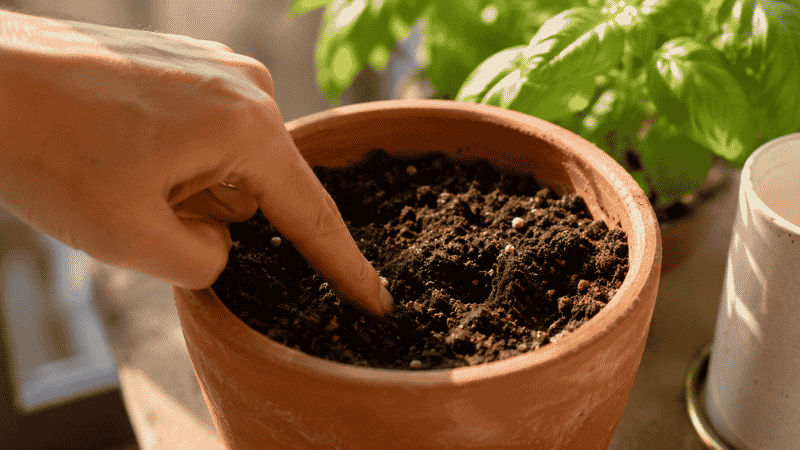
Week 2 — Plant Fill your containers with potting mix, leaving about an inch at the top. Plant your seedlings at the depth shown on the label. Water gently but thoroughly until water drains from the bottom. Place in your sunniest spot.
Week 3 — Observe and Learn Check your plants daily. Do the finger-test for watering. Notice how they’re growing. Are they leaning toward the light? Rotate the pot. Looking pale? A dose of liquid fertilizer will help. Celebrate every new leaf.
Week 4 — First Harvest (Maybe!) If you planted lettuce or radishes, you might already be harvesting. Pull a few outer lettuce leaves, rinse them, and put them in a salad. That’s it. That’s your first harvest. It will taste better than anything from a grocery store, not because it’s chemically superior, but because you grew it.
Frequently Asked Questions
What is the easiest vegetable to grow for beginners? Lettuce, radishes, and cherry tomatoes are the most beginner-friendly. Lettuce and radishes grow fast and require minimal effort. Cherry tomatoes take longer but produce abundantly and are very forgiving.
How do I start a garden with no experience? Start with two or three pots, quality potting mix, and two or three easy plants (basil, lettuce, cherry tomatoes). Put them in the sunniest spot you have, water when the top inch of soil is dry, and observe how they respond. Experience builds naturally from watching and adjusting.
Can I garden on an apartment balcony? Absolutely. Herbs, leafy greens, strawberries, and compact tomato varieties all thrive in containers on a balcony. South or west-facing balconies with 5+ hours of sun are ideal. North-facing balconies with less sun work well for herbs and greens.
How often should a beginner water their garden? Rather than following a rigid schedule, check the soil daily — if the top inch is dry, water. In summer, small containers may need watering every day. In cooler months or for larger pots, every 2–3 days is often enough.
What’s the cheapest way to start a garden? Start with seed packets rather than seedlings (seeds are far cheaper), use whatever containers you already have (old colanders, wooden crates, or deep bowls with drainage holes work), and buy potting mix in bulk bags for better value. A functional starter garden can be put together for under $30.
Why do my plants keep dying? The most common culprits are overwatering (the #1 killer of houseplants and container gardens), too little light, or using garden soil instead of potting mix in containers. Start by checking those three things before anything else.
When is the best time to start a garden for beginners? Spring — roughly March to May in most of North America — is ideal for starting herbs and vegetables outdoors. However, lettuce and greens can be started earlier, and herbs can be grown indoors year-round near a bright window.
The Bigger Picture: Why This Is Worth It
Gardening is not just about the plants. Research published in Urban Forestry & Urban Greening found that regular contact with nature and garden activities is associated with significantly reduced stress, lower cortisol levels, and improved mood — even in urban settings. The National Gardening Association reports that over 35% of American households now grow food at home or in community gardens, a number that has grown steadily since 2008.
But you don’t need research to tell you what you probably already sense: there’s something quietly profound about putting a seed in soil, watering it with your own hands, and watching it grow into something alive.
It slows you down. It connects you to something tangible in a world of screens and noise. And when you eventually eat something you grew yourself — even if it’s just a handful of lettuce leaves or a tiny bunch of basil — it will taste like victory.
Ready to Keep Growing?
You’ve got the foundation. Now here are your next steps on DirtZip:
- 🪴 [How to Choose the Right Pot for Container Gardening] — terra cotta vs. plastic vs. grow bags, explained simply
- 💧 [How Often to Water Potted Plants] — a detailed guide to getting watering right by season
- 🌿 [Best Potting Mix for Vegetables and Herbs] — what to look for, what to avoid, and our top picks
- 🍅 [Growing Tomatoes in Containers: The Complete Guide] — from seedling to harvest
Start small. Stay curious. And remember: every experienced gardener out there once killed a succulent too.
References
- Soga, M., Gaston, K.J., & Yamaura, Y. (2017). Gardening is beneficial for health: A meta-analysis. Preventive Medicine Reports, 5, 92–99.
- National Gardening Association. (2023). Garden to Table: A 5-Year Look at Food Gardening in America. National Gardening Association.
- USDA Cooperative Extension Service. (2024). Container Vegetable Gardening. University of Florida IFAS Extension.
- University of Wisconsin-Madison Extension. (2021). Beginning Vegetable Gardening Basics: Site Selection and Soil Preparation. UW-Extension.